RIE Etching Si3N4 to Make Freestanding MgF2 Nanomembranes
Poor English Paper used as a starting point: Silicon Nitride Etch Rate paper
This is a continuation of the work I’ve done, attempting to make freestanding MgF2 nanomembranes (theory and deposition) using a Silicon Nitride nanoporous substrate. I originally wanted to use hot phosphoric acid to remove the Si3N4, but since we do not have that capability at URnano, it was simpler to try RIE first (plasma etching, not wet etching). Using a standard recipe found in the tool manual by the RIE tool (URnano), I placed individual substrates with 100 nm MgF2, 50 nm Si3N4 freestanding films face down on a piece of silicon, and centered them in the etch chamber.
CHF3 Etch recipe: 95% CHF3/ 5% O2 = 45 nm/min. 100 mTorr, 100 Watts. Etching time + 15% over etch to remove 50 nm Si3N4 = 80 seconds. Setpoints on the tool were 27.5 sccm CHF3 and 1.9 sccm O2.
I ran 60s and 80s etches separately with my two remaining samples. For the 80s etch, pressures were 107-115 mTorr, DC bias = -565 V, 100-102 W Forward Bias, 17-20 W reflected. For the 60s etch, etch pressure was 110-115 mTorr, DC bias = -622 V, 115-120 forward bias, 17-19 W reflected. Striking the plasma seems to be an issue; it took an anxiety provoking 10s to ignite the plasma for both etches, and spiked the power up to 120 W. On the 60s etch the power remained high even though the plasma was struck. Reflected power is more than I would like; 5 watts or less shows proper tuning as a rule of thumb.
Optically, there appears to be no change in the plasma color as we approach the silicon nitride layer. Upon removal, the Si3N4 backside film appears to be gone in the bulk region, leaving only bare Si (though I am told that as much as 20nm of Si3N4 could still be present, “invisible” to our eyes).
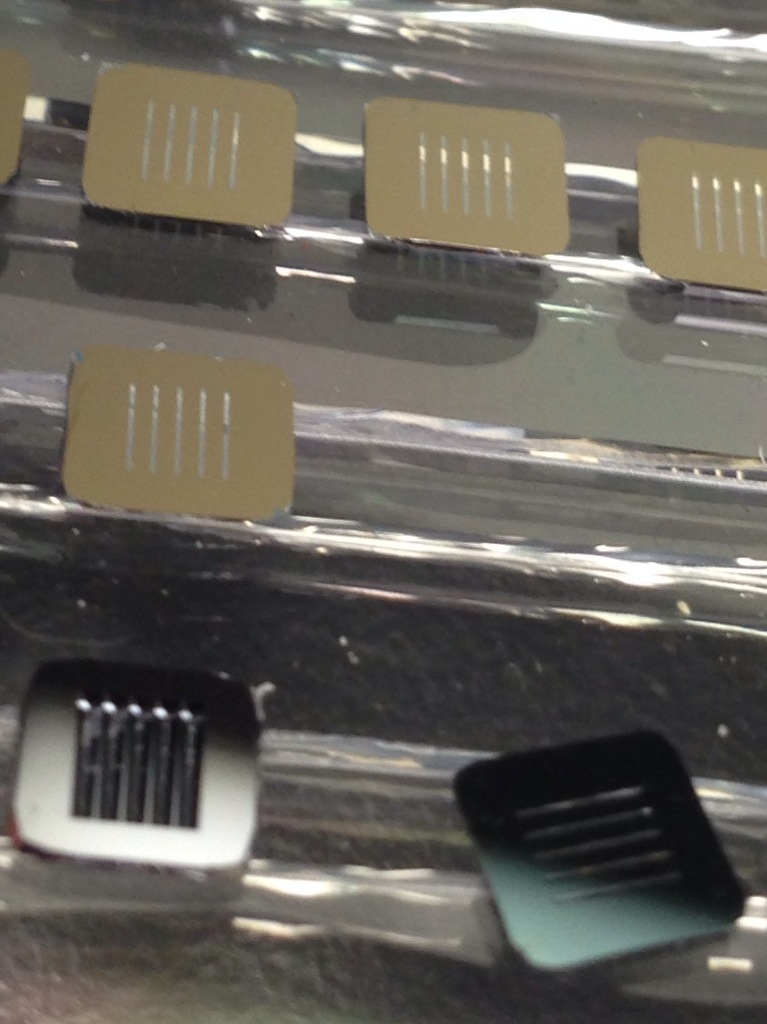
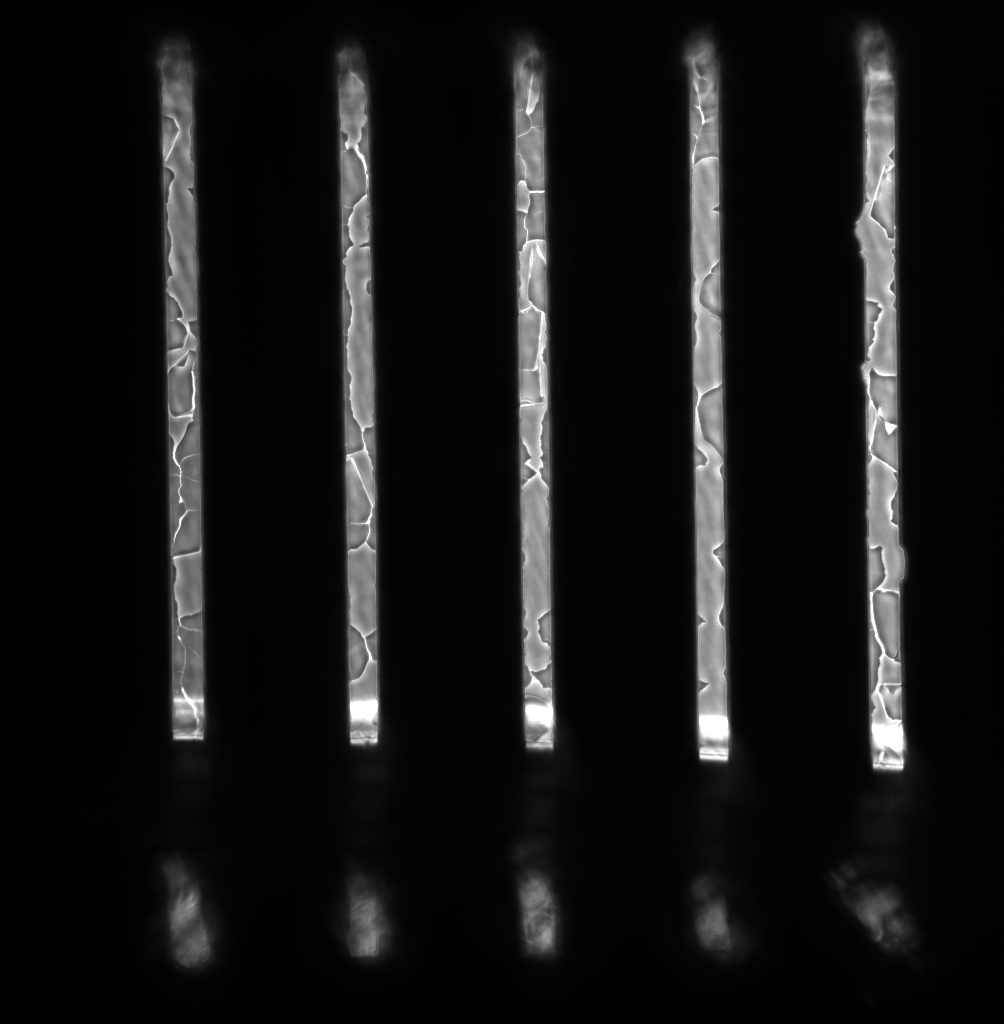
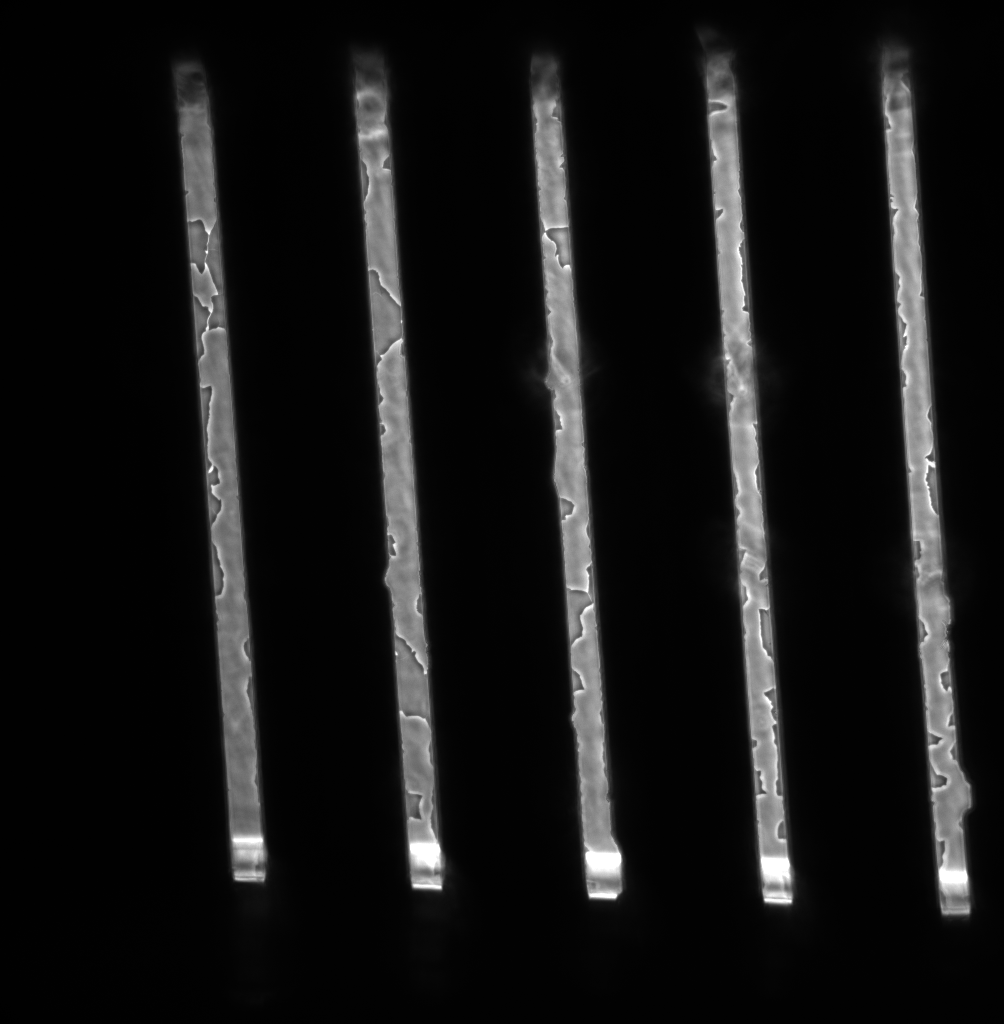
The cracks in the film are quite obvious, and more of the film appears to be remaining on the run with less etch time. Since both substrates appear to have cleared, I will continue to lower the etch time, in the hopes of preserving more of the film. There are other ways to tackle the problem of the film ruptures. We may be able to strengthen the MgF2 with a thermal process, but I suspect it will promote delamination from the substrate before strengthening the film (more research to be done). We can use a slower, gentler etch by adjusting the sputter pressure to be higher and lowering the power (RIE is very physical). Currently I am out of MgF2 evaporated films, so I will have to create some more before continuing.
Suggestion to make stack like we are doing with Nitride. Would simplify process. Greg says MgFl2 doesnt play nice in stacks but might in this process. So if membrane can be free standing, then maybe look at.