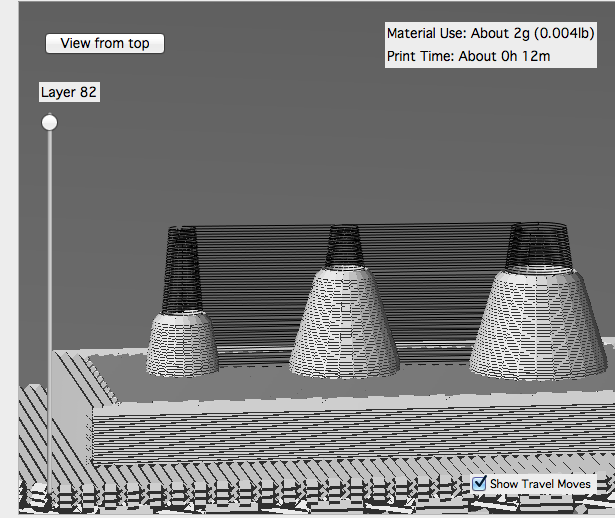
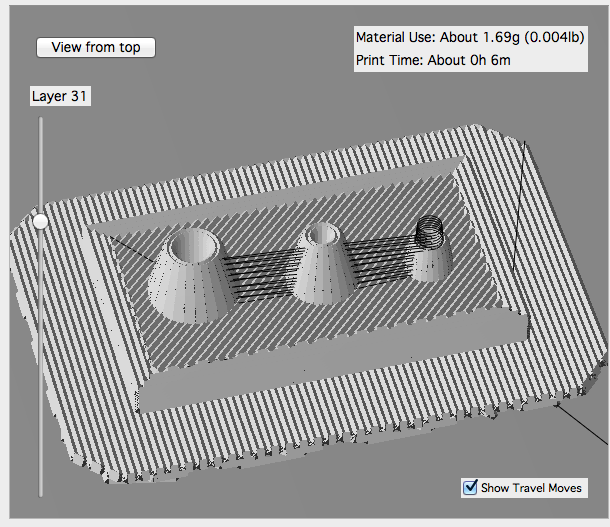
3d printed Male Connectors
This week I’ve added male connectors to my device. Originally, I had female-female tubing connections to the device, which were very prone to leaking around the insertion ports. Tejas suggested that I try printing out the male connectors to combat this problem. The tubing I’m using is ID=2 mm, OD= 5mm. It’s compliant enough to reach 75% of the way down the connector.
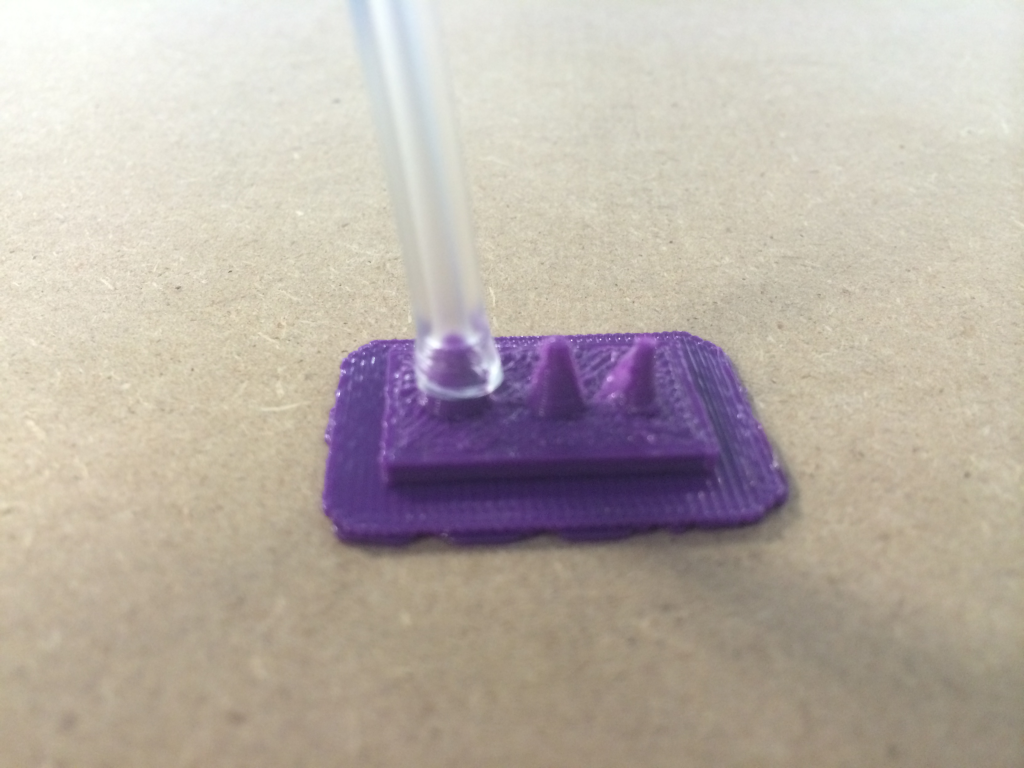
Given the general shape, I performed a narrower array of sizes to see if I could do any better.
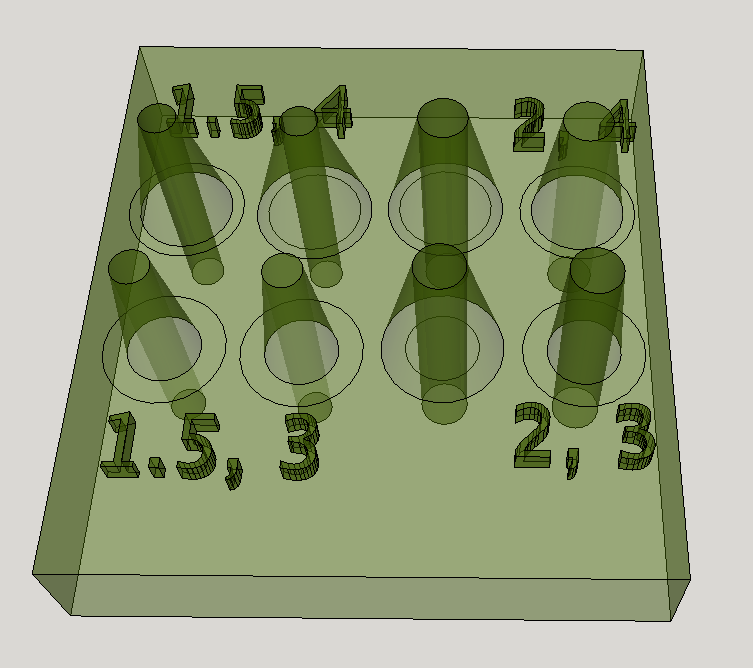
Having a found a solid fitting (OD = 5mm, ID= 2mm, 8mm long, conical) , I incorporated it further into my device.

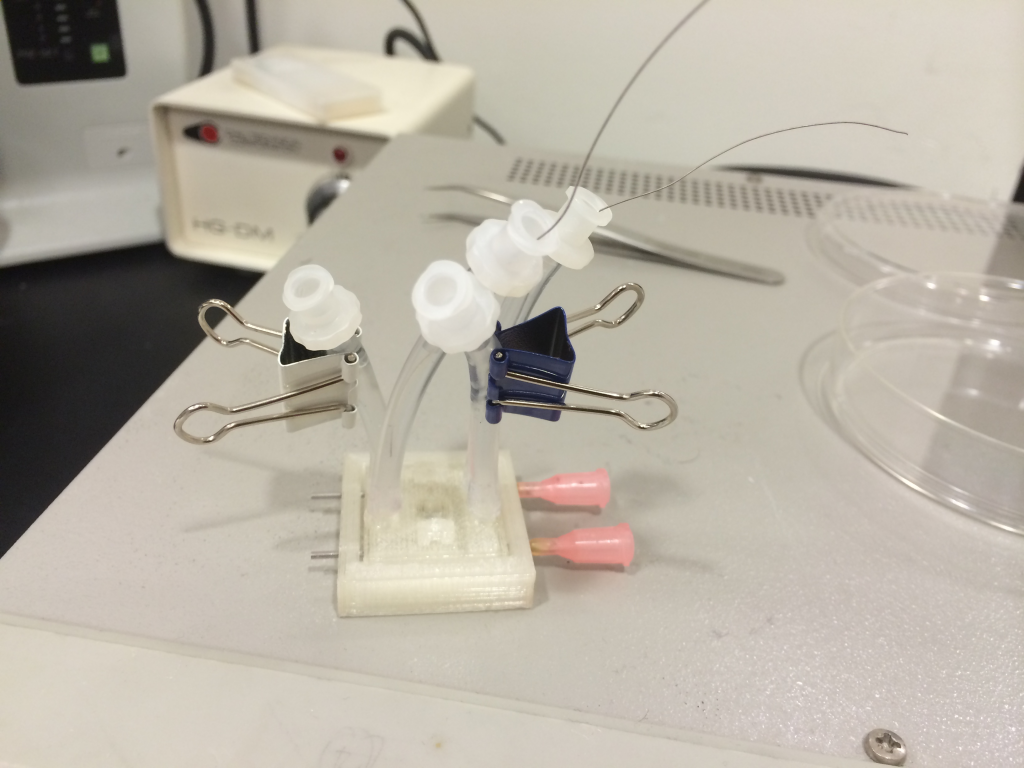
I attempted to make an EO pump with 10 mM KCl in both channels, but have not been successful so far. The connectors are sufficient to wet both channels by hand, though water creeping around the fitting does happen occasionally (~10%). Replacing the tubing will fix it about half of the time, suggesting a bad initial seal. The rest of the leaks must be caused by a non-obvious manufacturing flaw, where the fused filament is not appropriately fused. There might be ways to additionally seal the fitting surface that would improve this problem further (vacuum grease).