MgF2 Nanomembrane Fabrication on partially etched NPN substrates
This work is a continuation of my last post, Partial Etch RIE Blows out NPN Pores, where I take the process a step further and deposit MgF2 onto the newly opened substrates. I used the same etch recipe to blow out the pores (0, 10, 20, 30, 40s) and then evaporated MgF2 onto these new substrates using the original 250C MgF2 recipe I used for nanoporous materials.
Etching Settings
- 2.5 mTorr Oxygen (8.9 Setpoint)
- 47.5 mTorr CHF3 (26.9 Setpoint)
- 110/10 W Fwd/Ref
- ~100 mTorr Etching Pressure
- 5.5e-5 torr base pressure
- Samples face up on platen
- ~ 1 nm/sec etching rate
MgF2 Evaporation Recipe
- Platen Rotation ON
- 6KVOxide
- 99.99% pure MgF2 in crucible
- 0.1-0.3 nm/sec deposition rate
- 250 C deposition temperature
- 1-2 mA beam current
- Target = 50 nm, profilometer = 52.6 nm
I did not release the residual NPN as I normally do with these substrates for Raman applications; the following images still have the NPN template underneath the MgF2. The substrates that are etched for longer periods of time are thinner, and do not survive the evaporation process due to the film stress of the MgF2 deposition.
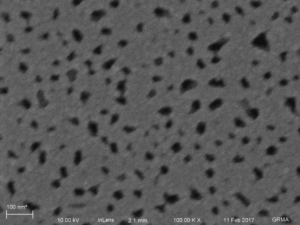
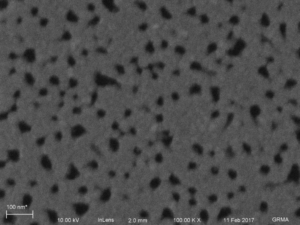
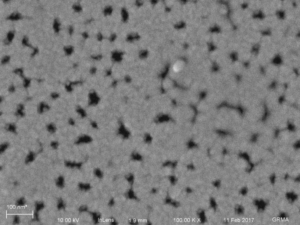
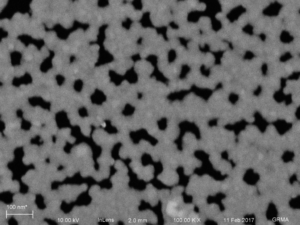
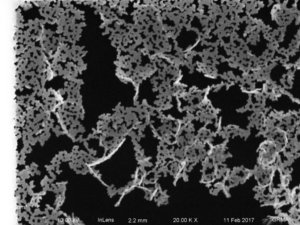
The surviving membranes were imaged before and after a 50 nm Au deposition using the denton sputterer.
Gold deposition setttings
- Denton Sputterer
- 100 mTorr base pressure
- Flooded with Argon 3x to purge chamber
- Samples placed face up
- no rotation
- 15 mA current
- 1 A/sec = deposition of 500s


Upon further inspection of the gold coated membranes, it seems that there are multiple levels of coating not particularly present on the gold-coated NPN templates. This might be Au particles sitting into anisotropic pores.


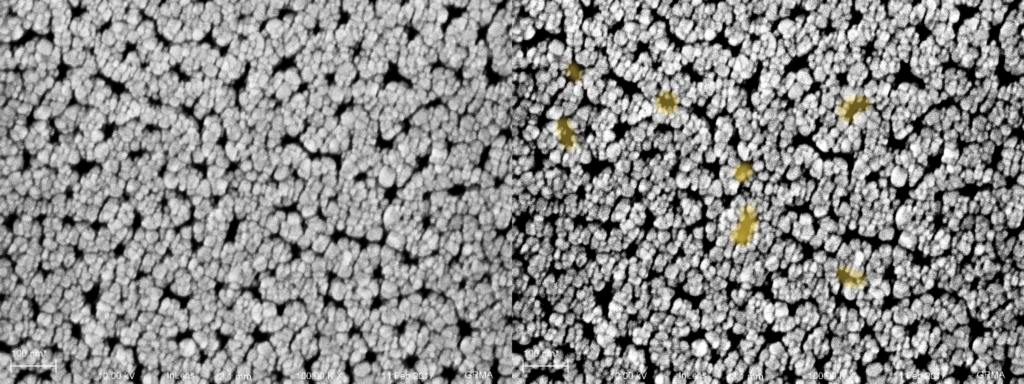
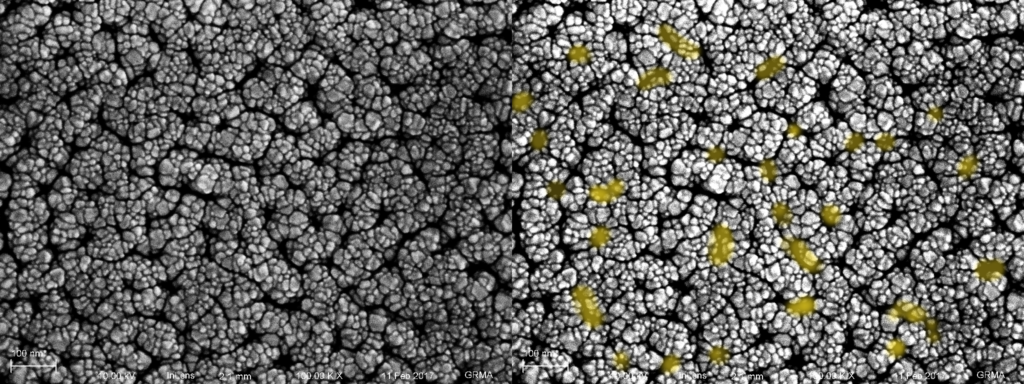
In the future it might be possible to get the 30 and 40 s etched membranes to work by modifying the deposition settings, or possibly working with thicker NPN (100 nm NPN etched for 50 sec would give me a 50 nm nanomembrane with severely blown out pores).