NSL membranes: pores and integration
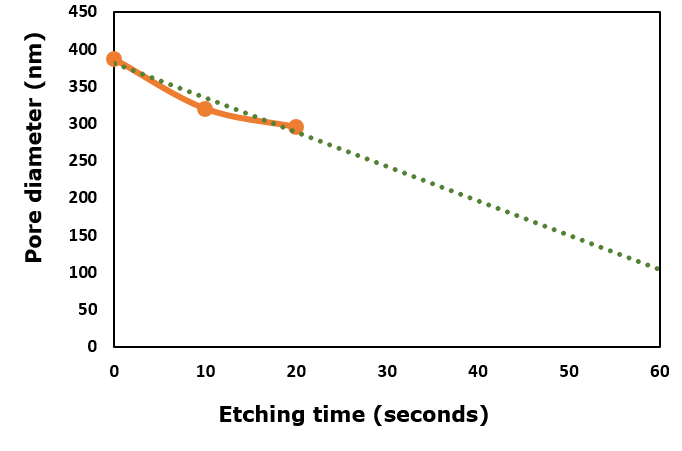
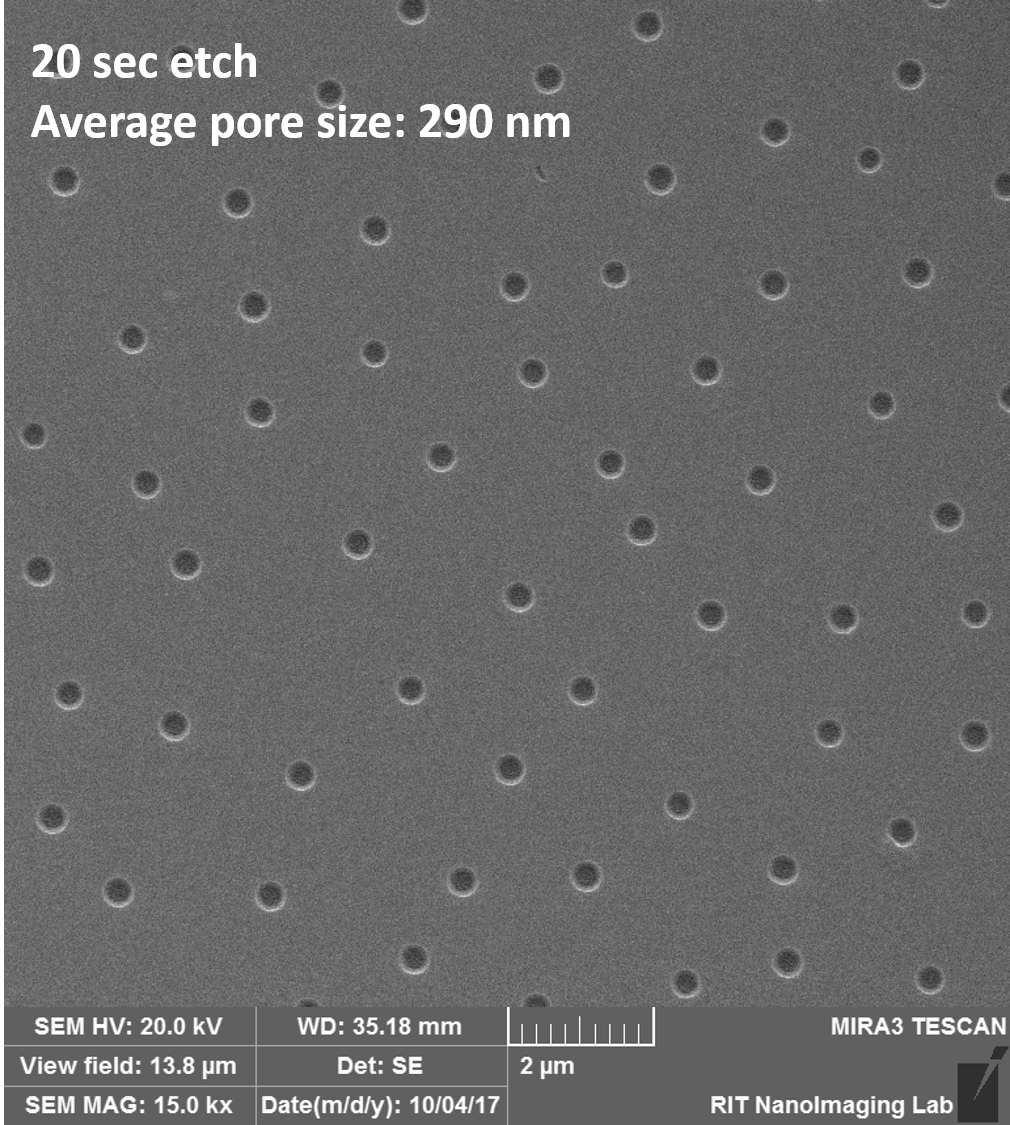
The plot below shows a calibration curve to calculate the etching time needed during the RIE step (used to reduce the size of the nanospheres) to obtain a desired pore size. The membranes were patterned from nanospheres with a nominal diameter of 300 nm., we know from SEM images that their actual size is 340 nm on average. The improved nanosphere distribution (less random) of the last sample was achieved as a result of the continuous nanosphere transfer optimization (use a fresh nanosphere solution every time).


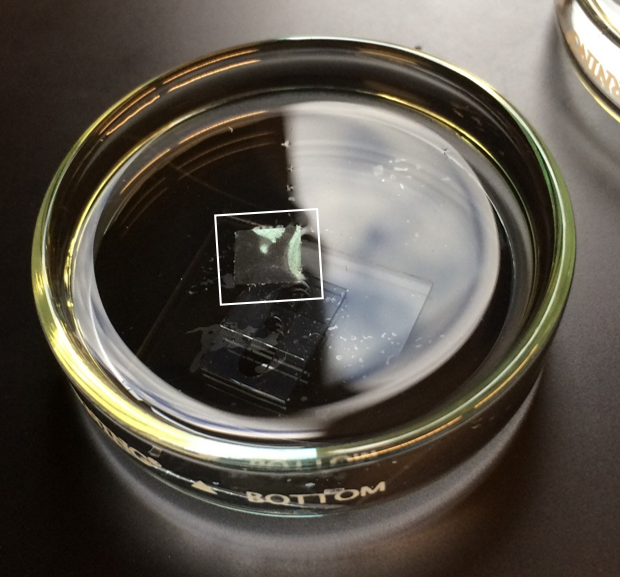
Henry mentioned the PDMS plasma bonding can be done in a wet environment, which would be a better approach for these membranes. The bottom chamber of the PDMS device was ozone treated and submerged into water. Next, the released membrane is floated onto the water surface. Finally, the submerged PDMS is brought into contact with the membrane while extracting it, see pictures below. Much improvement can be done over this method to reduce the degree of fine motor skills required from the user, particularly when floating the membrane. Previous attempts resulted in membrane tears all across the active area.
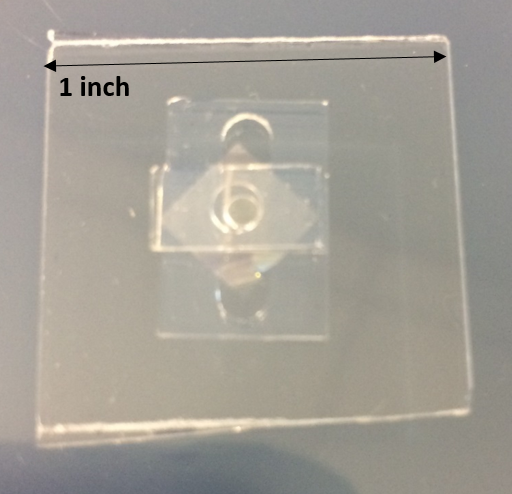
Here is a picture of the finished device. A couple of tears resulted from the bonding of the top chamber, probably due to the manually applied pressure.