Monolith X-sections
As the title states, these are images from the monolithically fabricated devices used by Kyle and Vincent in Ottawa. These devices were fractured with tweezers, then tilted and metallized with 5 nm of Pt, mounted on carbon tape.
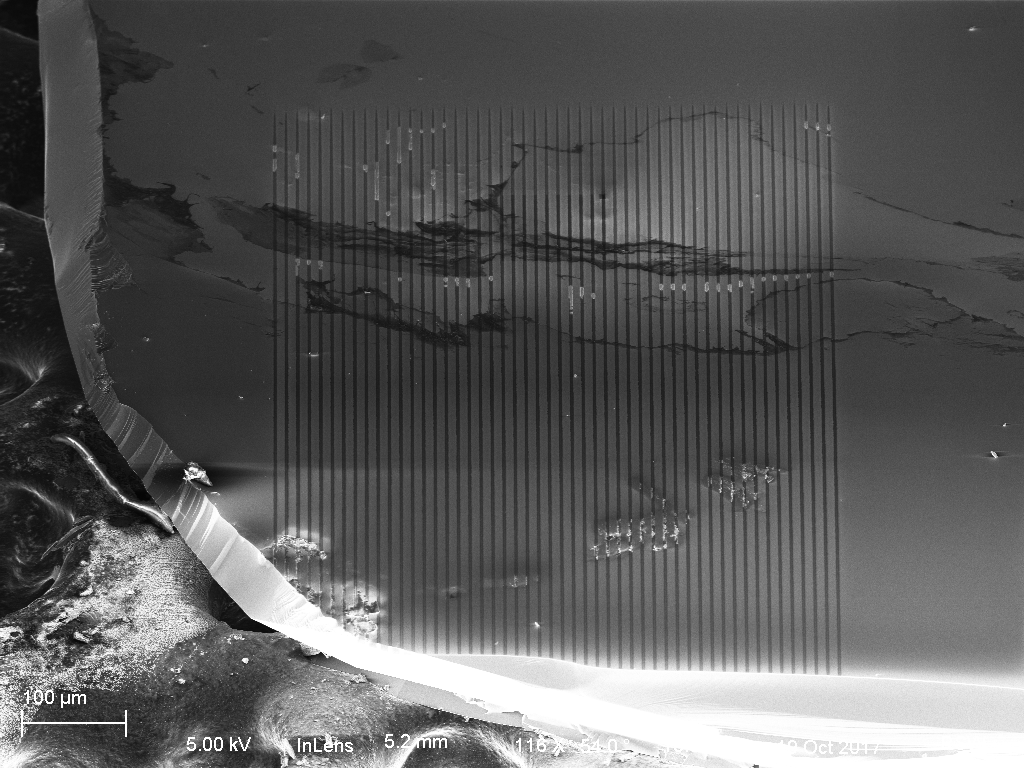
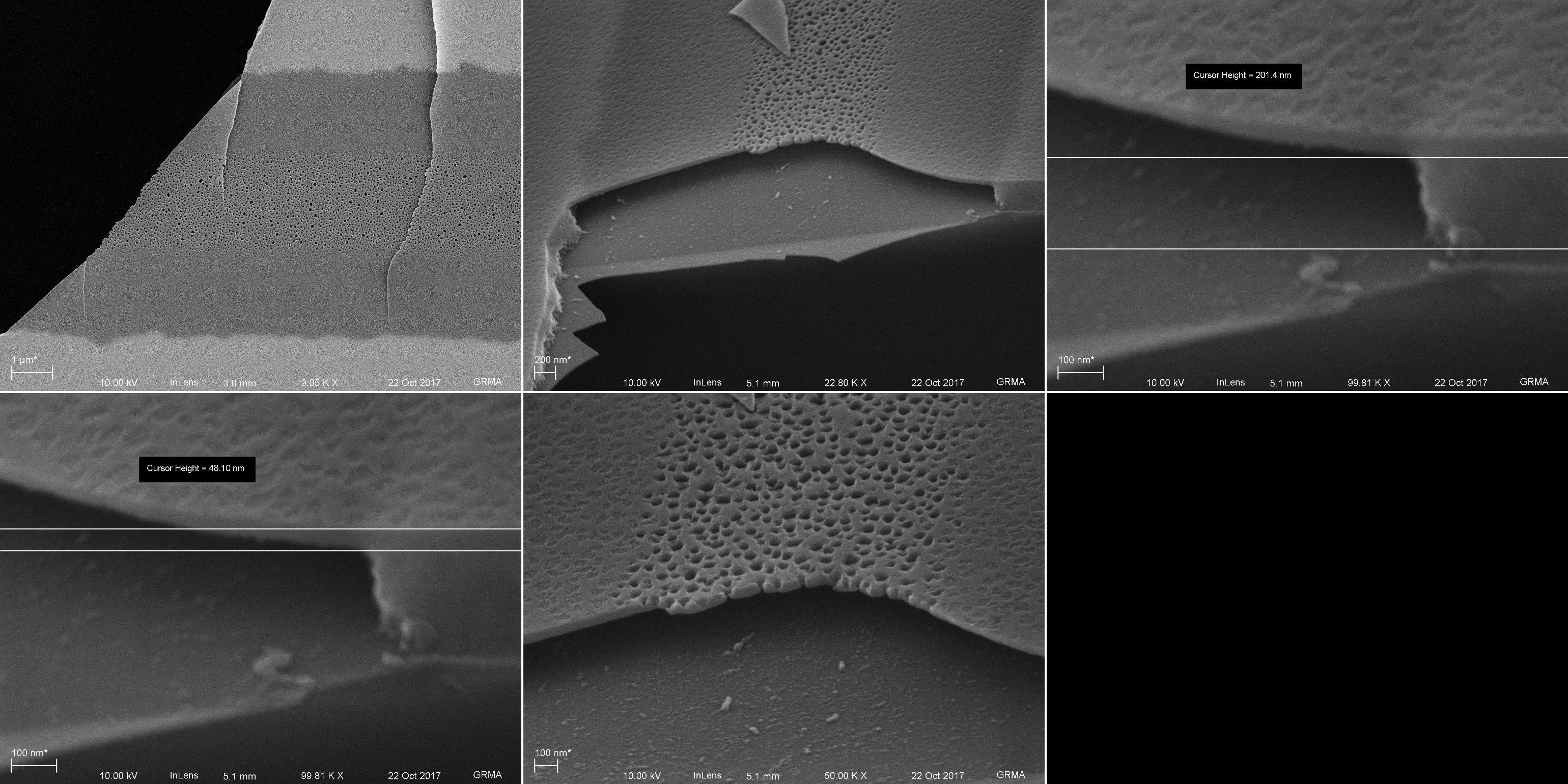

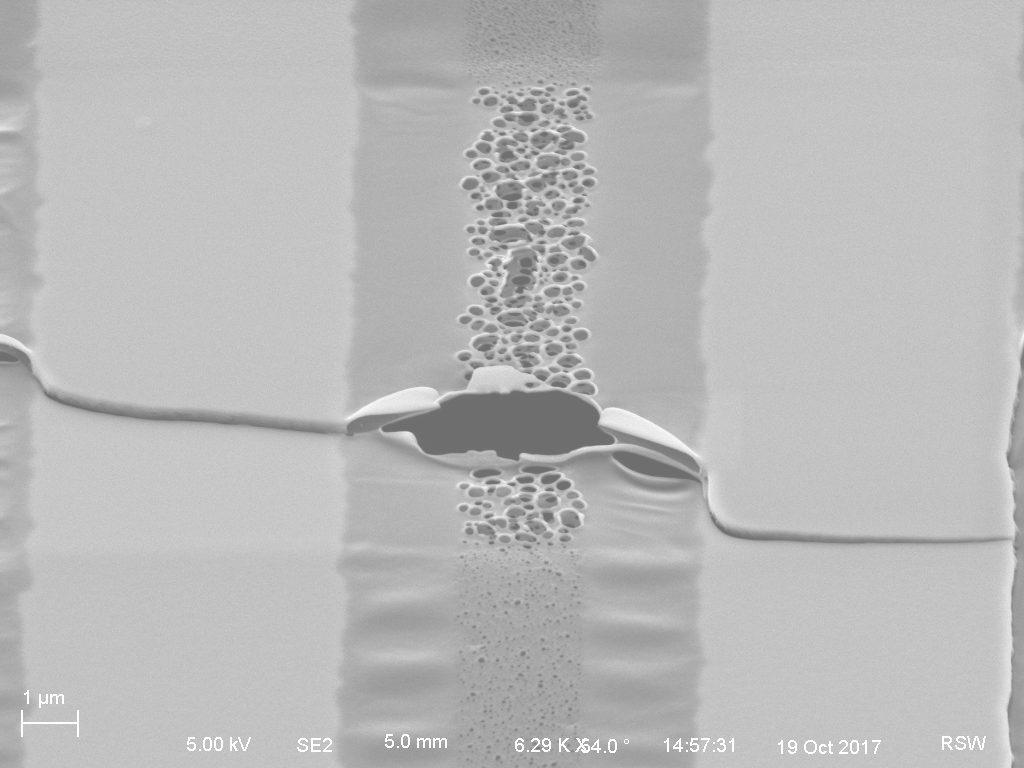
As the title states, these are images from the monolithically fabricated devices used by Kyle and Vincent in Ottawa. These devices were fractured with tweezers, then tilted and metallized with 5 nm of Pt, mounted on carbon tape.
Endotoxins (~10-1000kDa) are structural components of bacteria (LPS is the best known) that are released from bacteria when they die. Endotoxins cause inflammatory responses in humans and animals (infections give you a fever) and in cultured cells. For most cell culture applications, you don’t have to worry too much about endotoxins. For monolayer permeability experiments,…
The NPN tenting mechanism I’ve described in a few different posts has relied solely on mechanical technique. I poke the substrate with tweezers, or delaminate it with high electrical forces, or heat it up and let it contract while in contact with each other. It would scale very poorly if we tried to make this…
The only problem is the diffusion is very fast with defects in there.
I’ve been culturing RPE cells over here in Rochester for my MgF2 fabrication paper, in which the goal is to make a permeable Raman compatible cell substrate. My previous work had shown polarization of RPE cells (via-ZO-1 staining) on nanoporous MgF2 nanomembranes, but in the meantime, I have reworked my MgF2 substrates to be thicker…
With the previous 2 experiments, I made a couple of 6-slit pnc-Si transwells. These chips were from the cell culture wafers I had made a while ago. These samples (SC126) were RTP’ed before use. My improved technique, combined with the RTP, enabled me to keep cells growing on these pnc-Si samples for 1 week WITHOUT…
Given the mixed results of discoloration of RTPed samples from W613, which include no discoloration until 7 days (when the experiment was started within 2 hours of RTPing), and discoloration within 2 days (experiment started 8 days after RTP) I ran another discoloration test. This time I started the experiment within an hour of RTP,…
Comments are closed.
Thanks for getting these Greg. A few comments: The first montage, you point out the large under etch…this was a known condition that was expected. Its due to the XeF2 gas, which is very isotropic. As for the debris, this is also a known condition, also due to the XeF2, I believe this is due to contaminates in the poly-Si as deposited (at RIT) and because the selectivity of XeF2 is absurdly high, it does not etch at all. I do not think these ‘crumbs’ would interfere with pore formation since they are not continuous, and since the pores are actually enlarging, they probably are being dissolved in the KCl solution (and therefore not plugging the pore).