Progress on Wetting Monolith Chips
Kyle has made some progress using the monolith chips, however, the wetting of these chips is difficult and makes the monoliths unattractive to use. I have attempted to create a more replicable wetting protocol. We’ve heard over the summer that other groups have used an autoclave to inundate tiny nanostructures with water (like a nano-scale peg board), so I first investigated wetting protocols with the autoclave.
https://trace-bmps.org/monolith-x-sections/
Autoclave Pressure Cycle
- Recipe 5, 4 min sterilize, box closed
- Recipe 3, 20 min sterilize, box closed
- Recipe 3, 40 min sterilize box open
- Dessicate in 70 C oven for 1 hr
The general gist of these cycles is that the autoclave pressurizes and generates supersaturated steam (260-270F) for different lengths of time. By enclosing the chips in a tip-box, I thought getting different amounts of steam near the chips would improve the wetting characteristics. When the autoclave finishes the high pressure sterilization, it purges using N2 gas, which also dries out the chamber. Attempts to halt the autoclave mid cycle without a lot of purging were successful, but saturating the cavity failed. The monolith chips always came out dry, even when there was significant hot vapor in the box.
Wetting by Breathing
I then fell on the old standby of breathing on the structure, to see if the moisture from my breath could improve things. Below is an example of the monolith after being autoclaved for 40 minutes (interrupted cycle), kept in the box, then imaged within 5 minutes of exiting the autoclave.
This video was taken about 2 minutes after breathing on the chip over and over at the frequency observed here. If there was an effect from the autoclave, I would have expected the wetting to be immediate. We do see some of the droplets condense into the monolith channel, but there isn’t a lot of coverage.
Control, Native
As a control, I took another chip without the autoclave cycle and applied a similar breathing regimen.
This video is very interesting because of the change in frequency in breathing about half way through. This change seemed to create a different wetting behavior in the channel. We can observe a few nucleation sites of wetting and then the expansion of those sites down the length of the channel, with additional water vapor.
Notably, the areas of overlap on the edge of the wafer with the channel seem to hold the wetting better than in the free-standing region. I hypothesize that the temperature differences here are important. The structure of the cavity in the overlap regions is no different than in the free-standing region, but the bottom membrane is now attached to a large block of silicon which could serve as a large heatsink. By contrast, the cavity in the free-standing region only has a tiny amount of mass, most of which is water when wetted.
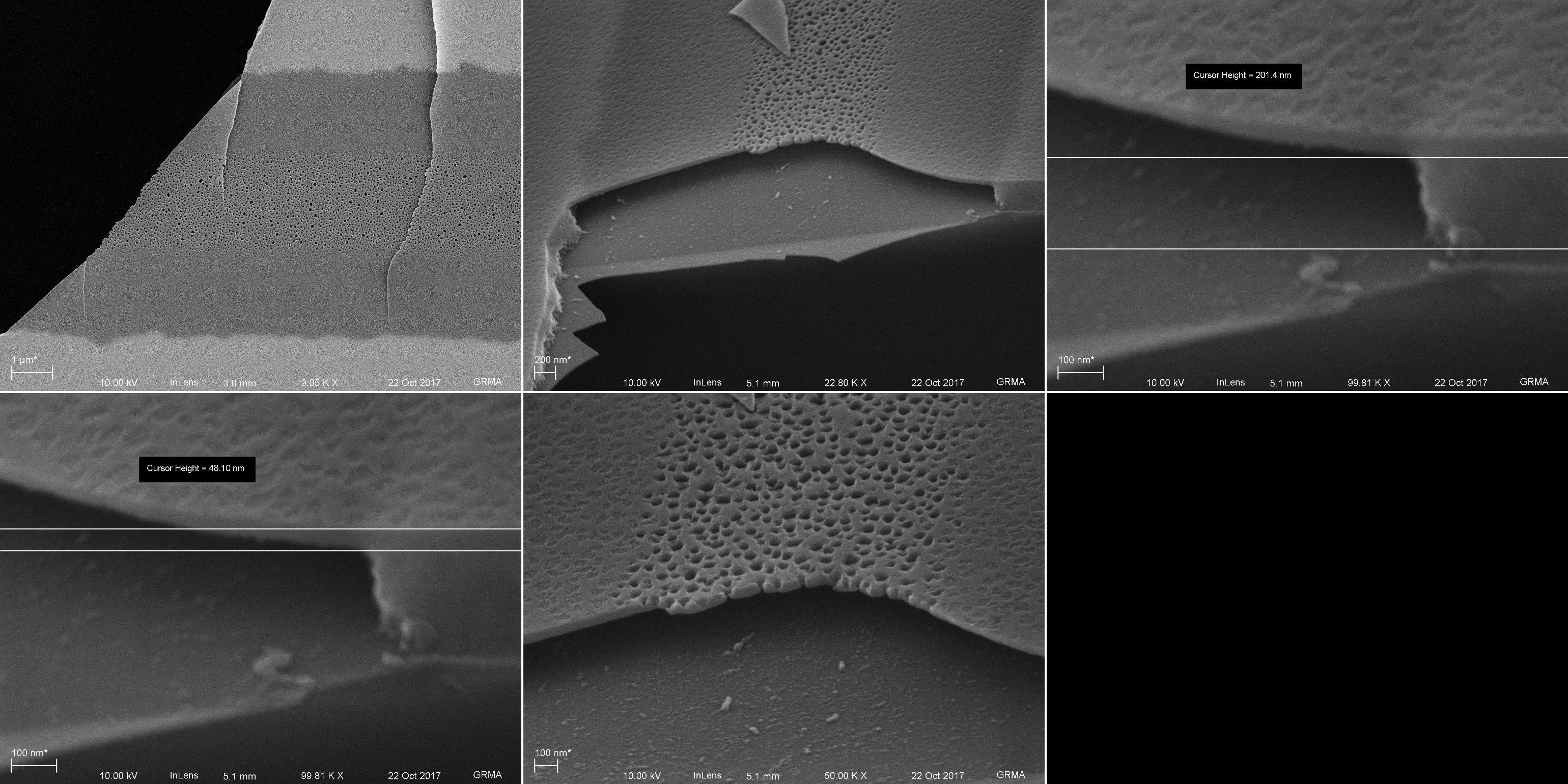
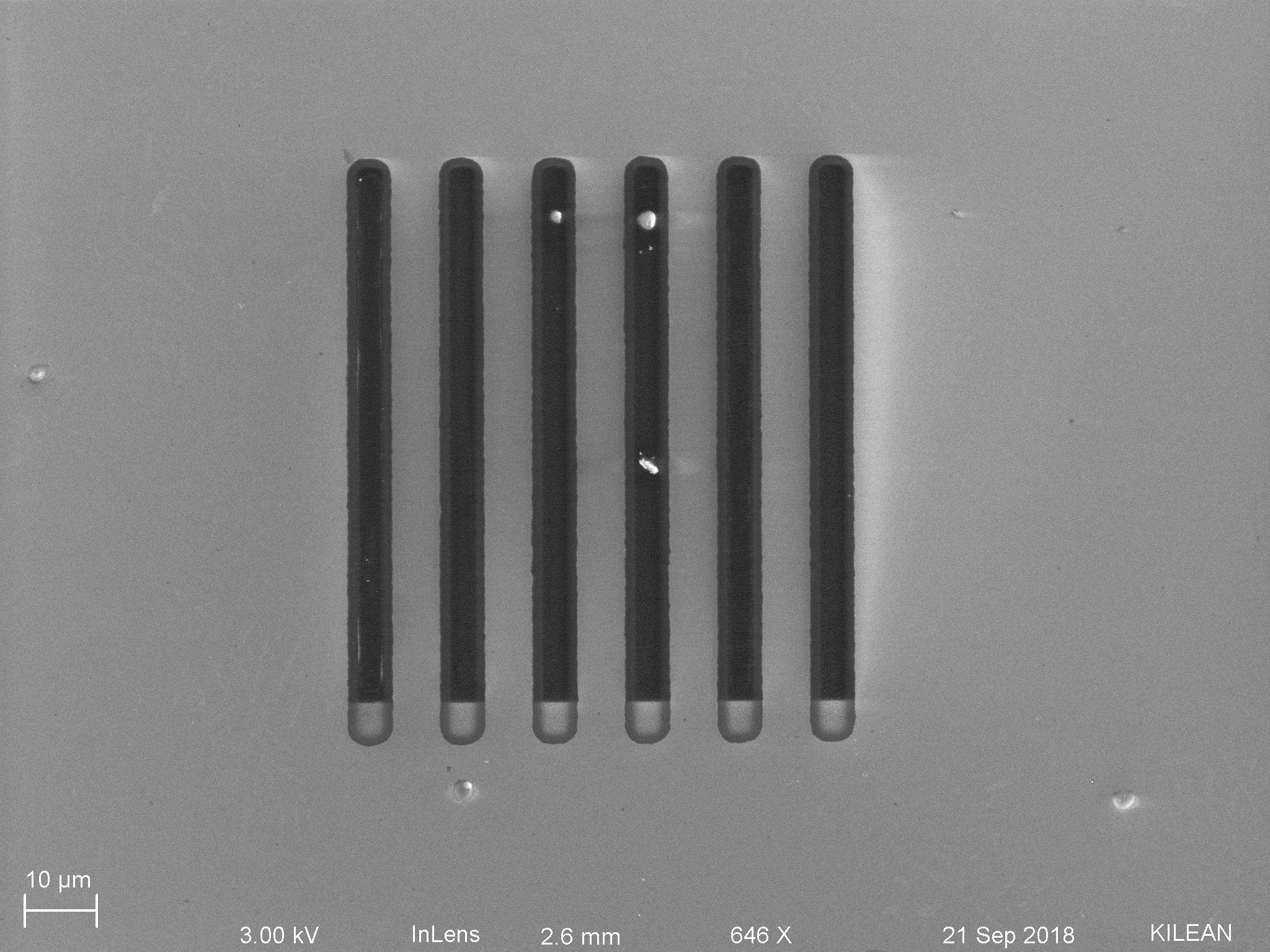
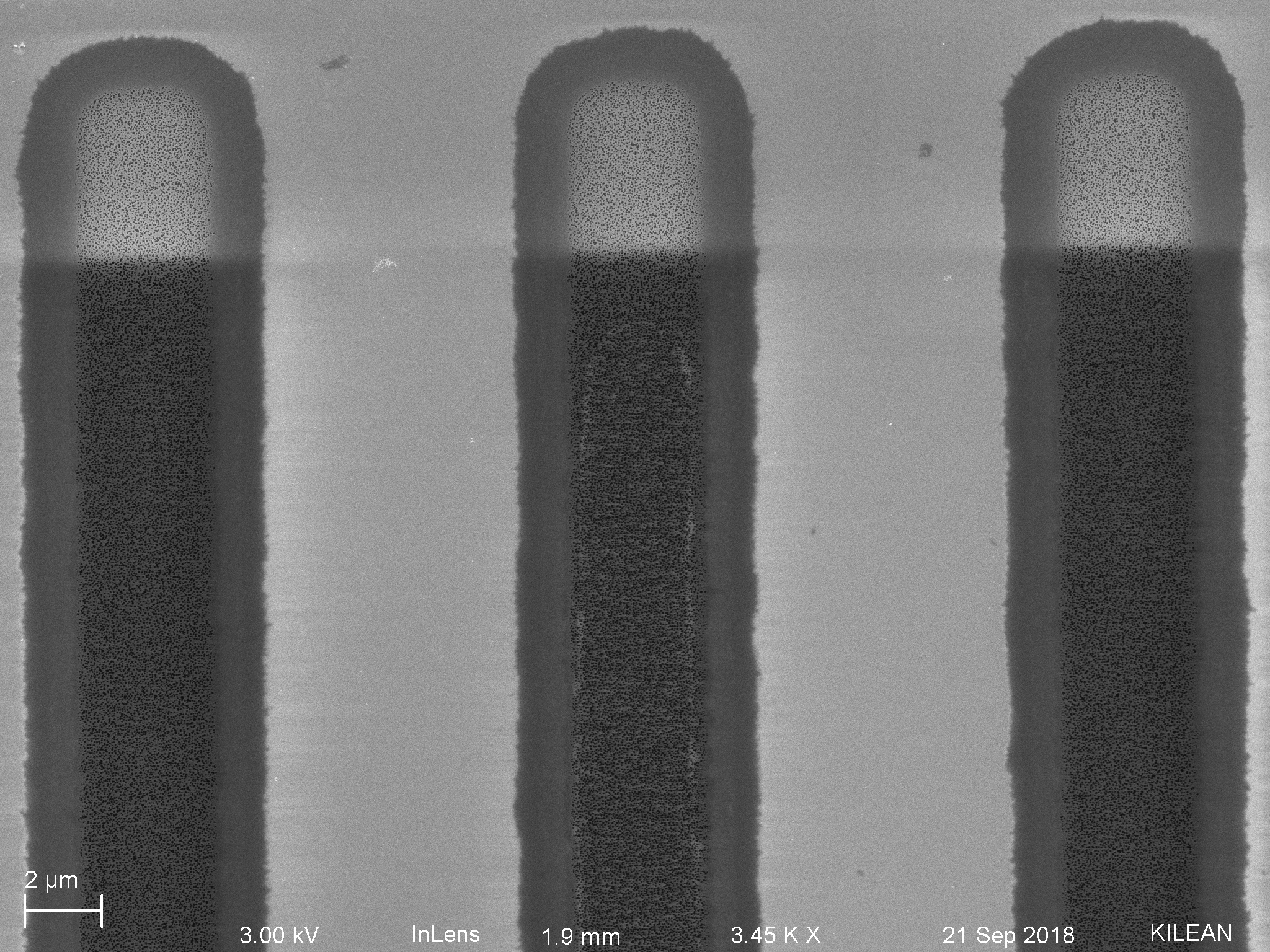
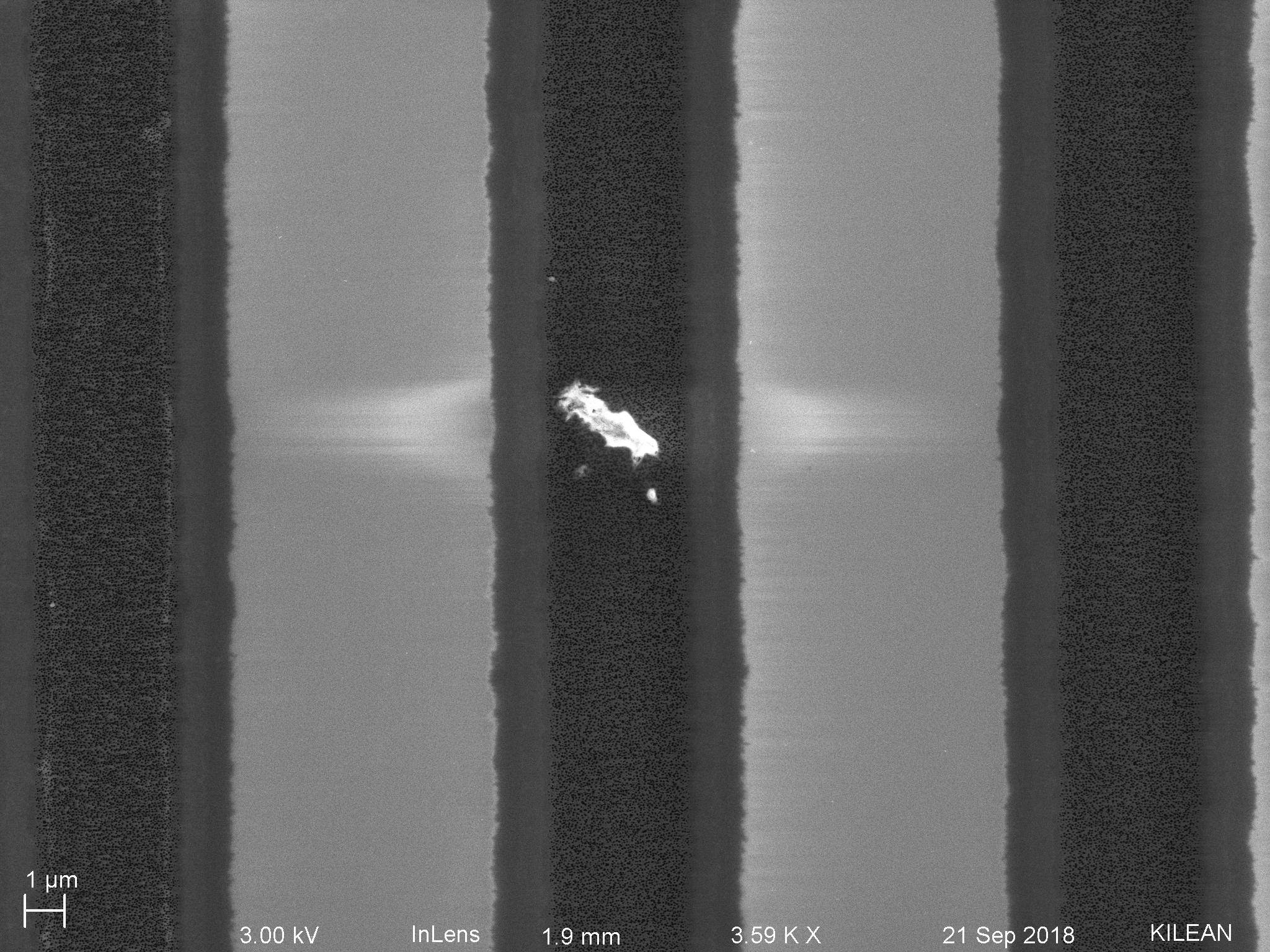
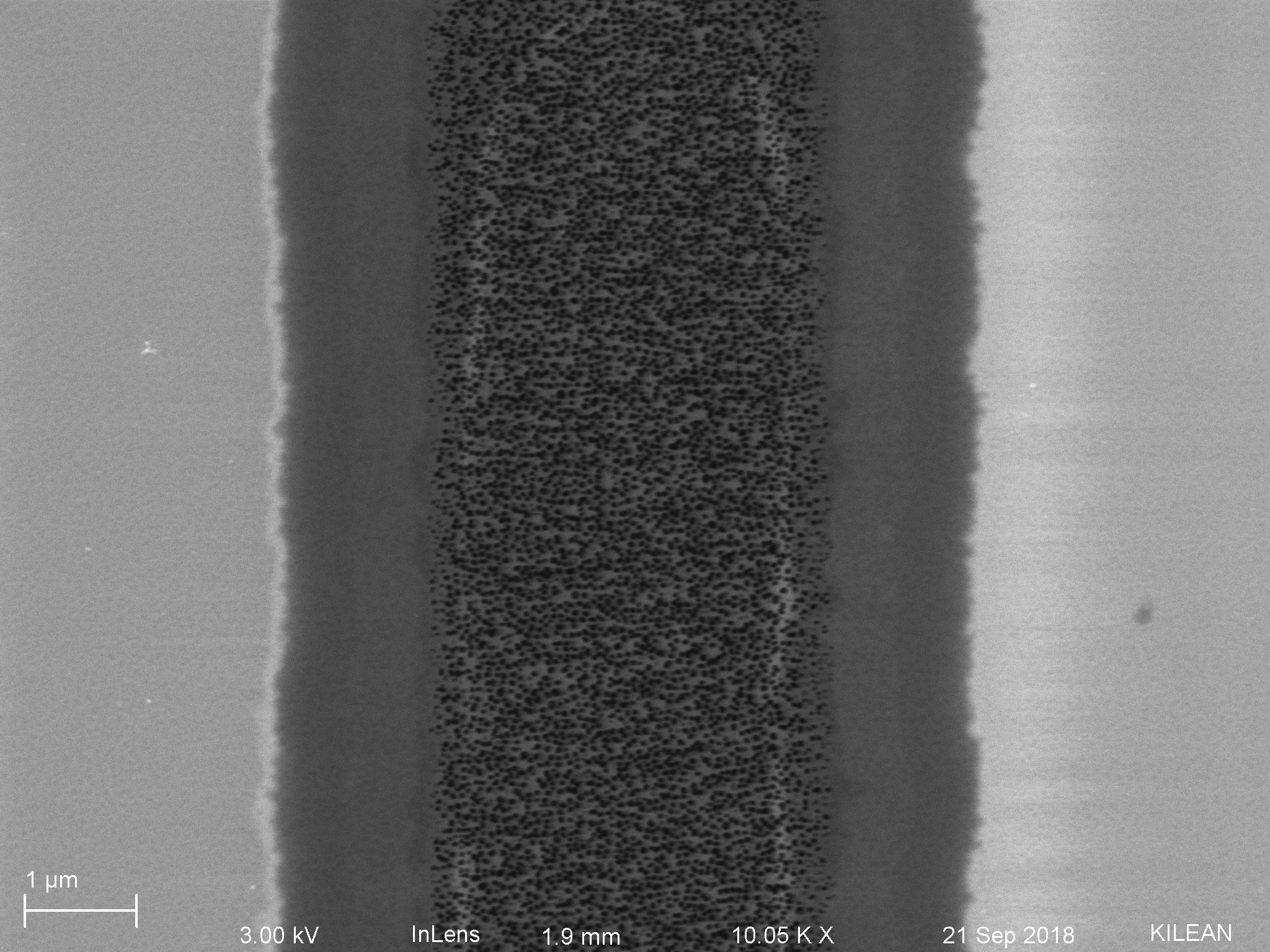
The fact that the wetting seemed to occur from nucleation sites was troubling, because this is the behavior we would expect if the monolith was ruptured. However, SEM images confirm that the top NPN membrane is not broken.
Future Work
I believe that we need better thermal control to wet these cavities repeatably. The transient behavior by breathing indicates that there is a balance between evaporative and condensation rates that seems to promote wetting, and we can address this balance by directly controlling this environment.
I ran an autoclave cycle (out of the box in a custom jig, 20 min cycle). The membranes were well wetted (electrically confirmed, not visually), but both broke in the autoclave and showed high conductance. So the autoclave works, but is a bit too aggressive if the chips are not somehow protected. Perhaps using the gel box with a few small perforations in the lid could be my next step, or does the ethanol vapor approach work reliably enough that we can skip autoclave testing entirely?
Something I’ve used in the past to contain chips in the autoclave is a box to store pipette tips.
I think you should be ok skipping the autoclave testing; the evidence for the ethanol is very promising, though I haven’t made any electrical measurements. Visually, it is clear to see the wetting behavior differ, with ethanol it is immediate upon introduction to the cavity.