Small Dye Diffusion Through SC256
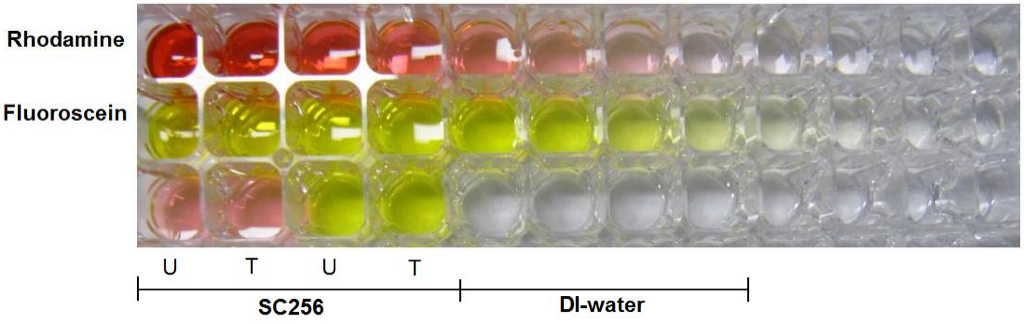
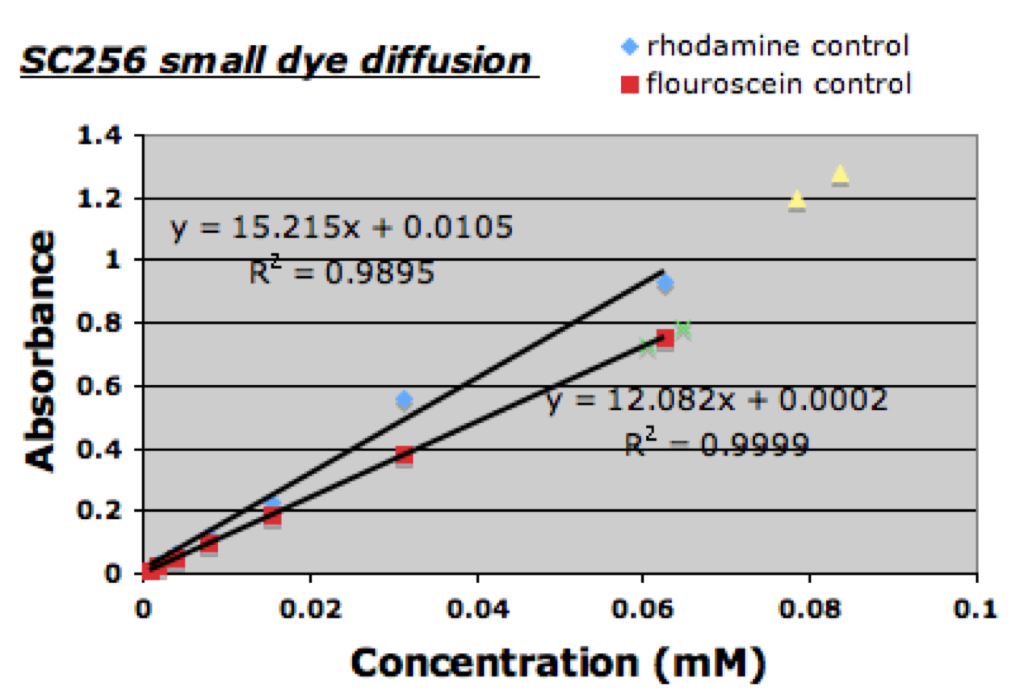
After our meeting with Professor Dumont on Tuesday it was decided that we needed to try and perform the BSA/DDM seperation with a more porous membrane (to allow for eventual pressurization). SC256 was choosen and as an initial step I ran a simple small dye diffusion experiment to verify that the pores were open. As shown below rhodamine and fluoroscein passed through both the “treated” and “untreated” SC256 samples.
Additionally it was decided that our experiments needed to be performed under buffered conditions rather than in DI-water as we have been doing. After talkng with Jim we decided to use 20mM HEPES at a pH of 7.5. Initially we are not going to have salts in solution but eventually encorporate them. I have made stock solution of 5mg/mL BSA and 2.0% DDM in 20mM HEPES at pH7.5. Yesterday I tried to run a diffusion matrix testing “treated” and “untreated” SC256 samples against the diffusion of BSA and DDM but I forgot to use vacuum grease on the treated samples and they leaked around the edges of the chip.
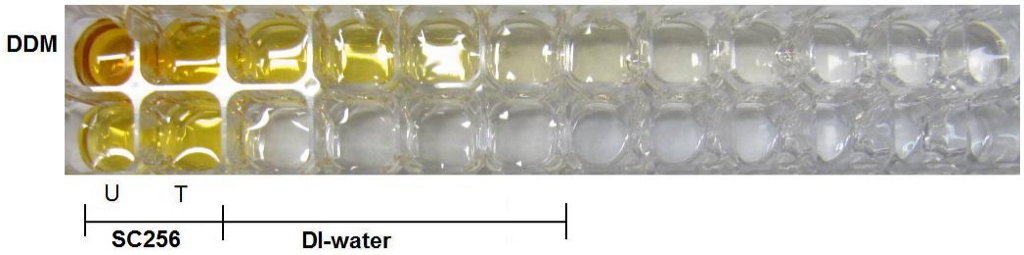
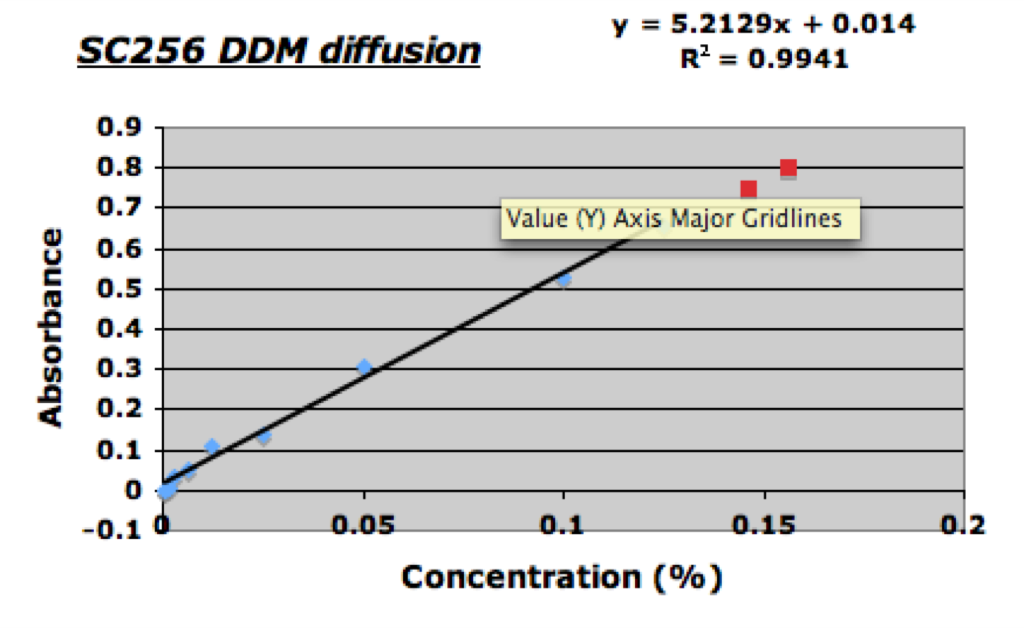
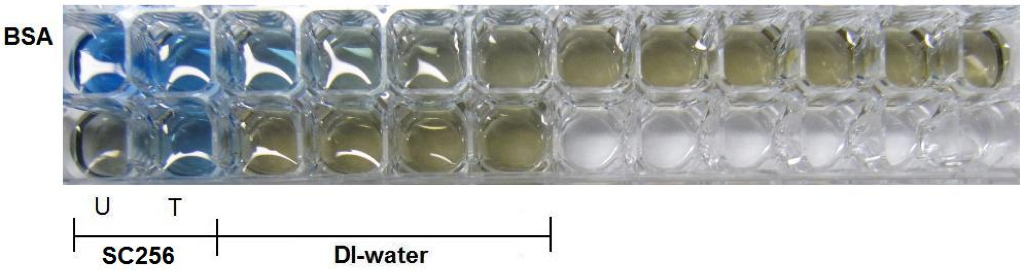
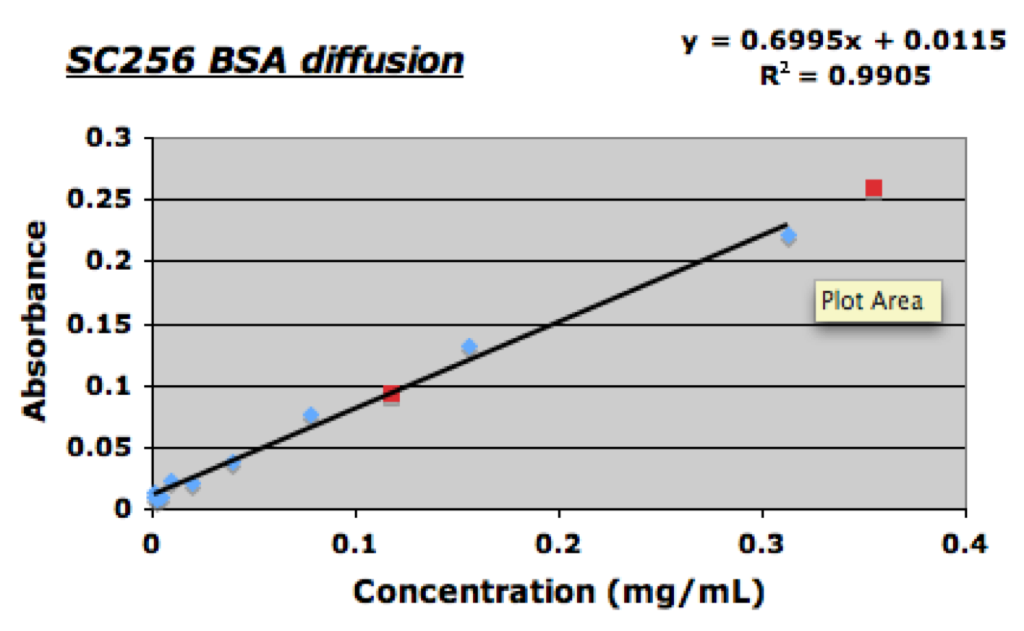
In both the “treated” and “untreated” SC256 cases DDM was allowed to diffuse across the membrane. In the “untreated” case BSA did diffusion across the membrane and the “treated” case was compromised due to leaking so it is not possible to say if BSA did diffuse across the membrane. I am setting up another diffusion matrix today so hopefully I will have some better results soon.