Multi channel, dual chip dialysis device
A two multi-channel chip device was fabricated with gaskets and PDMS caps. The Upper fluidic
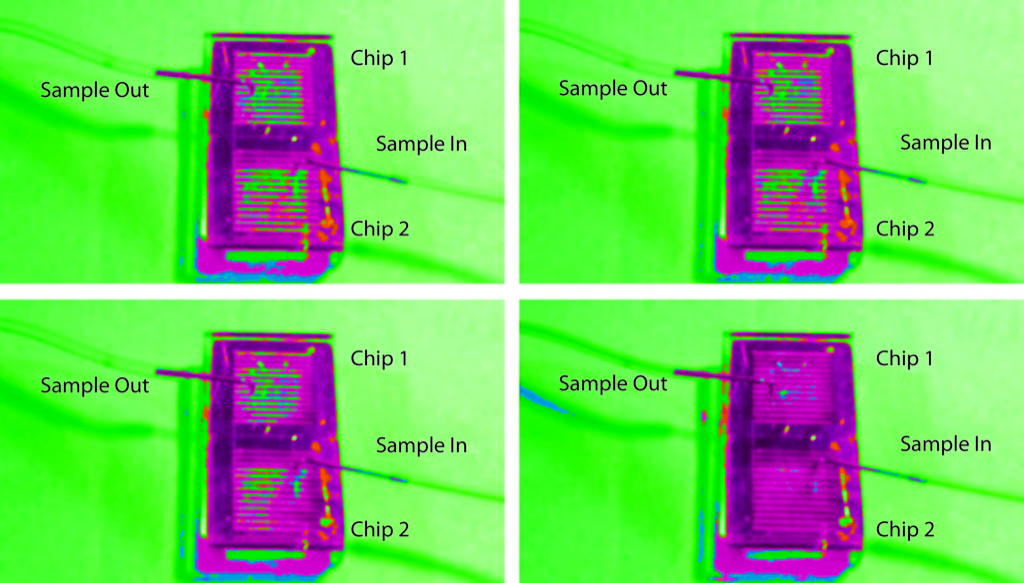
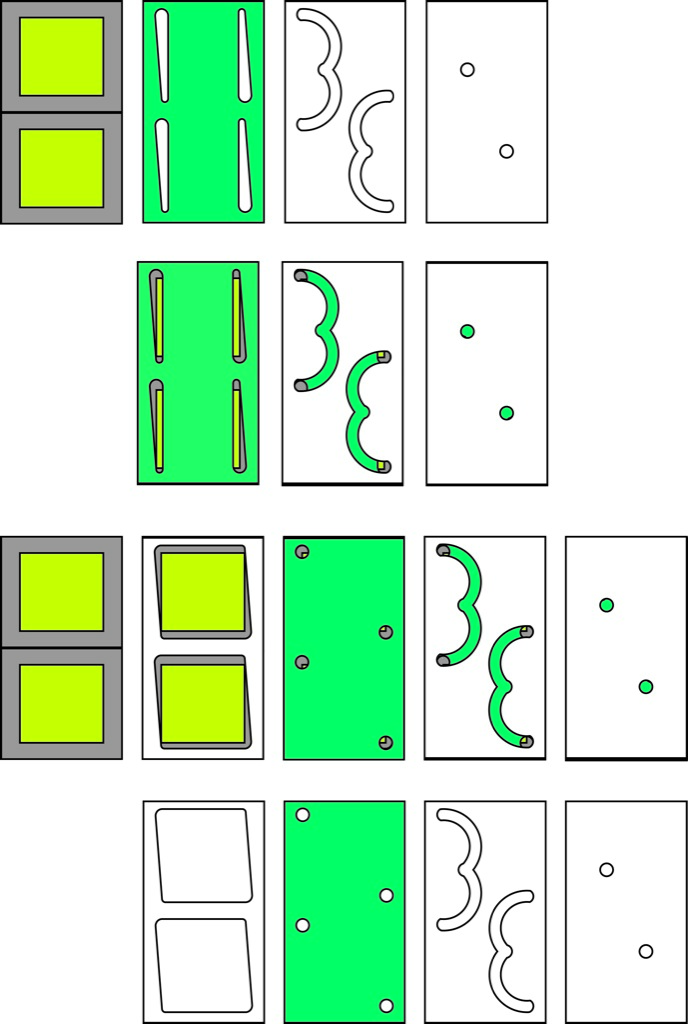
A two multi-channel chip device was fabricated with gaskets and PDMS caps. The Upper fluidic
For last many months, I am working on neutrophil migration experiments to develop protocols to inhibit them from traversing the basement membrane. My previous blogs are here and here. I want to prevent neutrophils from crossing the endothelial basement membrane (BM), and record the changes in TEER and try to correlate with the gain in…
Over the course of this past year and 3 months, I have been on a long and perilous quest to reproduce data that I obtained during my rotation in the McGrath Lab. Specifically, I was looking to capture exosomes in the pores of our membranes, as I showed in my post here (See the last figure…
To analyze the dimpled Sylgard substrates that we’ve been making, we’ve been conducting experiments to investigate how topographical differences in the surface of a substrate impacts HUVECs and ADSCs, in this case the dimples. We’ve already shown that cells will grow on these membranes in our “Dimpled Sylgard Membrane Device” post and that our substrates are wetting in our “Degassing Experiments”…
Introduction In the Glading Lab we study a rare disease called Cerebral Cavernous Malformations (CCMs). In this disease, brain capillaries develop greatly enlarged lumens and a disrupted blood-brain barrier. A genetic cause of the disease is the presence of a mutation in KRIT1 that causes loss of KRIT1 protein function in the cells. KRIT1 binds…
Paper: Oo2016 Supplementary Info:Oo2016SI Abstract: Design and fabrication of three-dimensionally structured, gold membranes containing hexagonally close-packed microcavities with nanopores in the base, are described. Our aim is to create a nanoporous structure with localized enhancement of the fluorescence or Raman scattering at, and in the nanopore when excited with light of approximately 600 nm, with a view…
A group published a paper in Lab on a Chip (2012) using track-etched membranes for electro-osmosis. There are a lot of eerily familiar terms and concepts in the paper. The title even sounds familiar: Low-voltage electroosmotic pumps fabricated from track-etched polymer membranes They created a device with metal mesh electrodes on the opposite sides of…