Tensile Mechanical Testing of Ultrathin membranes
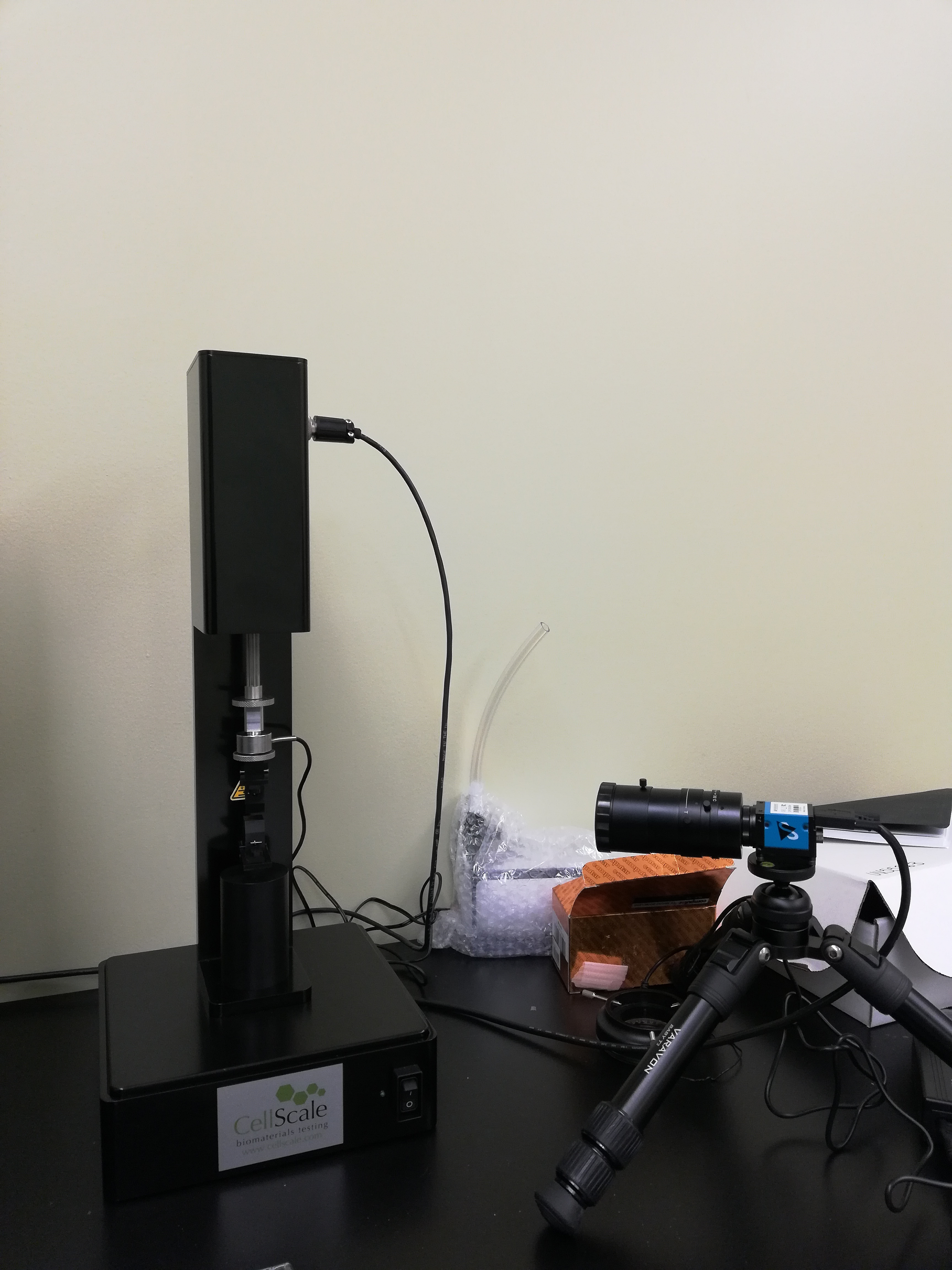
As part of Aim 1 of my PhD, I am looking into mechanical characterization of ultrathin membranes to explore the effects of porosity on the structural integrity and determine how porous we can go with a porous membrane, and last but not least, to quantify the mechanical robustness of Parylene membranes. Recently, the BME department at RIT has initiated forming a core facility lab and one of the tools they have purchased is UniVert from CellScale, capable of performing tension, compression, and bending testing at forces up to 200N with a wide range of grips and fixtures.
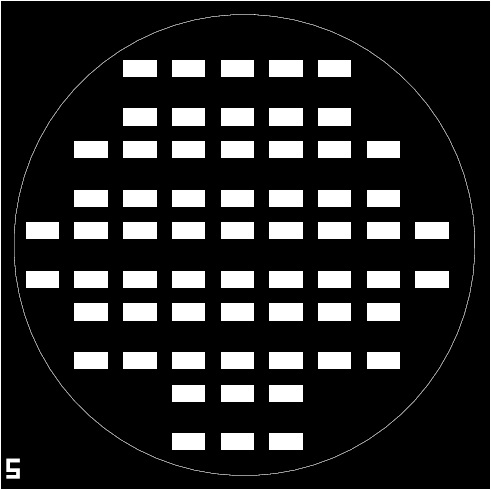
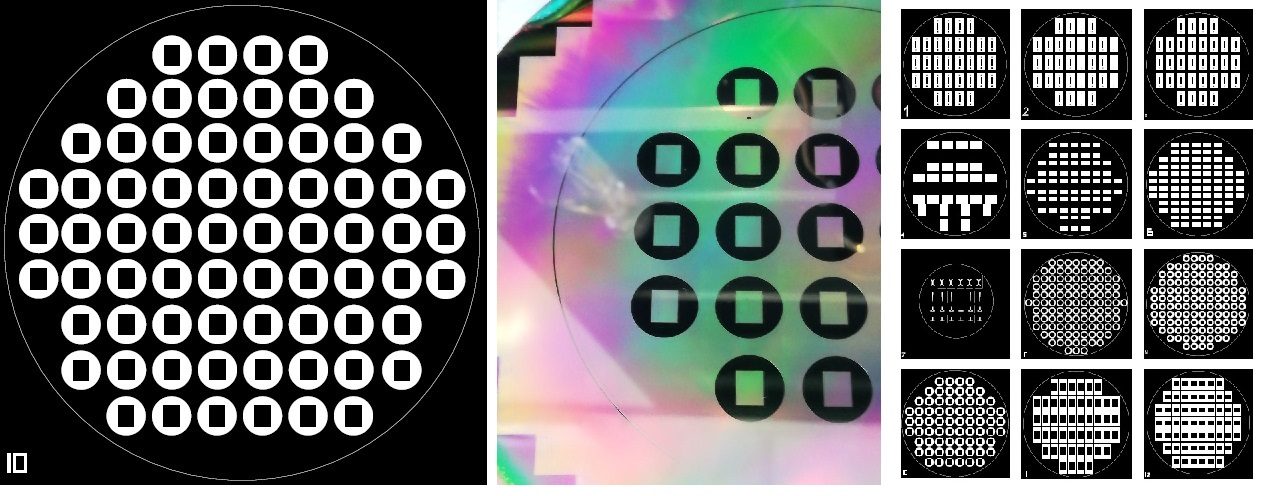
In order to accommodate for our ultrathin membrane, we needed a support to be able to handle the membrane and to ensure the device grips can efficiently hold the membranes without any damage. Inspired by the great success we had by embedding a SU-8 frame on top of Parylene membranes for the devices we send to our collaborators at Vanderbilt, I designed similar masks and made a 20″ x 26″ transparent mask design (outputcity.com) for ~8$ for a mask.
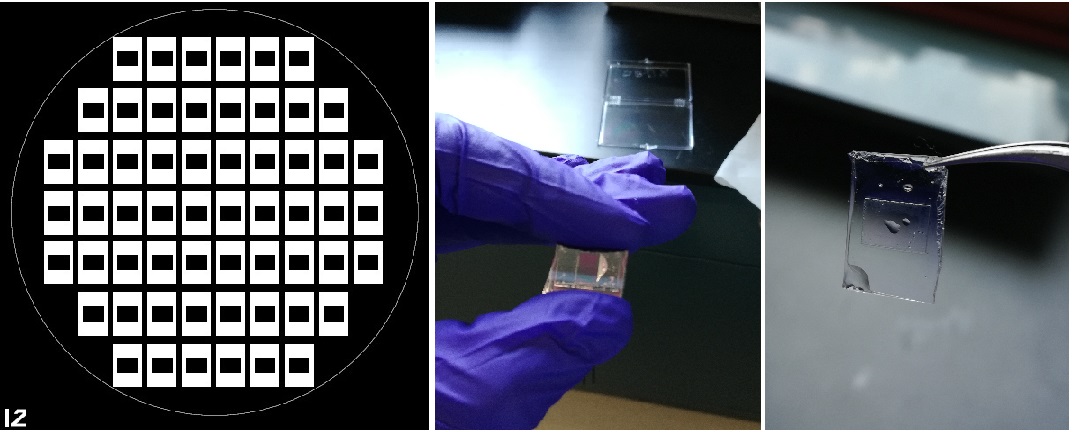
We started doing mock experiments with 80 um silicon sheets.
After exhaustive work on calibration and setup of the tool, we then conducted the tests on prepared Parylene membranes.
The main challenge with cutting the side-frames either before peel-off or after peel-off was introducing micro-cracks (not so much “micro”) on the sides, which led to all of the samples to break from crack propagation. A simple and so-far successful to overcome this issue is precise-cleaving of parylene wafers with the following designs. Hopefully, this would lead to a quick outcome.