The future of the Goergen Hall Basement
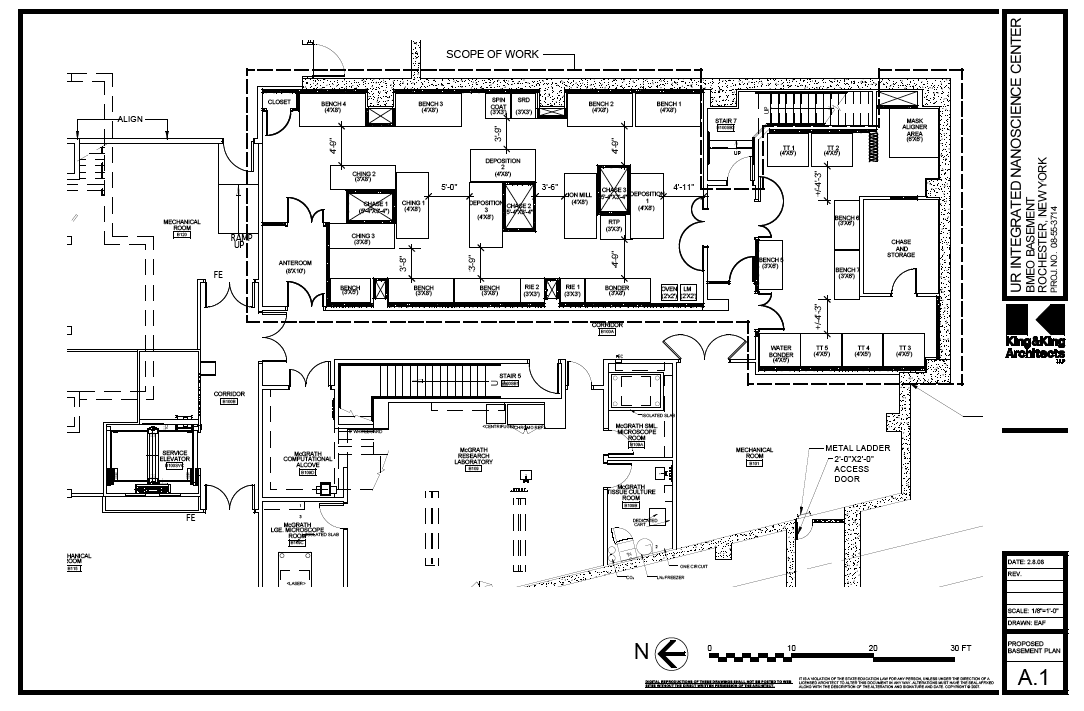
Coming to a basement near you by the end of 2008 (assuming no delays that is). Pretty exciting in my opinion.
Coming to a basement near you by the end of 2008 (assuming no delays that is). Pretty exciting in my opinion.
http://www.azonano.com/news.aspx?newsID=26865
Building on my recent posts I ran an experiment with SC267 testing the ability of BSA and DDM to diffuse through UV-Ozone treated (20min at 150C) and untreated samples. I used four samples testing both BSA and DDM in the treated and untreated cases using Jess’ diffusion cell. Again 6uL was placed on the membranes…
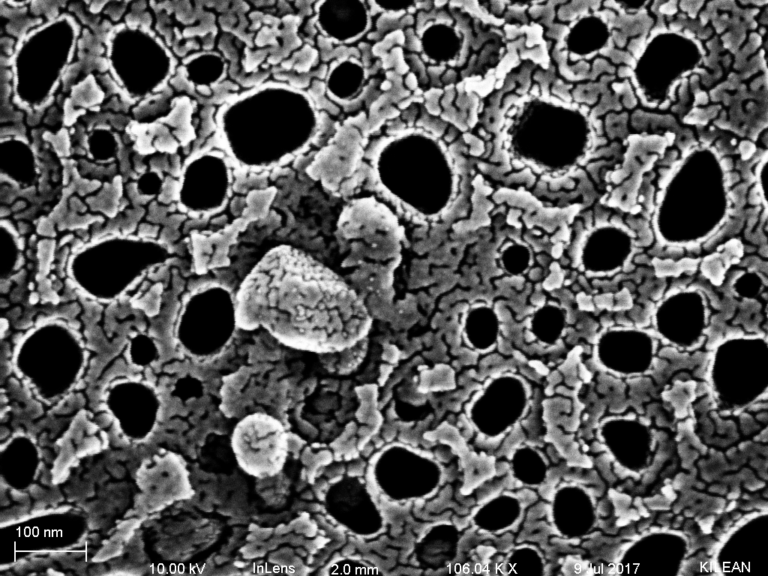
So, this is the data that we have all been waiting for. Without all the fancy introductions and stuff, I present you with labeled exosomes. They were isolated in tangential flow from my human plasma samples using the SOP that I have been following along with a labeling protocol that Henry and I developed. It…
This is just a little update on the results of the pnc-Si, cellulose, and pes separations. When I added up the retentate and filtrate, it didn’t always equal the intensity of the starting sample (keeping in mind that I was unable to collect filtrate from PES and should re-try that separation). I took the percent…
As a continuation of the substrate bias series, I deposited a 15 nm film with 05 W substrate bias and annealed at 1000 C. TEM shows that this condition generates a 13.4% porosity and a max pore size of ~40 nm! Here is a comparison of all the bias conditions tested thus far: I believe…
This post explains that electroosmosis in our material is higher than we expected. Jim suggested that maybe we don’t have fully developed flow in our thin material. Here I attempt to find the entrance length, or distance until fully developed flow, in our material. One needs to keep in mind that this is a continuum…