Silanization and BSA coating
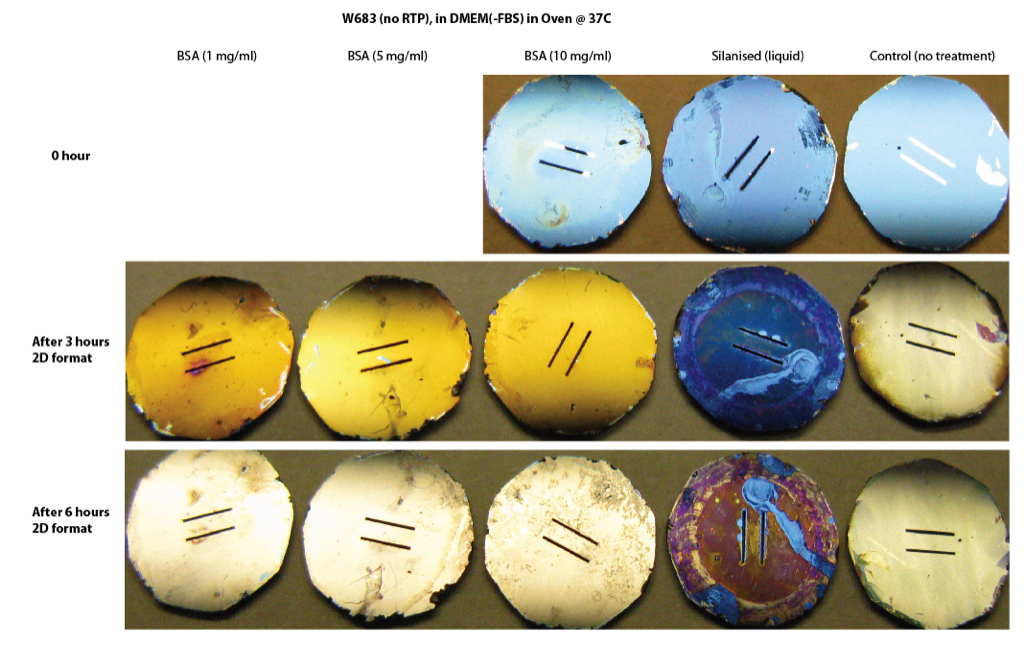
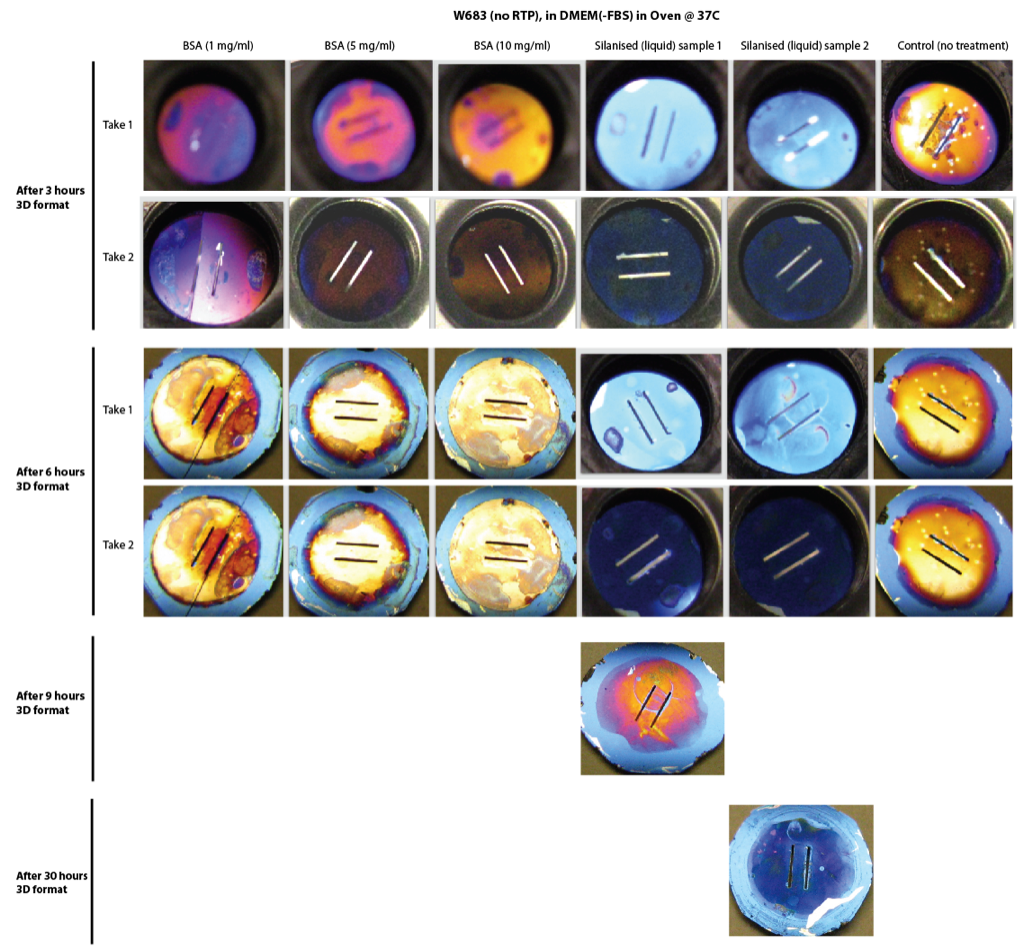
Surface treatments like silanization were seen to slow down discoloration in the past. I carried out liquid amino-silanization (protocol in place) of samples from W683 (no RTP) and used them in both 2D and 3D format to monitor discoloration in DMEM(-FBS) @ 37C in Oven. Also BSA coated samples were used side by side for comparison. This time I used vacuum grease to lift the samples above the floor when dipped in BSA solution assuming that there will be complete coating on both sides.
Following figures show that silanization prevents discoloration to some extent. The silanization protocol involves baking the samples for ~30 minutes @75C towards the end. (Is this similar as in case of RTP and autoclave conditions which have shown to slow down the discoloration).
Further, BSA coated samples did slow down the process too but not as much as silanization. (But I think, unlike in 2D, in 3D the discoloration of coated samples is more than non-coated sample. We have seen this before too.)
One of the silanized samples in Sepcon was not discolored even after ~30 hours, whereas in 2D format they started discoloring at around 6 hours!