Further studies into porous Si membrane formed by Ag NP etch
This is a continuation of the initial experiments testing the possibility of creating porous Si membranes with thicknesses ranging from 50 to several hundred nm, and mean pore diameters from ~50-200 nm.
As suggested, we’ve started using 200 µm thick wafers and we’ve patterned with the Cell Culture mask as well as the Deflection Mask. We’ve also annealed these wafers in the RTP with a 50C/s ramp and a 3 min soak at 1050C.
We’ve experimented in removing the Ag NPs with both a 1:1 30% Ammonium Hydroxide:30% Hydrogen Peroxide as well as a 1:1 70% Nitric Acid:Water. Both chemistries seem to do a good job of dissolving the Ag, but the Ammonium Hydroxide:Hydrogen Peroxide starts to violently boil after several minutes.
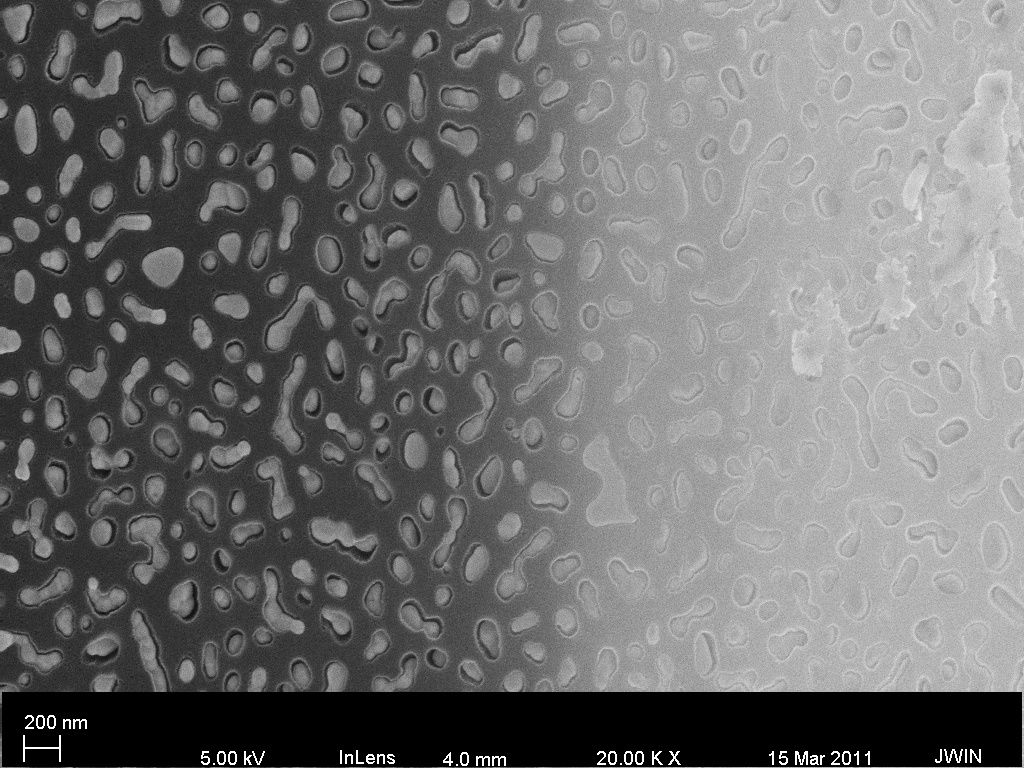
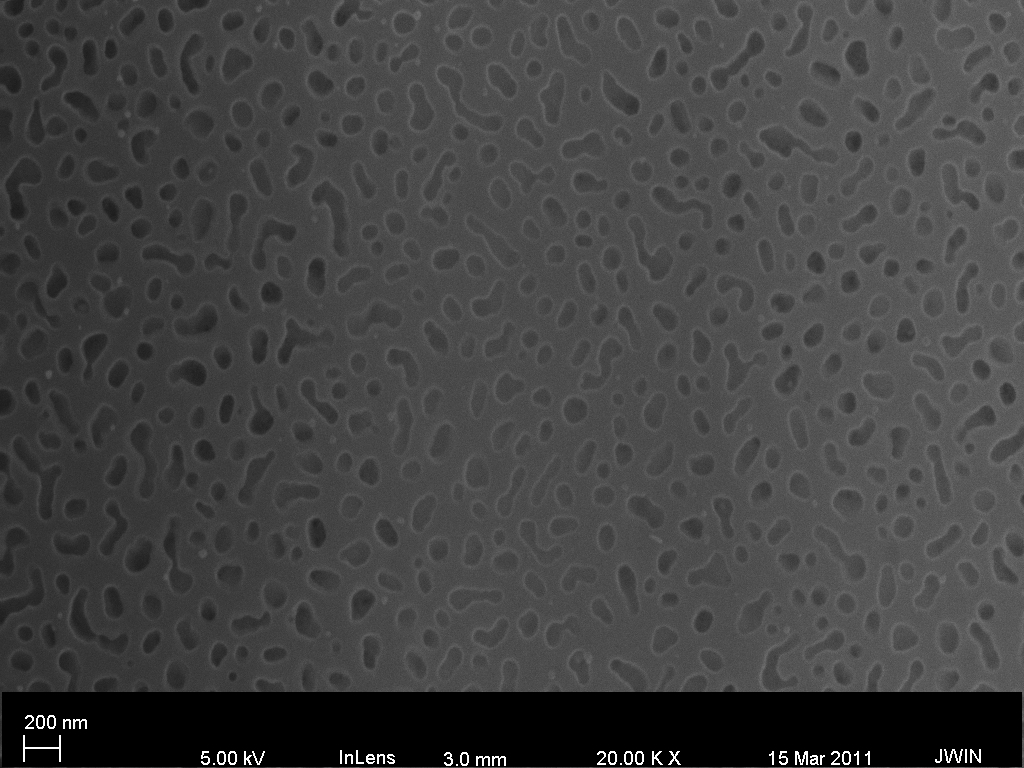
Here’s a before an after image of Ag NPs etched into the Si surface and then dissolved away:
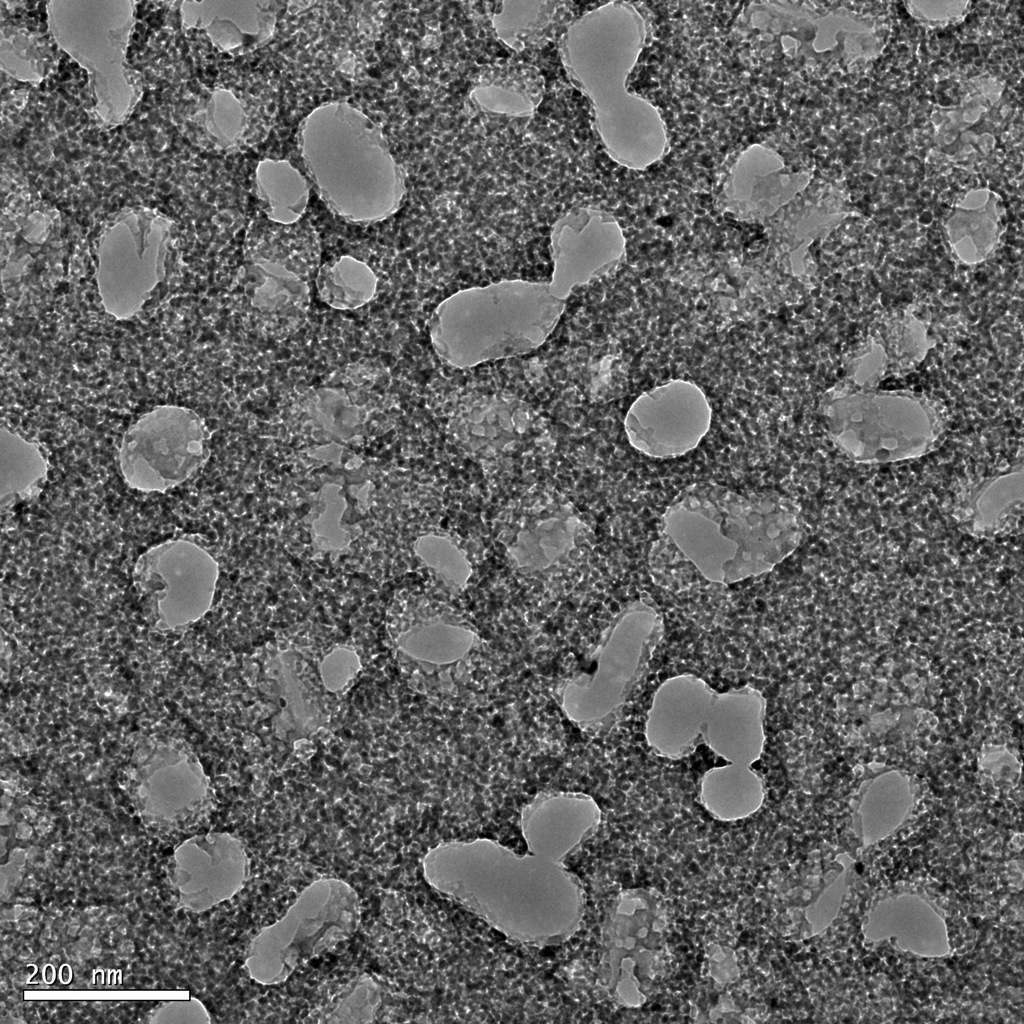
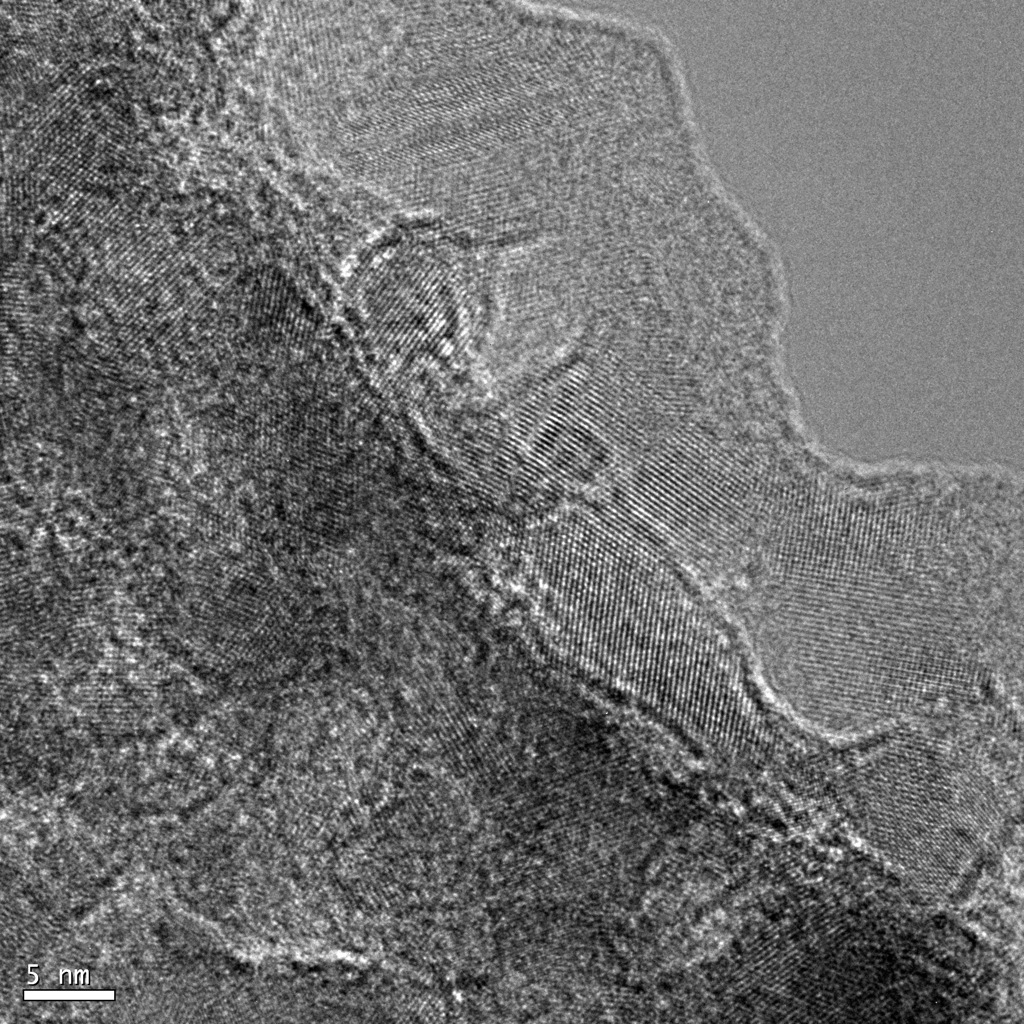
Here’s a TEM image showing the nanocrystals as well as the pores:
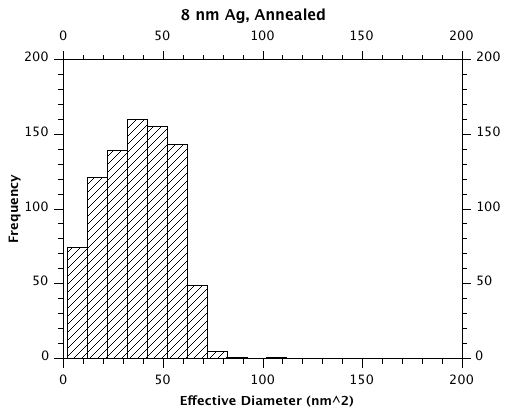
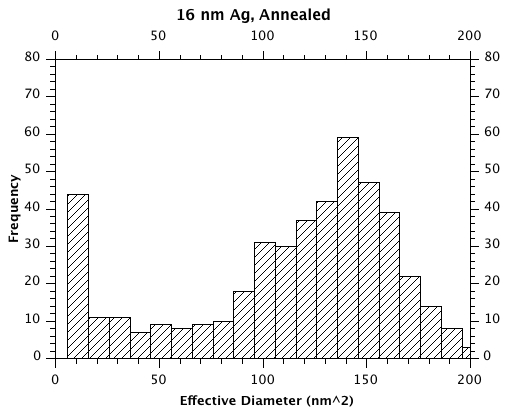
We have also looked into depositing Ag at an effective thickness of 8 nm (half of the original 16 nm) After annealing under the same conditions of 300 C in Ar for 1 hr, we get smaller particles, and thus smaller pores:
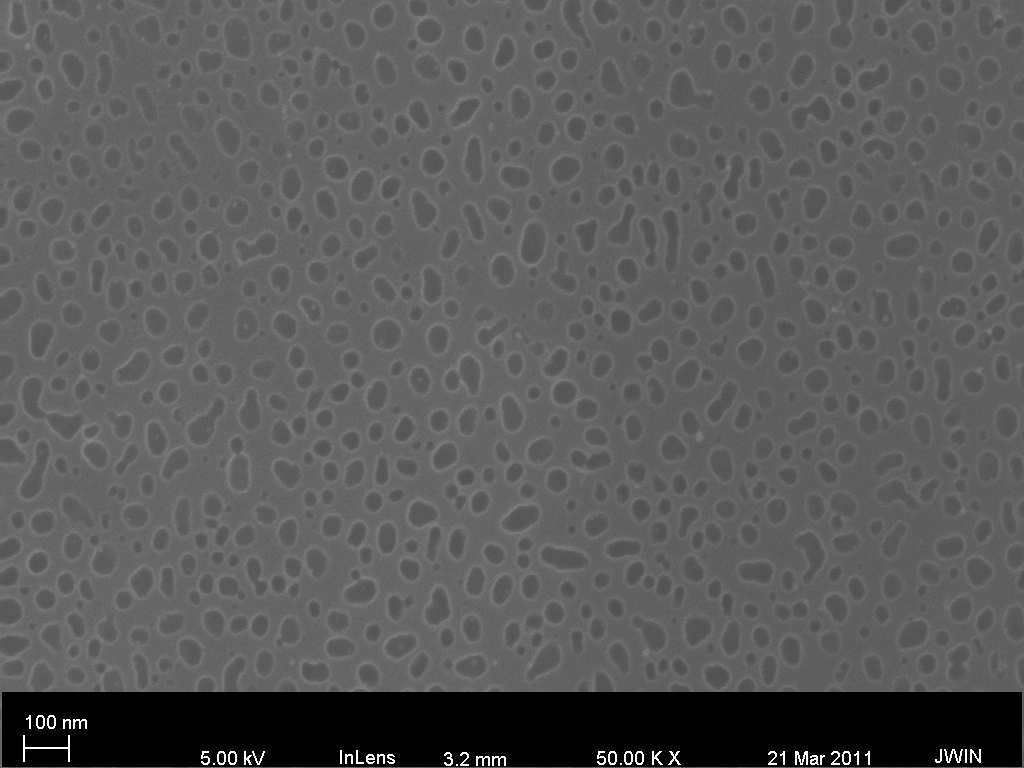
The following two histograms show the distribution of particles sizes after annealing 8 nm and 16 nm of Ag. (The effective diameter is calculated by measuring the area of each particle using ImageJ software, assuming the area corresponds to a circle, and then using the following formula: Diameter~ 2 * √[Area/π] )
And finally, our first attempt to test the filtration properties of the membranes failed, mostly due to their fragility and the non-deterministic nature of the Si etch process. Future attempts will focus on using Cell Culture membranes that can test each window separately.