Adipose Stem Cells on Nitride LiftOff Membranes (Part 1)
We have successfully plated adipose derived stem cells (ADSC) on microporous silicon nitride (SiN) membranes. Cells plated on nanoporous SiN appeared fine at time of seeding, but membranes were broken at 2 hours – possibly due to media washing or cell spreading/contracting.
Josh Miller made new Microporous and Nanoporous Nitride liftoff membranes. These membranes were placed on top of our standard four silicone pedestals, but this time with a silicone ring on top to hold the cells. In the past the cells seemed to wander or roll off the liftoff membrane, sometimes even after attaching.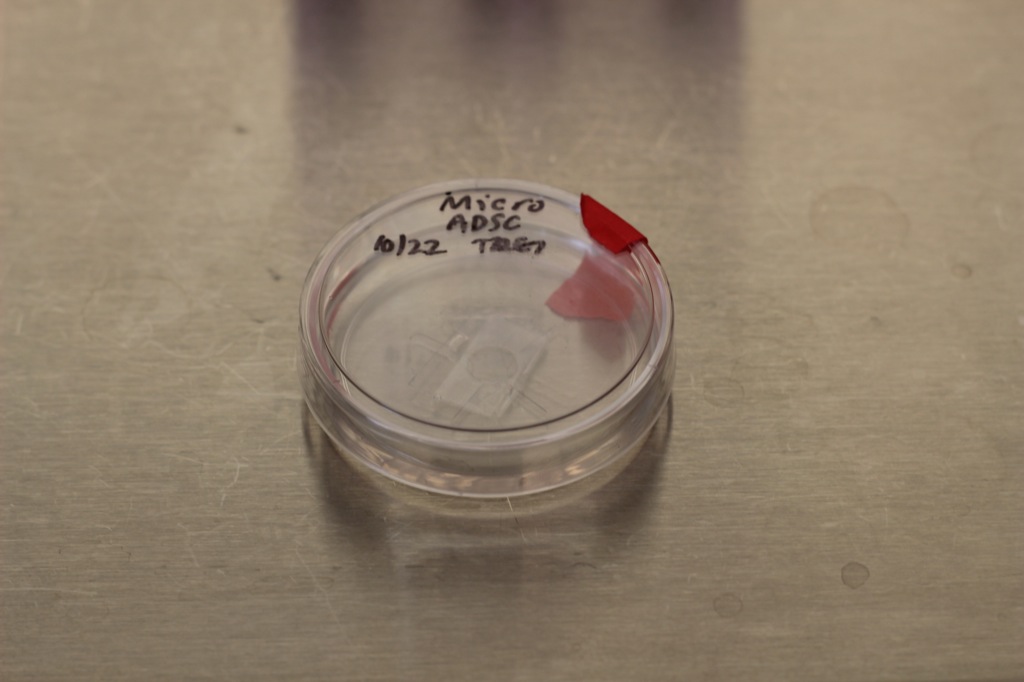
The membranes were pre-treated with 2% Geltrex in PBS for 60 minutes. The concentration is low enough that the ECM proteins will not gel. This solution is rinsed in media prior to plating the cells.
Adipose derived stem cells (P4) were concentrated from one T25 flask by centrifugation (~500 rpm for 5 minutes) and resuspended in 3 mL of undifferentiating media. Approximately 250 uL of cells were seeded onto the membrane inside of the silicone ring – a significant amount of media filtered through the membrane, effectively concentrating the cells further. The cells were allowed to settle and adhere for 2 hours prior to flooding the remainder of the petri dish with undifferentiating media.
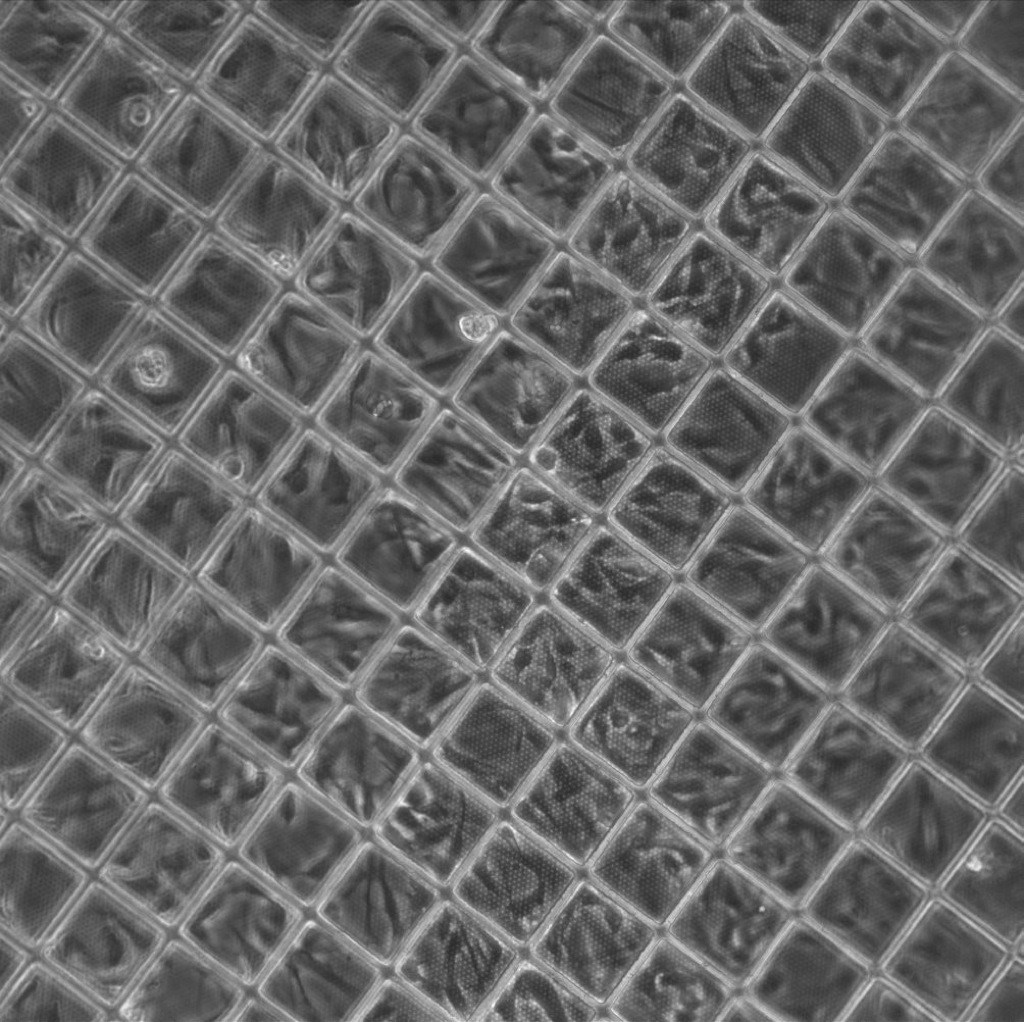
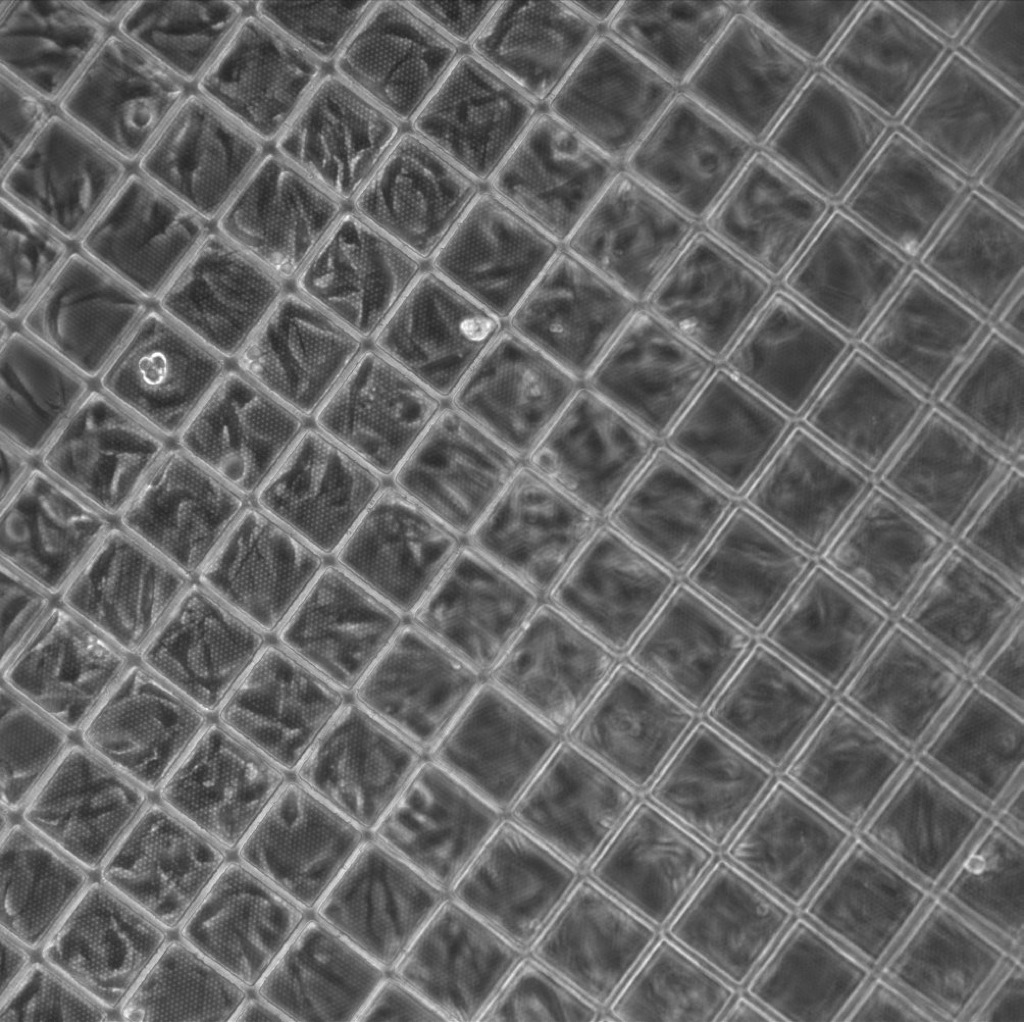
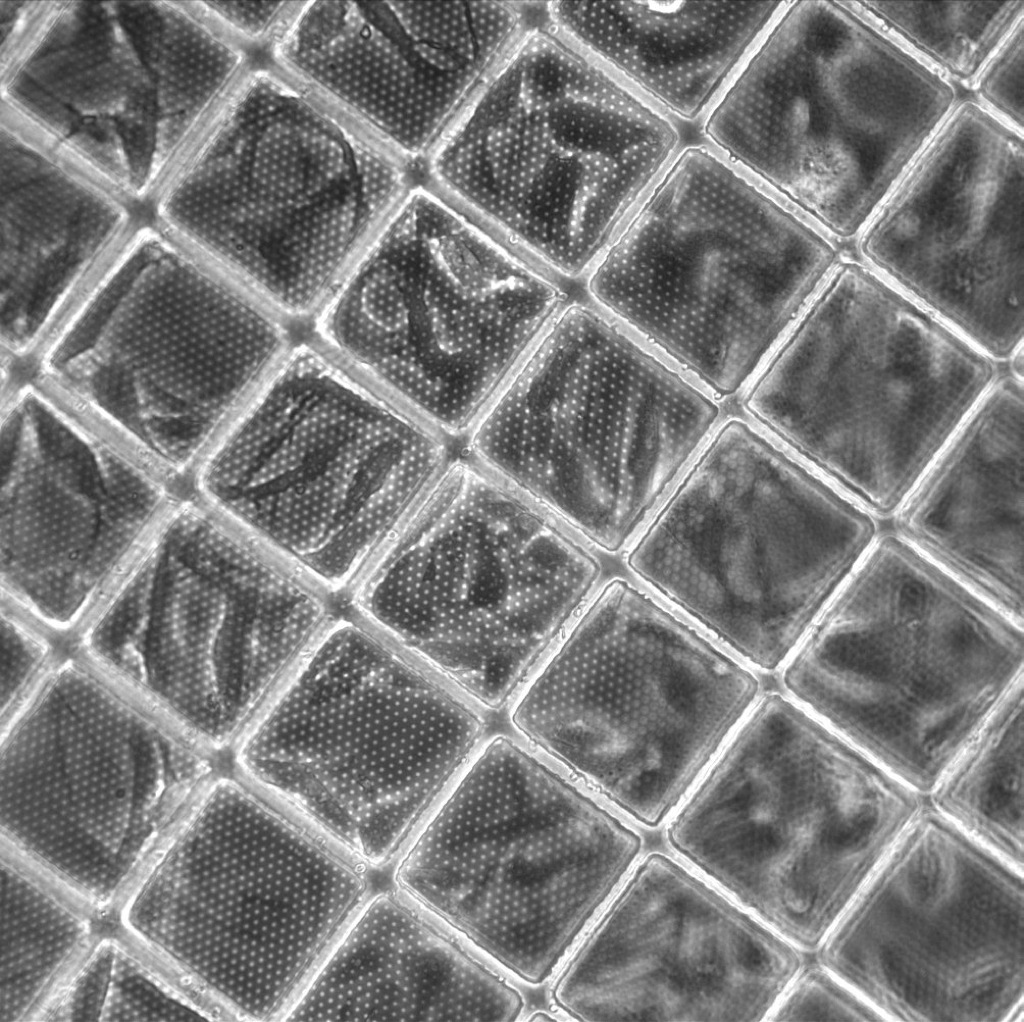
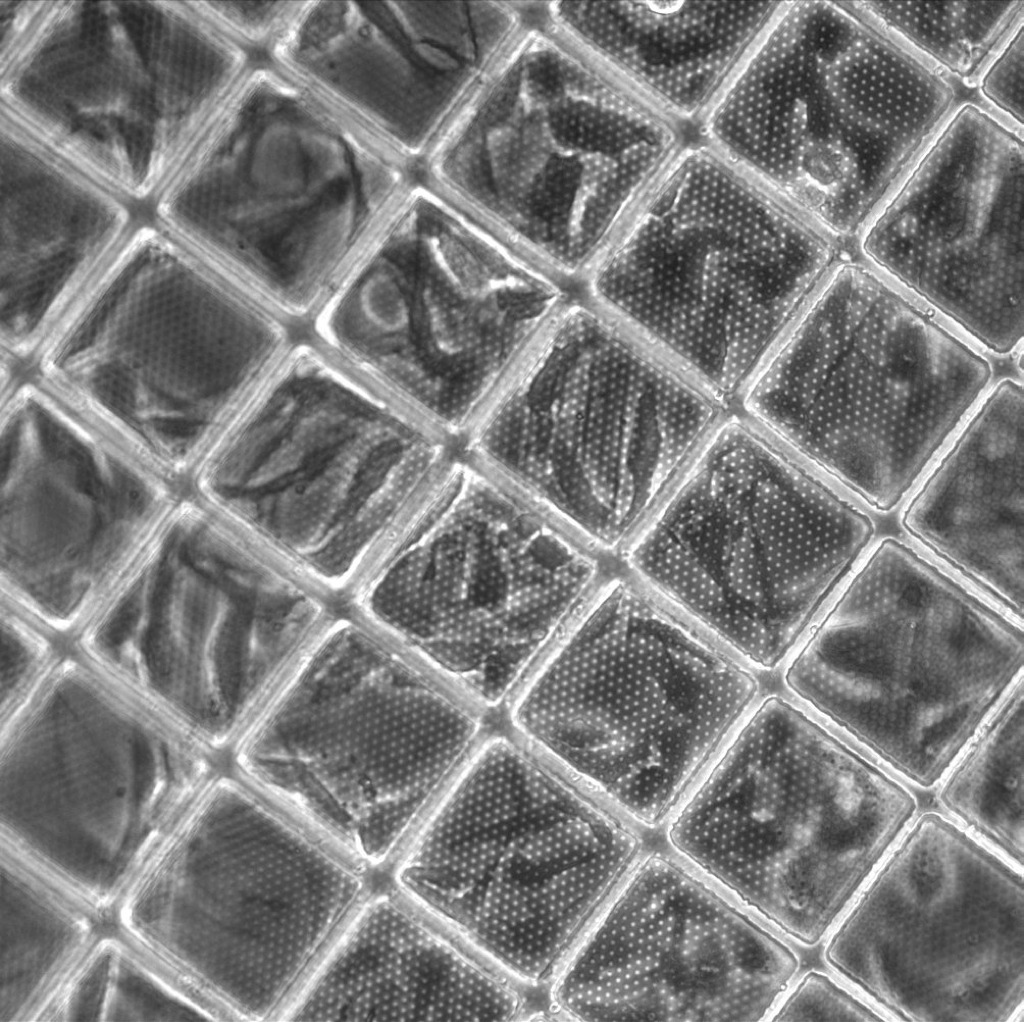
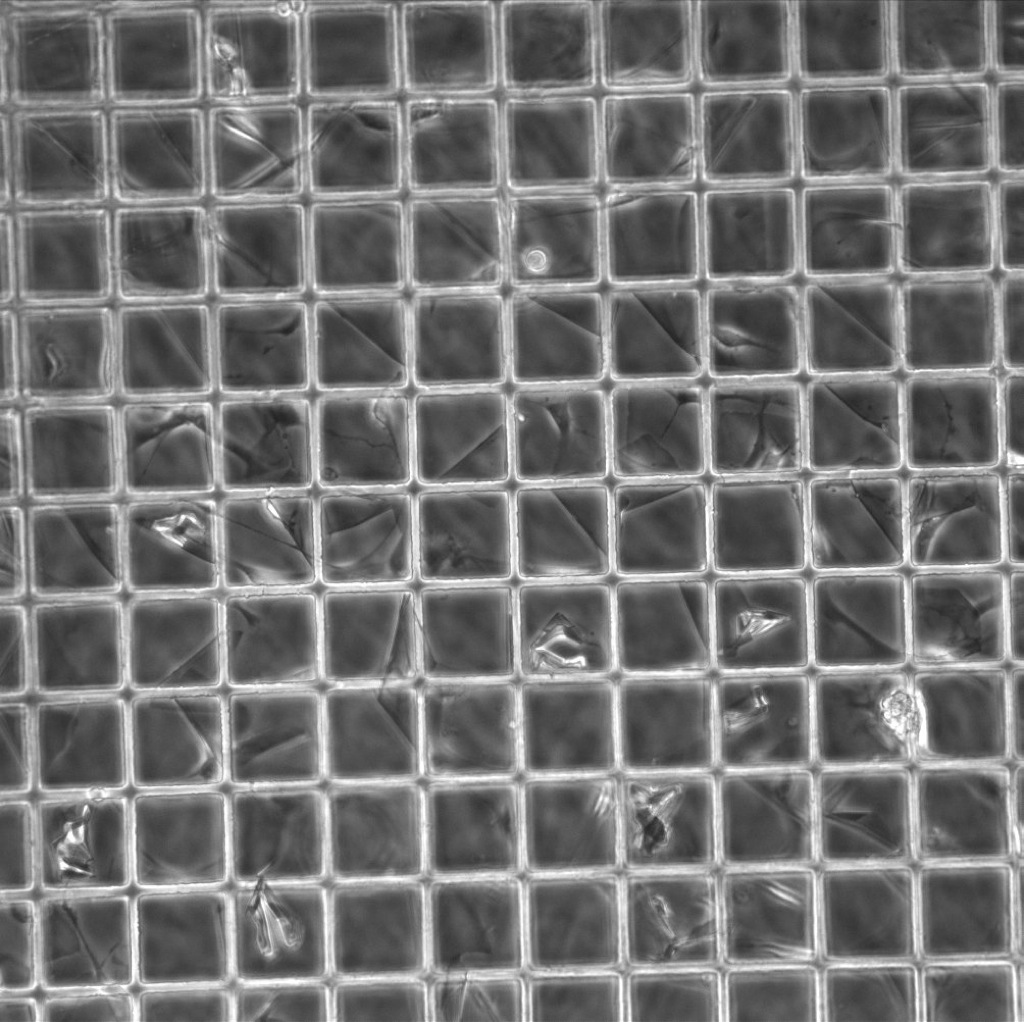
At 2 hours, most of nanoporous membrane windows were broken between the SU8 scaffold even though they appeared intact immediately upon seeding. The microporous windows appeared intact through 24 hours (images below).
At 48 hours, the media will be swapped to DMEM with 10% FBS and 50 ng/mL VEGF in order to differentiate towards endothelial cells. Cells will be stained for nuclei and CD31 (PE-CAM).
Nanoporous:
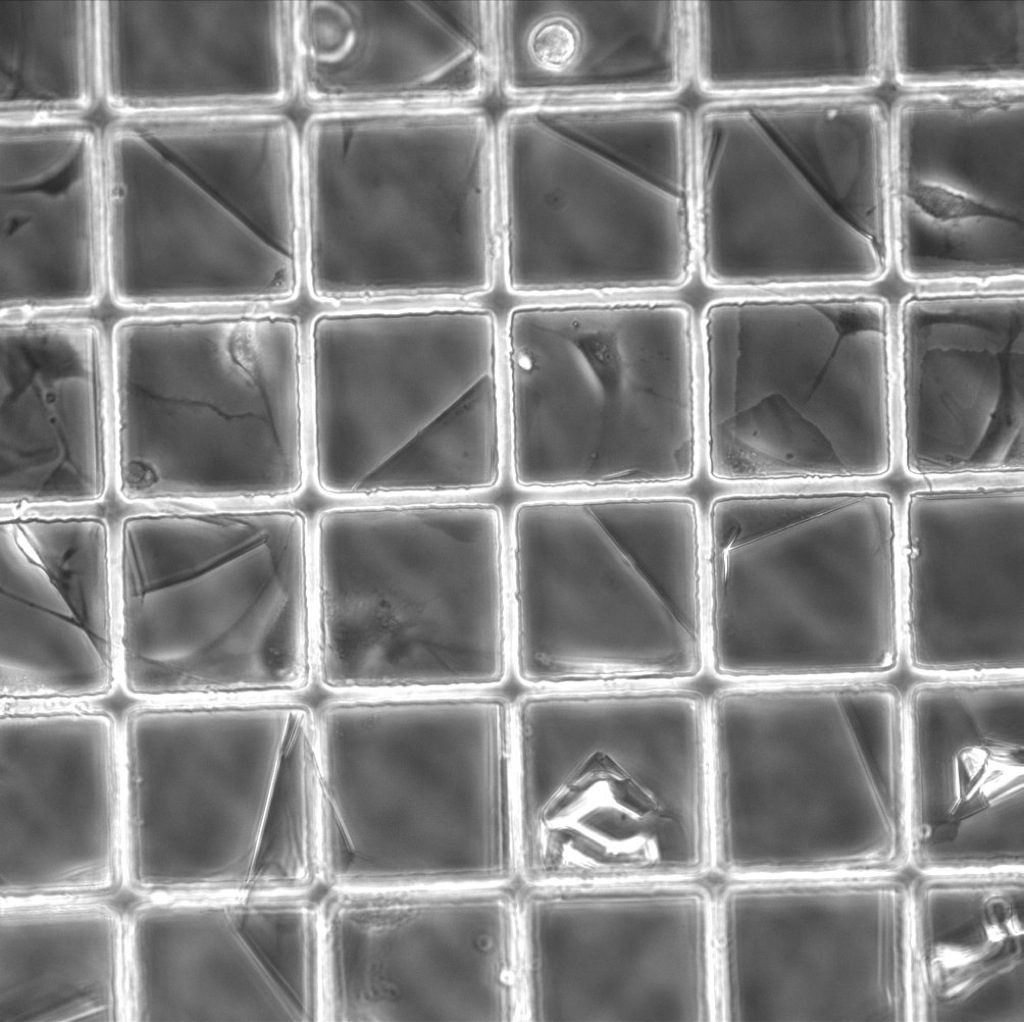
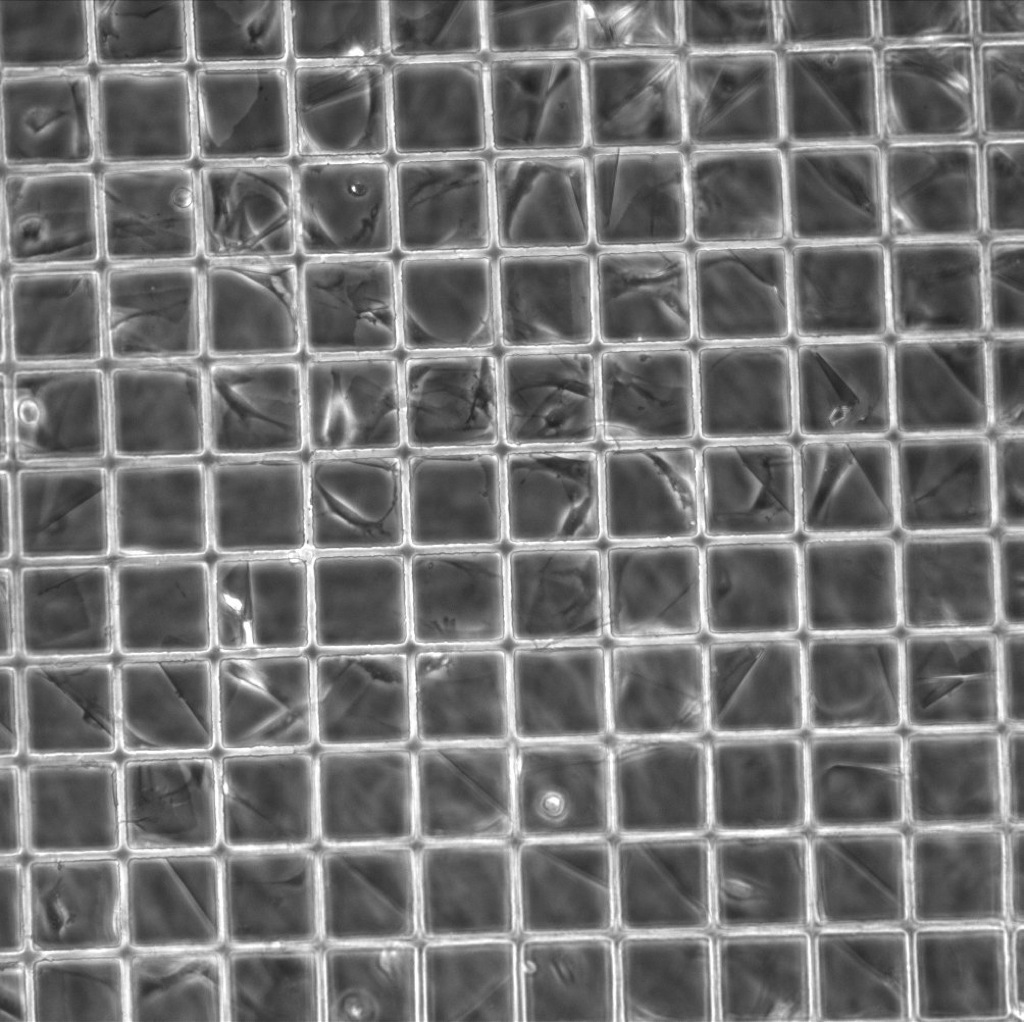
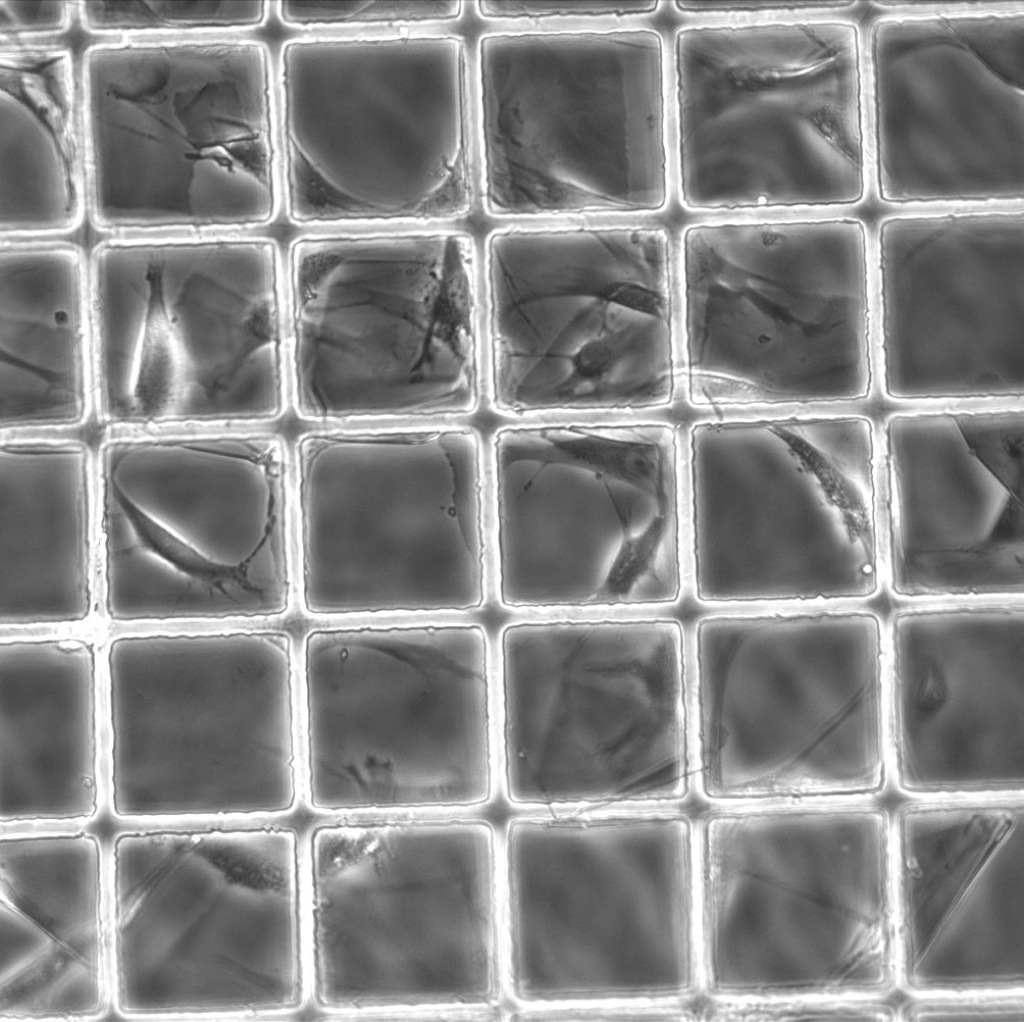
Microporous: