Dialysis Chip Recovery After Membrane Damage
Josh Miller came up with the idea of filling individual damaged membrane channels with PDMS so the rest of the chip could be salvaged.
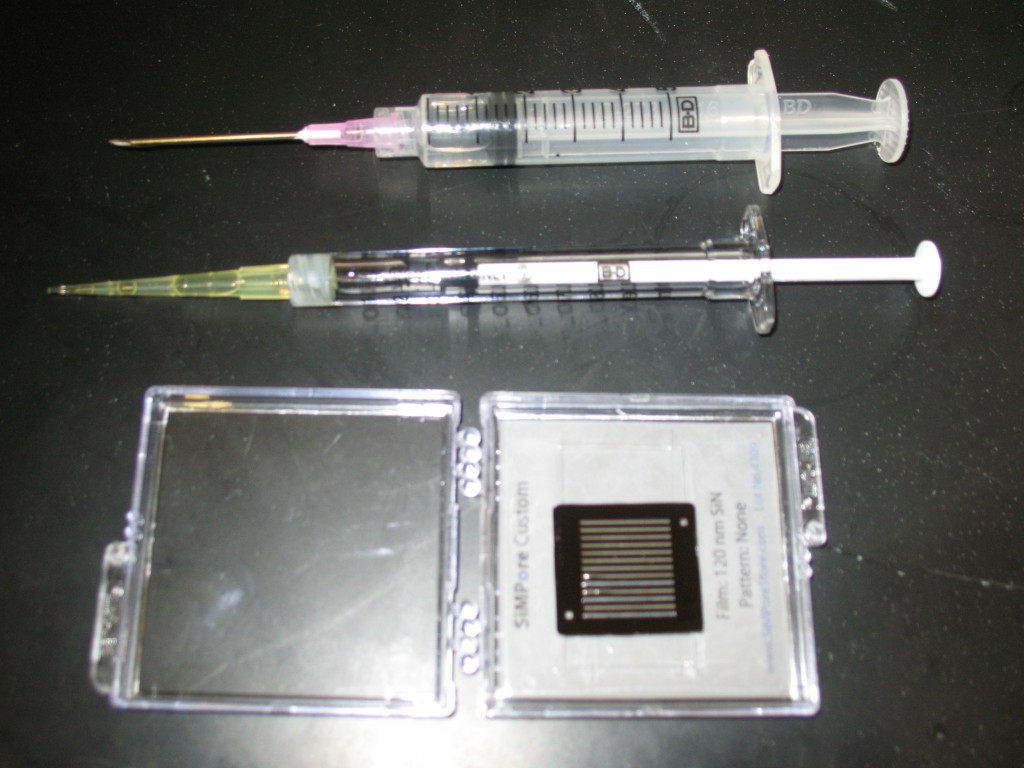
We worked on it this week, mostly Josh, and we developed a process using strips of silicone laid on the top (flat) side of the damaged channel and PDMS injected onto the other side. PDMS is prepared (2 g and 0.2 g activator) and poured into a 5 mL syringe body. This is used to inject the PDMS into a 1 mL syringe. A pipette tip was glued to the syringe. This is used as a micro-caulk gun to direct the PDMS into the channel. Excess PDMS on the surface can be scraped, squeegeed, with a razor. After curing, the silicone is removed, and the chip can be examined under the scope.
With care we believe this technique will allow me to use chips which otherwise would have been worthless. I only need prorate the chips based on how many of the 13 channels are fully functional.
Good work Josh.
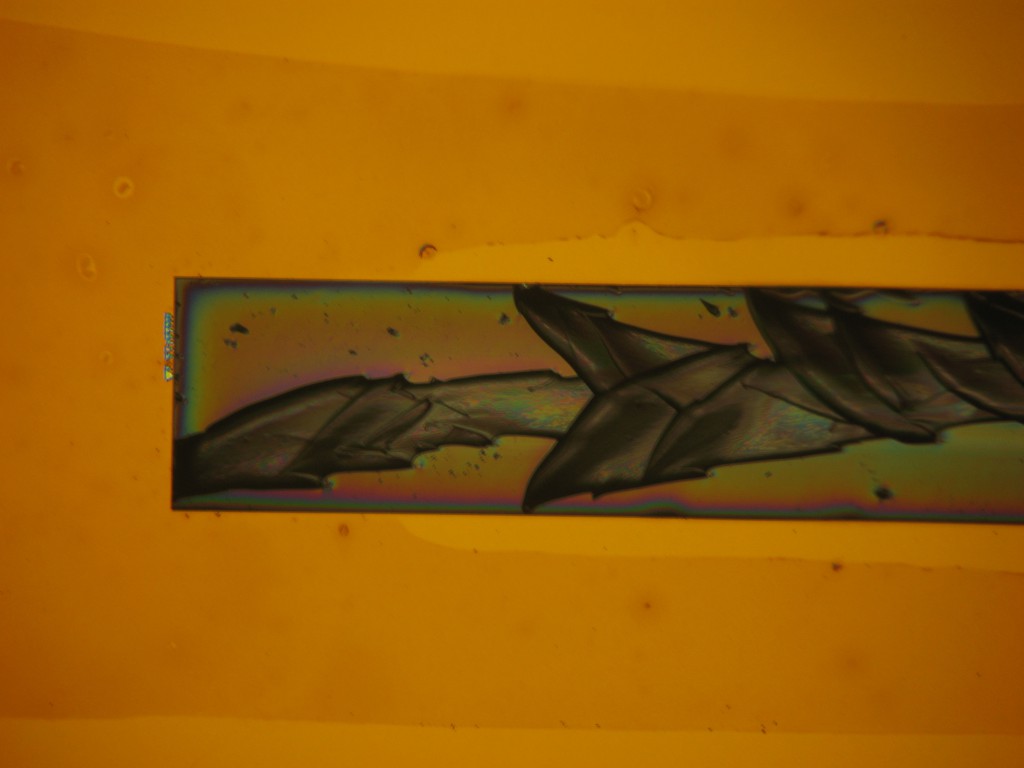
Below you see a filled in trench, the pattern is from a bit of the PDMS being torn away when the silicone is removed.
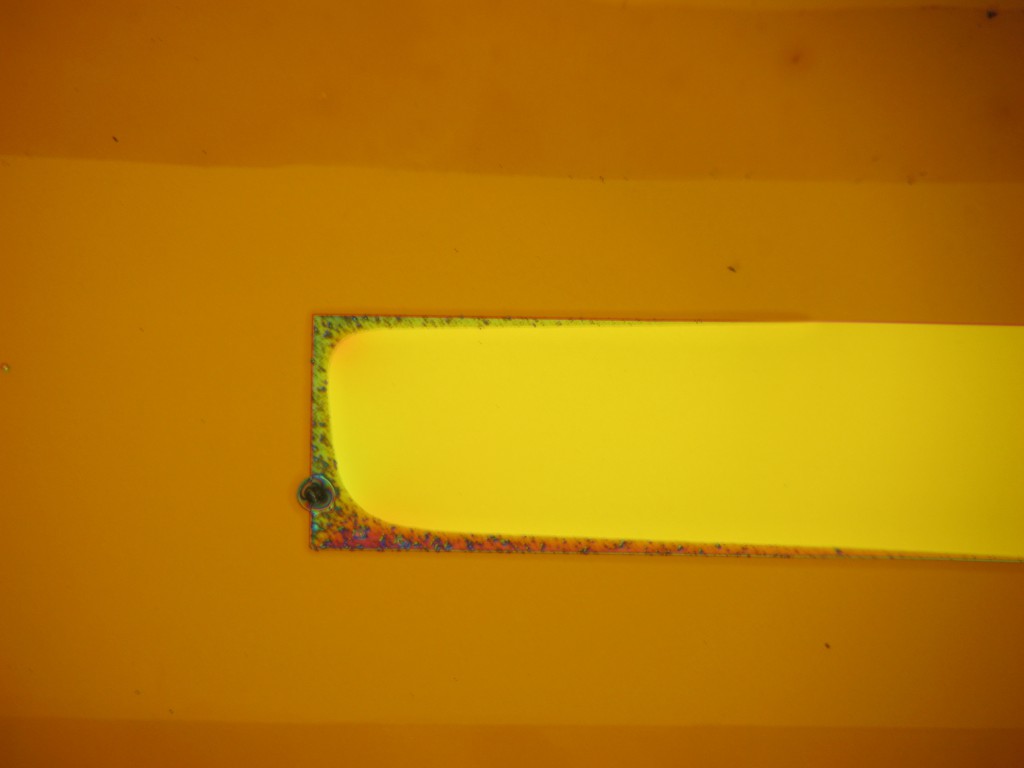
Next is a good membrane with a bit of PDMS
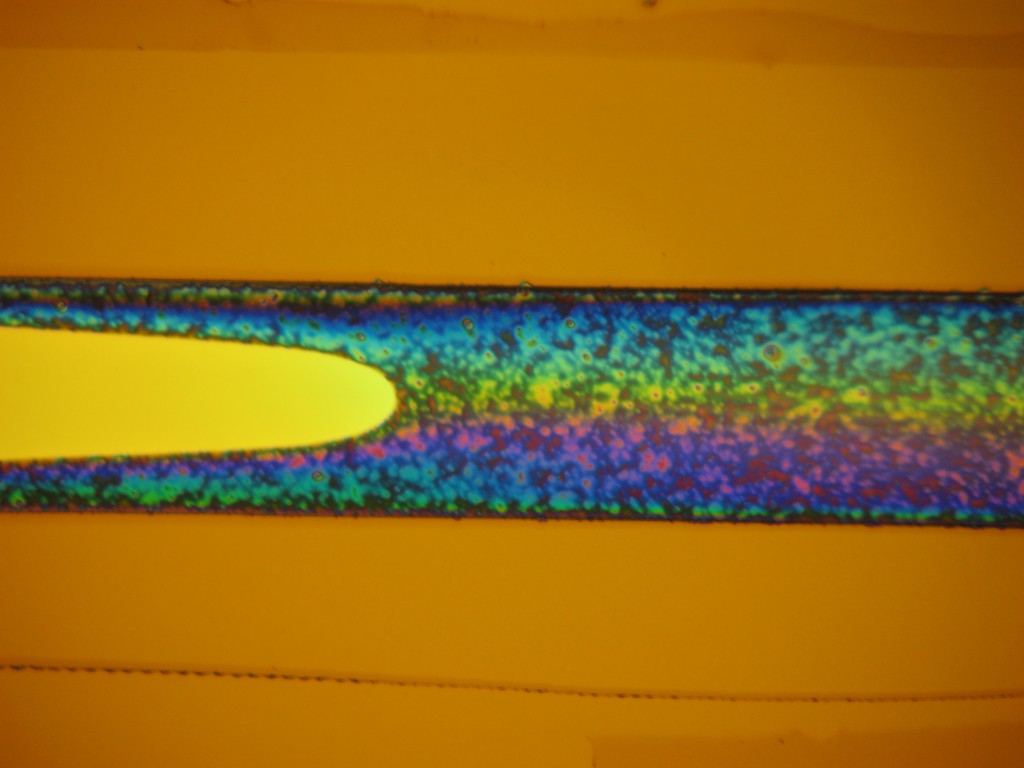
Now a good membrane with a lot of PDMS
Here are the syringes with tips, and the chip.
Next, I will put two of these into my dialysis fixture and pump some fluid to check for leaks and to see if flow is affected.
Really neat idea! Are there large sheeting problems (does your pdms end up in adjoining membranes)? When I have tried to do something like this in the past, I was unable to keep the PDMS from wicking across the surface of the silicon. Or is that what you mean by “a good membrane with a bit/lot of pdms”?
Beauty! Thanks Josh!