Initial Nanofluidic Transistor Zetapotentials Seem Unresponsive to Applied Gate Voltage
I’ve been taking lots of zetapotential measurements with my current setup. Serendipitously, it appears that the more I use the electrodes, the more stable my zetapotential measurements become. Because the system seems well behaved now, I decided to move on to a more difficult problem. Sarah and I made some nanofluidic transistors a few weeks back, and I tried pumping current into the metal gate on each of these chips to see if by changing the gate voltage we could get the zetapotential to change as well.
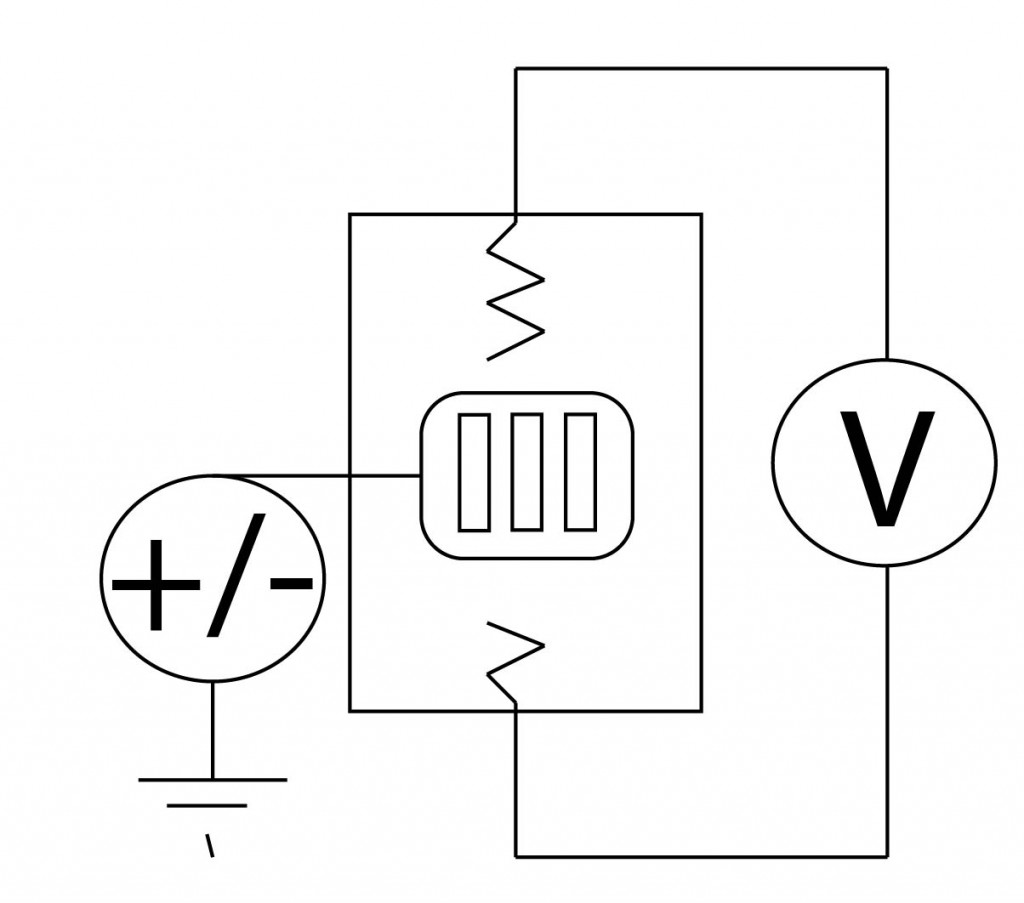
In my first set of experiments, I had the voltage being pumped into the chip completely isolated from the circuit that was measuring the difference in voltage between the electrodes – i.e. there was no common ground. This is illustrated below:
I then took a series of measurements while varying the voltage applied to the gate:
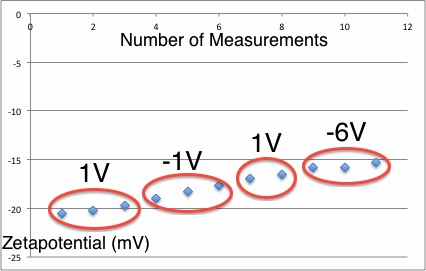
I blamed the complete irresponsiveness of the zetapotential on the lack of a common ground, so I next repeated the experiment using the following circuit:
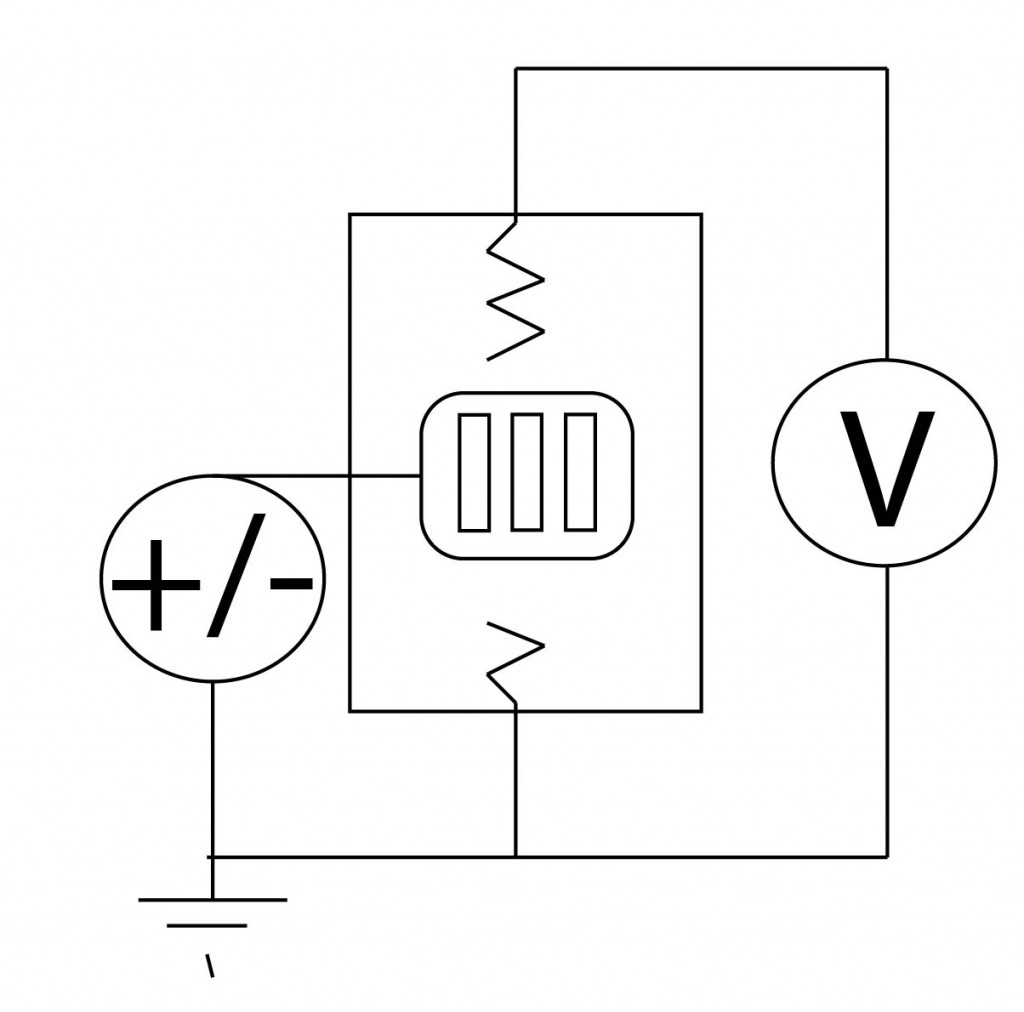
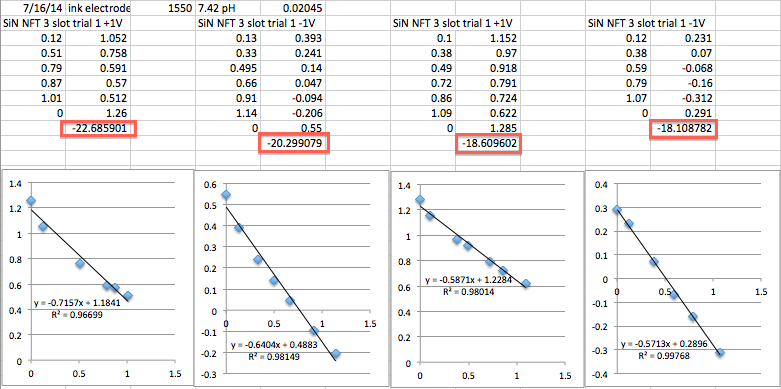
Although the DC bias of the zetapotential measurements changed with the applied voltage, the zetapotential did not seem to.
When I ran the EO experiments showing variable pumping rates with variable applied voltage, I was using +/- 6 V, so it’s possible that the system is working, but I just haven’t used high enough voltages. So repeating the second set of experiments at +/- 6 V is the next step.