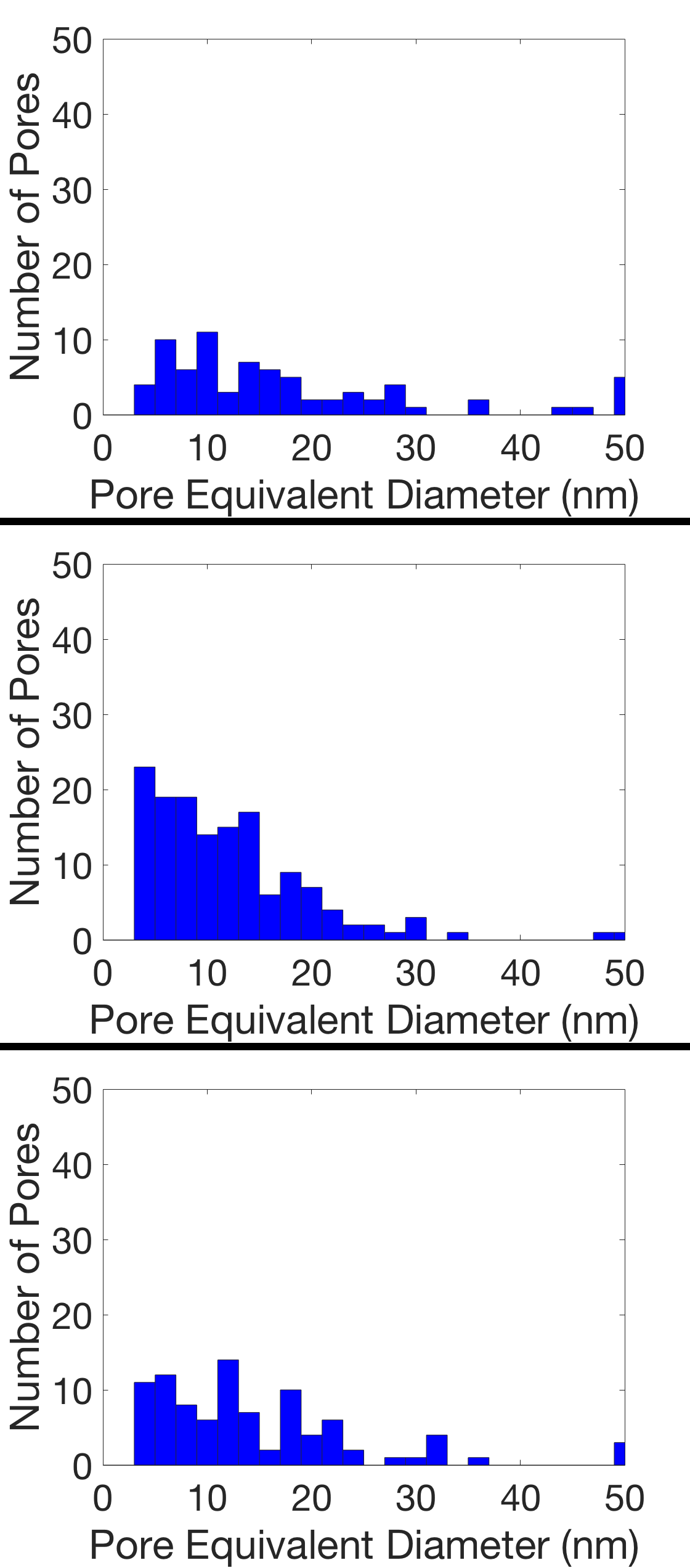
MgF2 grain size as a function of temperature
Summary
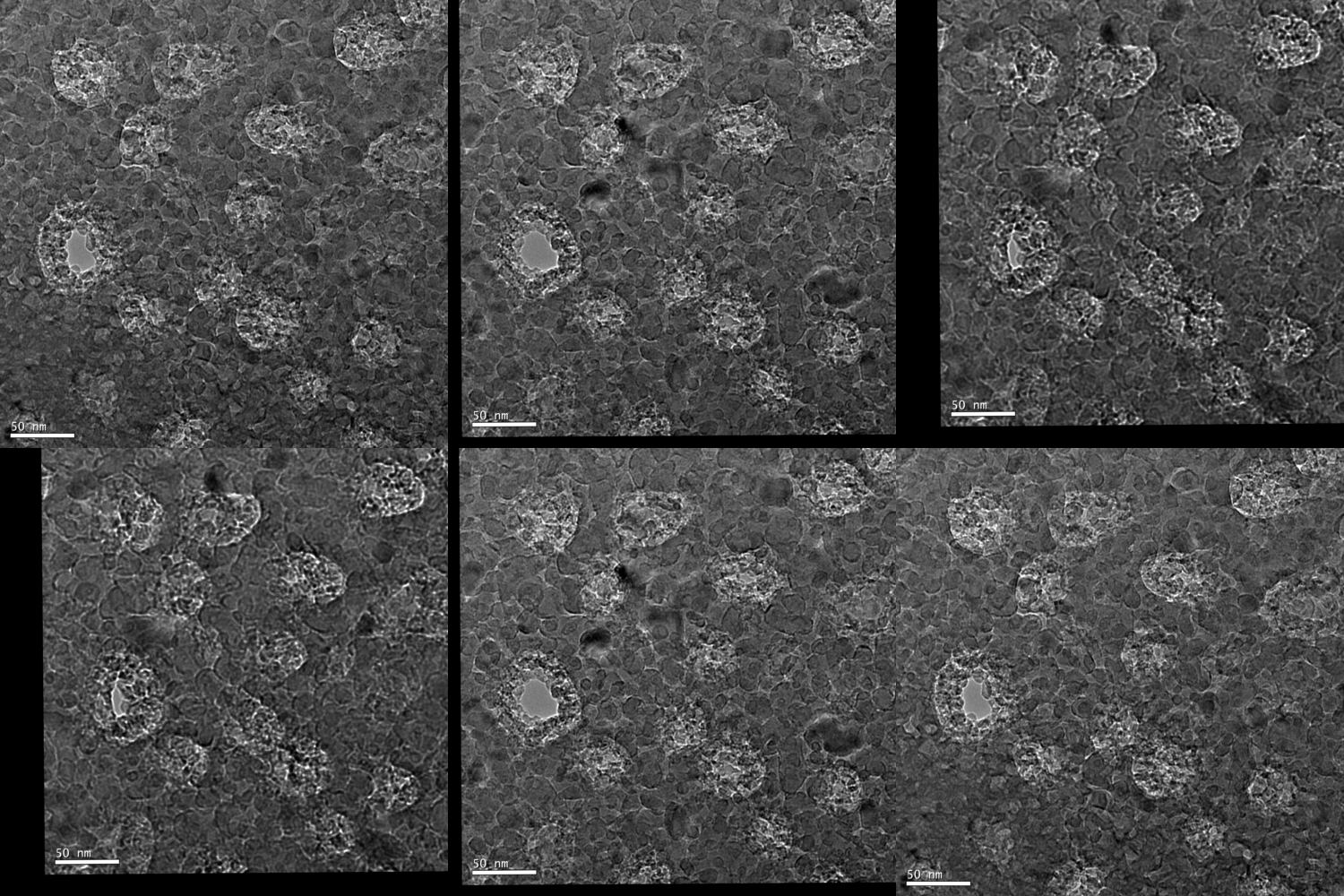
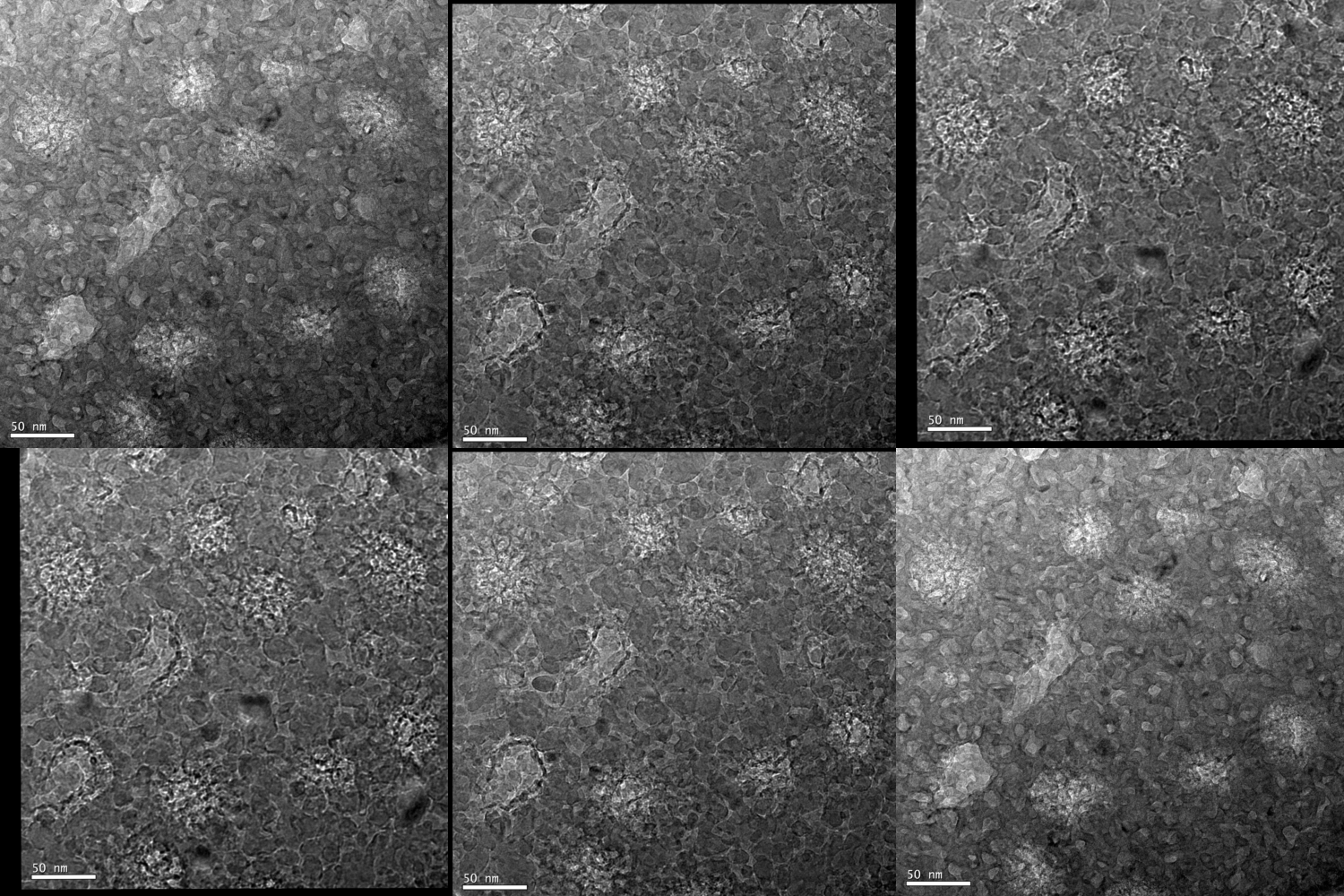
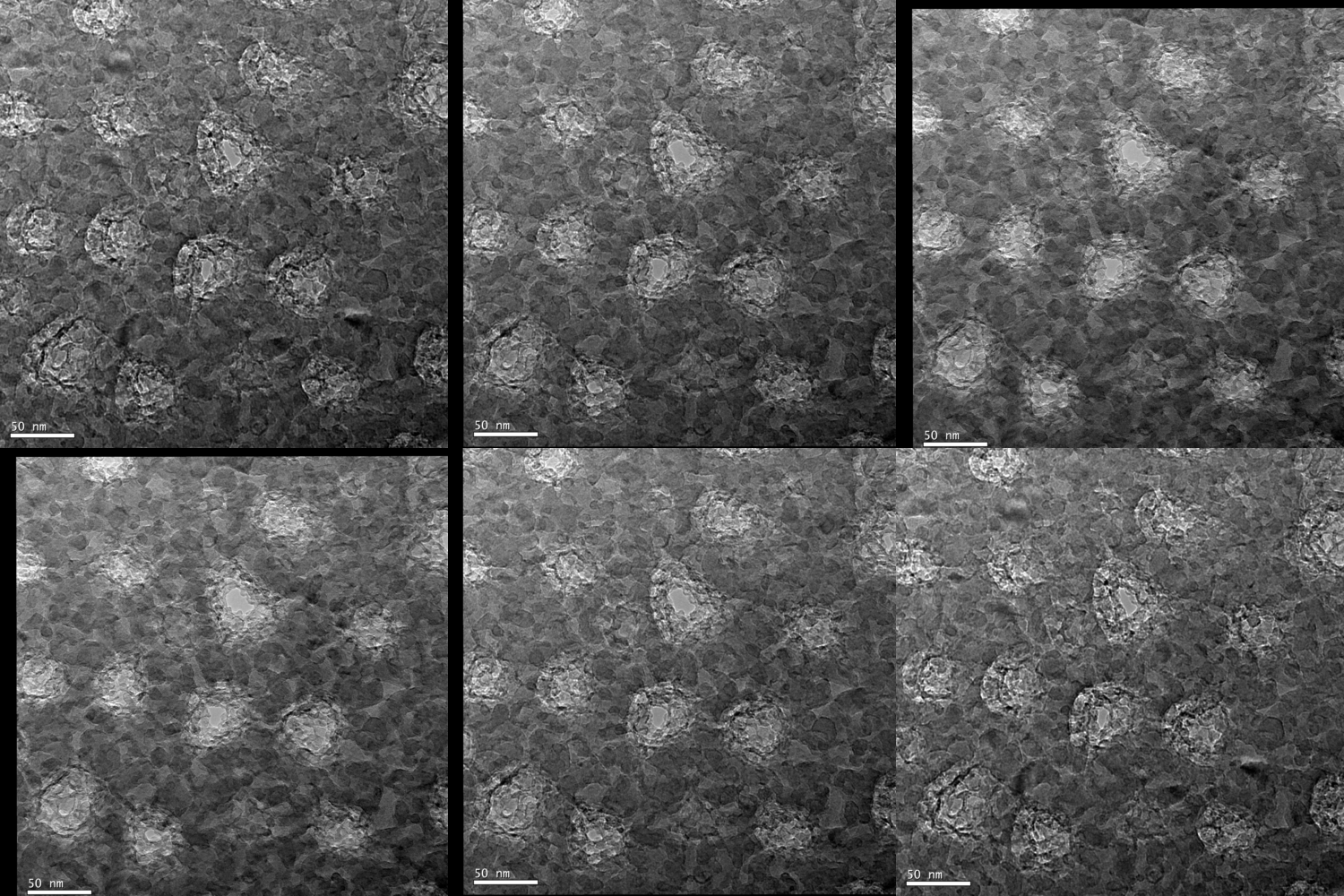
Surface roughness is believed to impact the SERS effect. Rougher surfaces tend to produce more SERS activity. We can manipulate the npMgF2 surface by changing the deposition temperature, in the form of changing the grain nucleation, shifting the overall grain size and roughness. I performed TEM tomography and segmentation to pull out distributions of MgF2 grains and found that the average grain size appeared to be minimized at 250C.
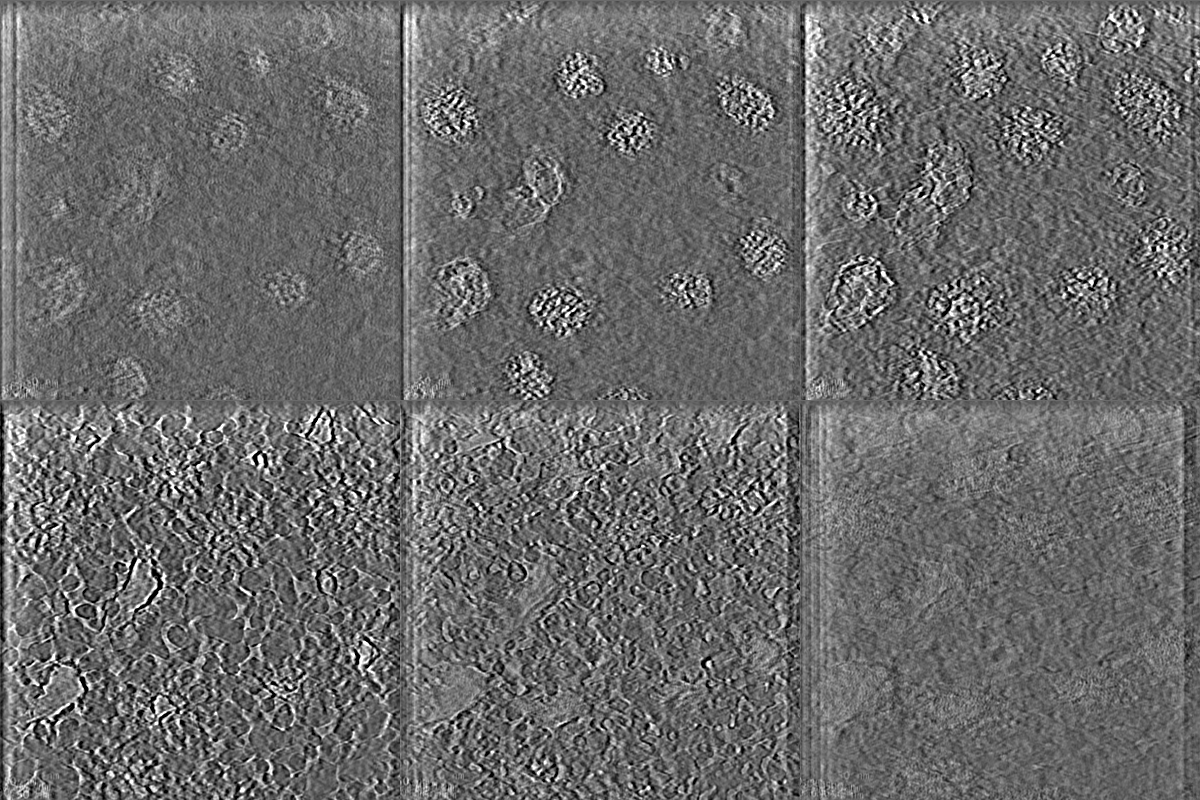
Tilt Stacks
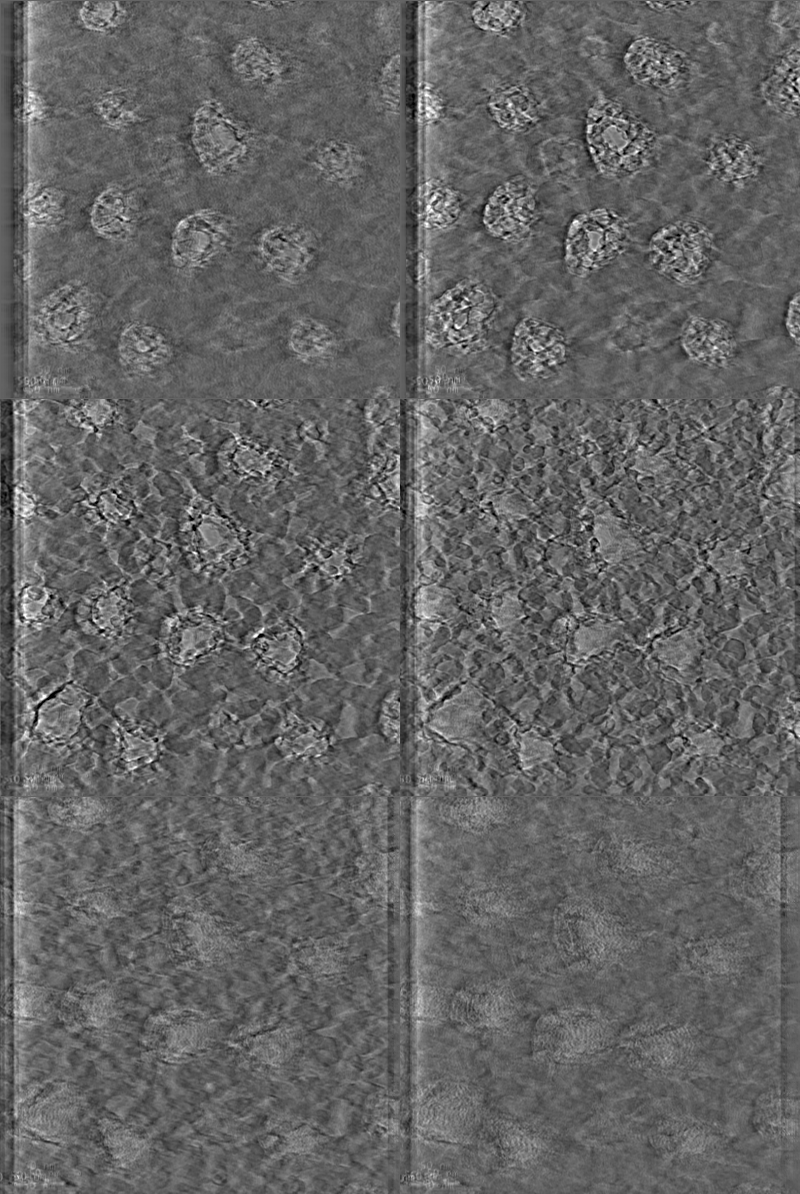
Tomograms

Analysis
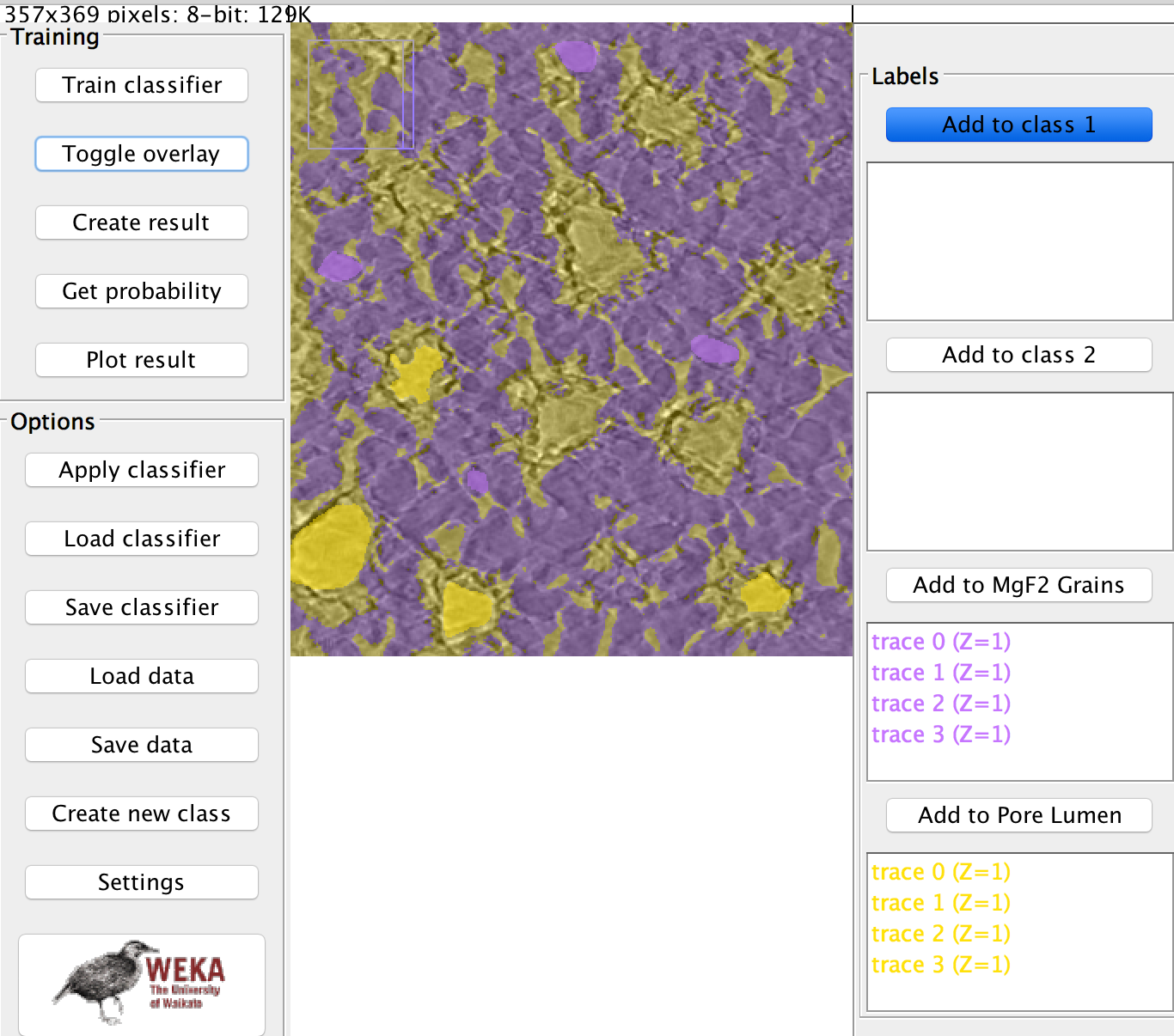
If I use Weka segmentation on the image stacks, I get probability maps of these structures.

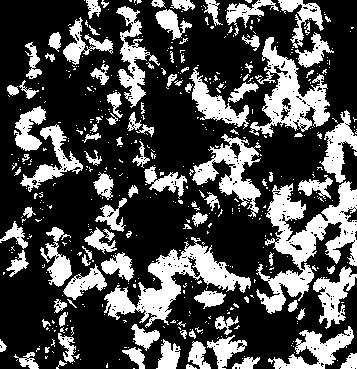
I used the pore processing software to cleanup the images and pull out individual particles. There is some variability in adjusting thresholds, which propagates into the changing the grain size, but the adjustments I made were consistent across the images. I used Majority, Erode and Dilate (1x), Majority to clean images.
Histograms