SiR-Hoechst based cell tracking for cell migration and wound healing analysis
Intro/Motivation: SiR-Hoechst is a far-red DNA stain for live-cell micro/nanoscopy and has been shown to be non-cytotoxic. I mentioned to Tom that if we can label the cells we can better automate the cell tracking for faster analysis. Tom knew of this dye and decided to give it a try. This direction subsequently lead to a potential method/protocol manuscript.
cell types:
- hdFb (adult human dermal fibroblast) for better mimics of wound healing.
- 3T3 (mouse embryonic fibroblast), which are often used in migration experiments.
Data demonstrating that SiR-Hoechst does not affect cell viability:

NOTE: SiR-Hoechst (1 μM) is always in the media, whereas the CFDA (another cell tracker) is incubated with the cells for only 15 min and washed prior to the migration experiment. For imaging with SiR-Hoechst, an exposure time of 1000 ms was used, whereas for CFDA an exposure time of 20 or 50 ms was used.
Data demonstrating that SiR-Hoechst does not affect cell migration:
for hdFb: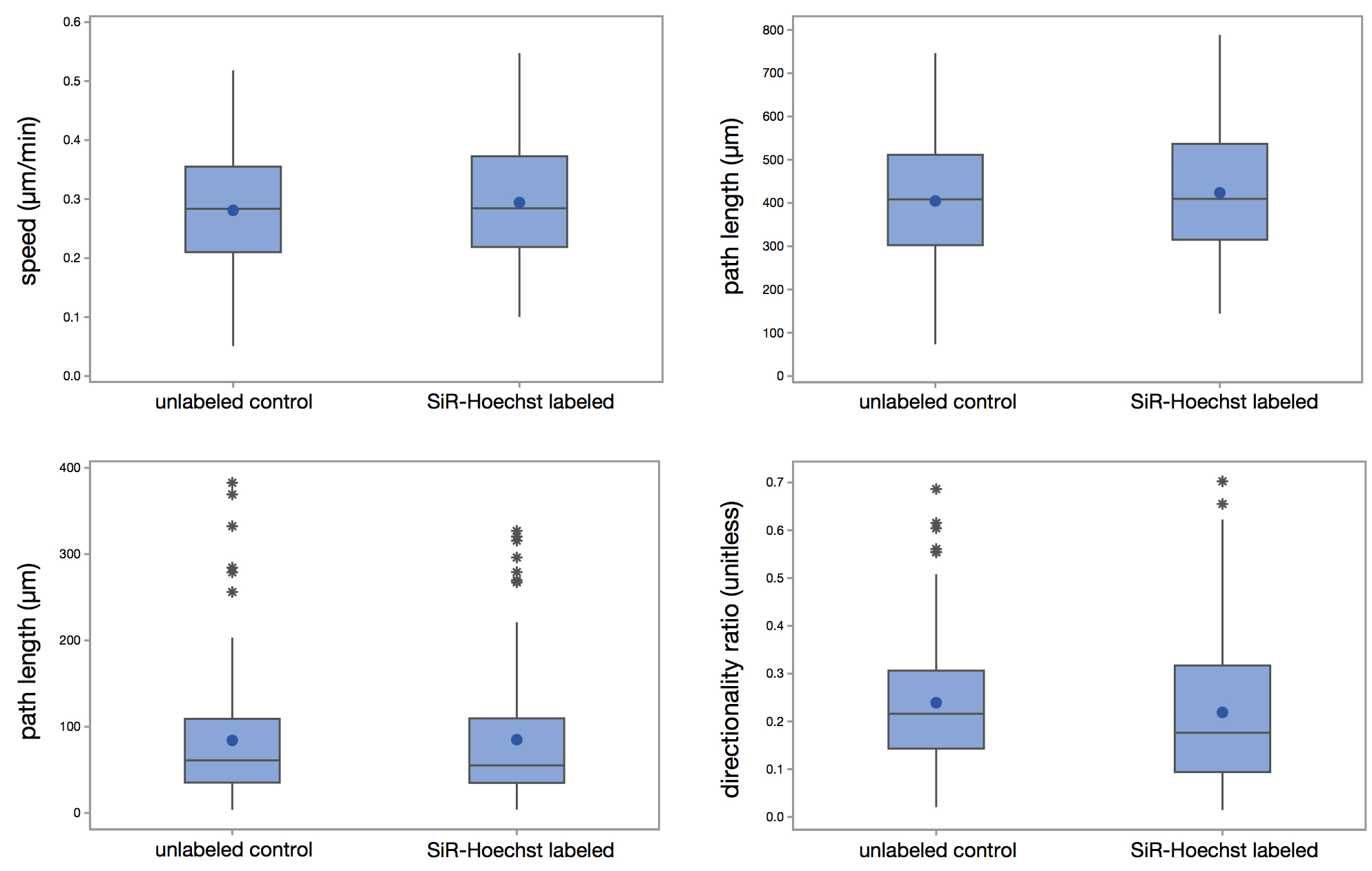
for 3T3: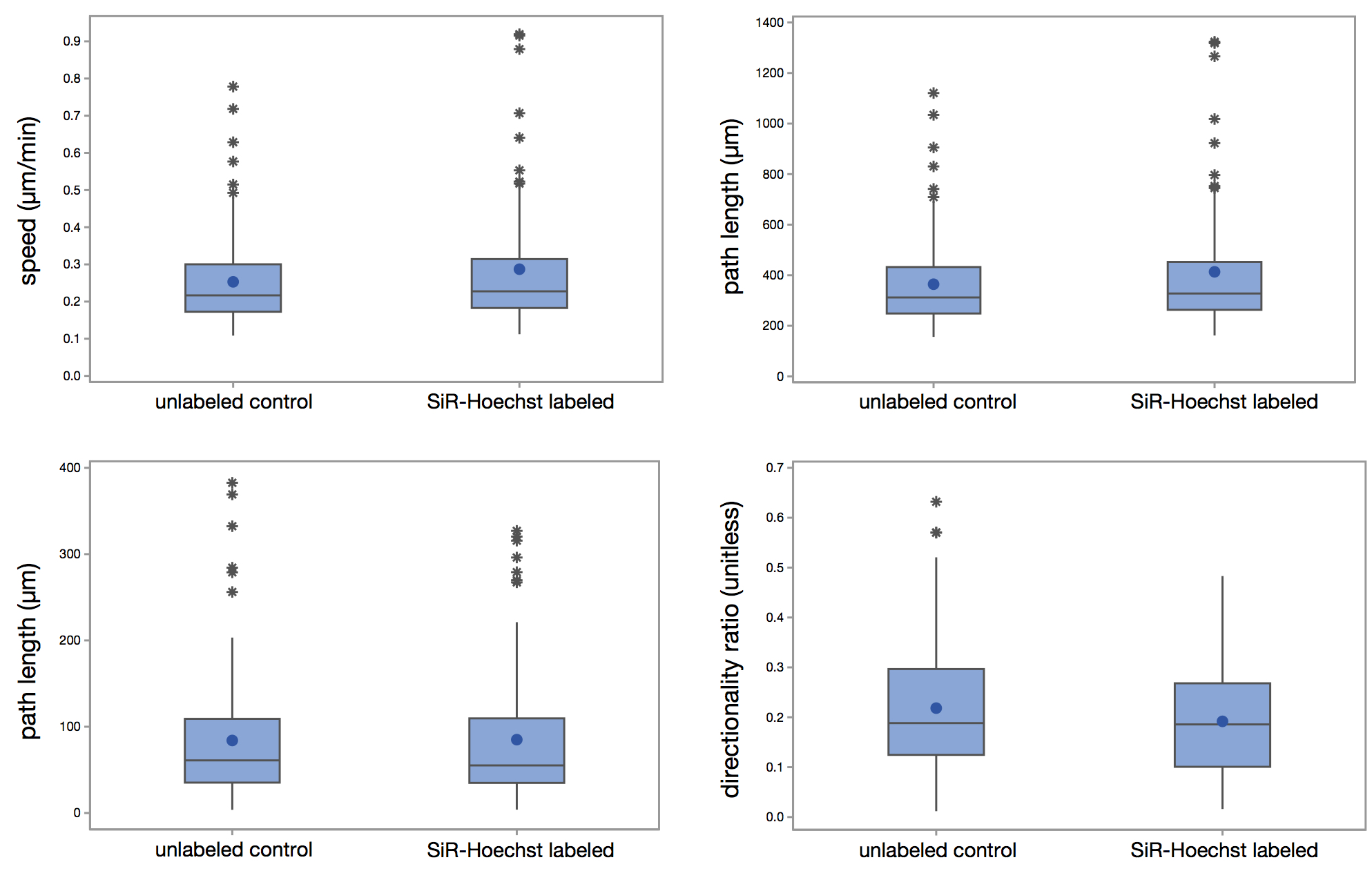
Use of SiR-Hoechst in wound healing analysis:
Sean, the main executer of the project, proposed that we can report wound healing based on the cell count in the wound over time. This method is likely better than the common/traditional approach where the user manually define the two edges of the wound and reporting wound healing based on the distance between the two edges over time. The disadvantage of this traditional approach is:
- It is hard to define the two wound edges since often there are fast “leading” cells that break off from the cell collective.
- Even when the wound close, the cell density is still low in the wound. The cells tend to continually divide in the wounded region.
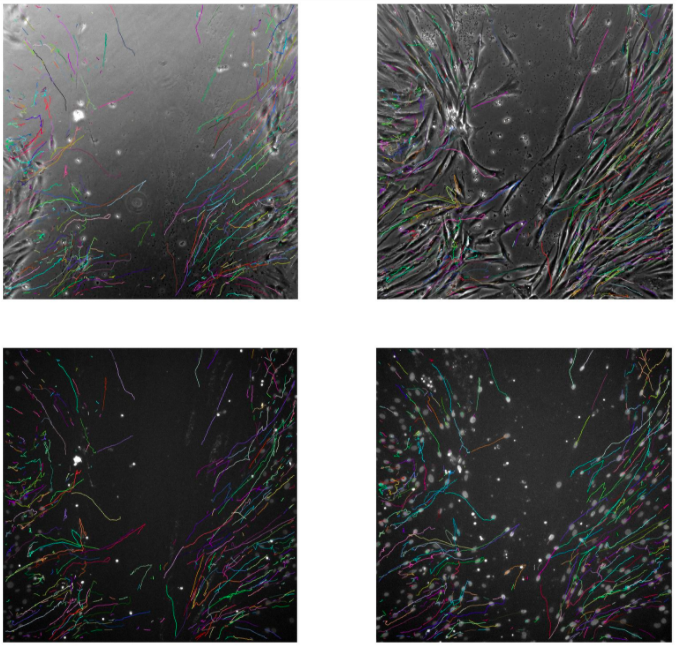
Therefore, we proposed wound healing to be a two stage process:
- Wound closure
- Wound remodeling
In addition, we analyzed how the cell migrate to close the wound by monitorung the progression of speed and directionality over time:
speed
directionality: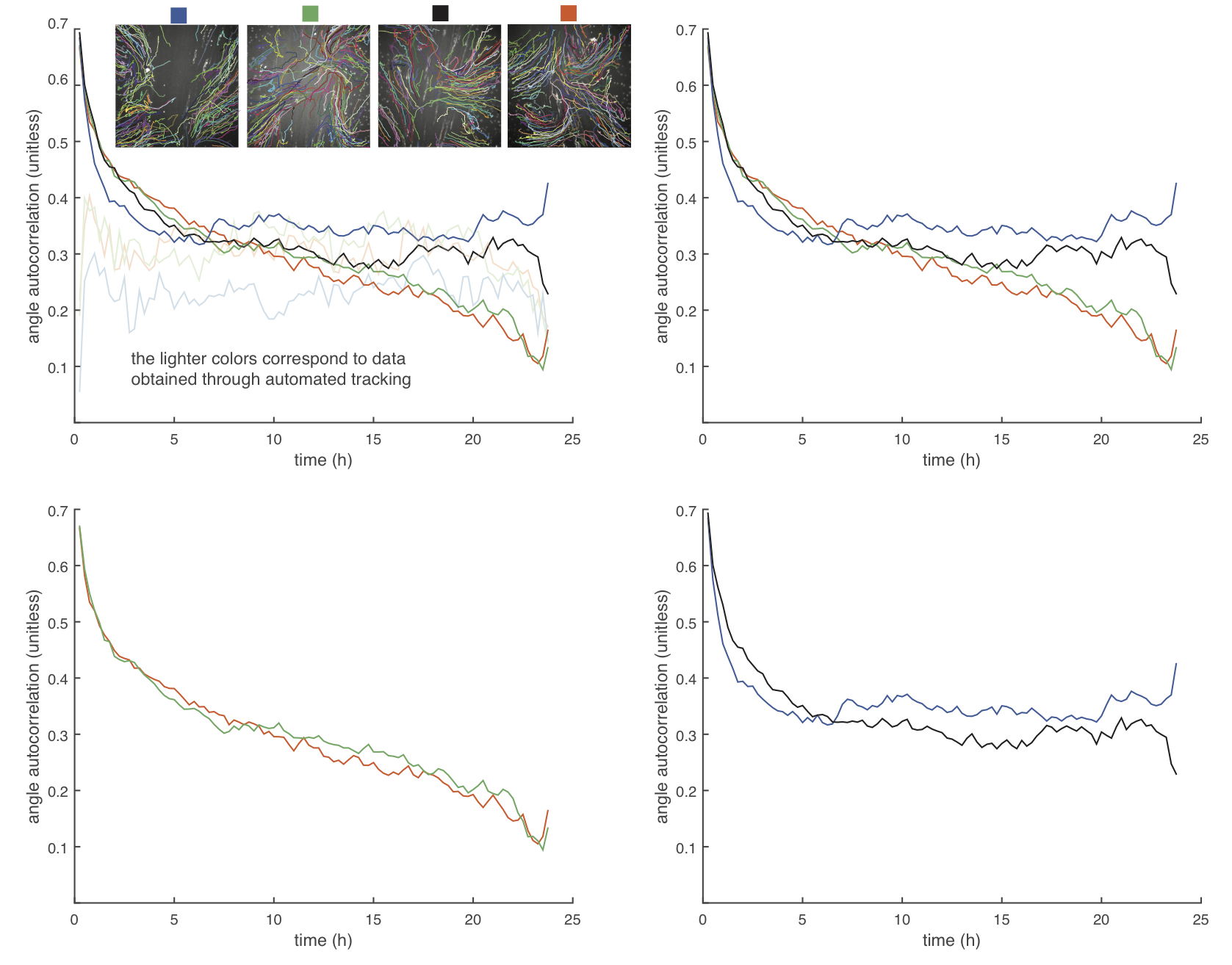
cell count:
Healers vs Random Cells:
speed:
directionality: