1257 NPN SERS Wafer Partial Etch Study
We manufactured a wafer specifically for SERS experiments in the hope of recapturing larger pore distributions/pore densities that we observed in some of the prototype runs of NPN. Natively, it’s a little thicker, and a little less porous than the 1085 material. By partially etching the membranes from the backside, we should be able to recover some porosity and recreate a membrane with similar thickness/pore size characteristics.
Target 1085 NPN. 50 nm thick, 60-80 nm pores, 60-70 pores/um^2.
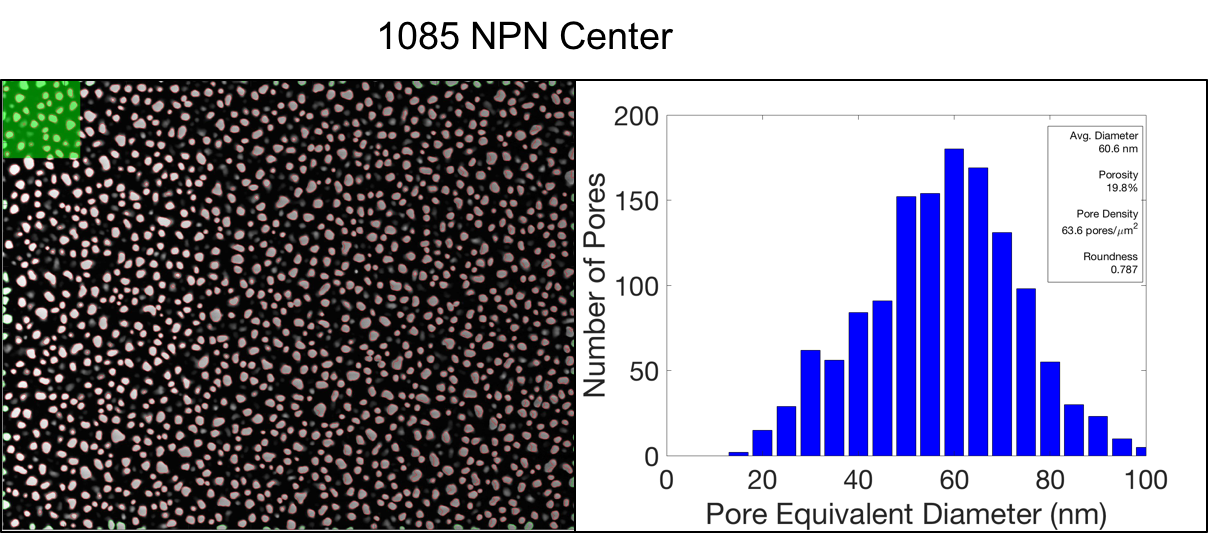
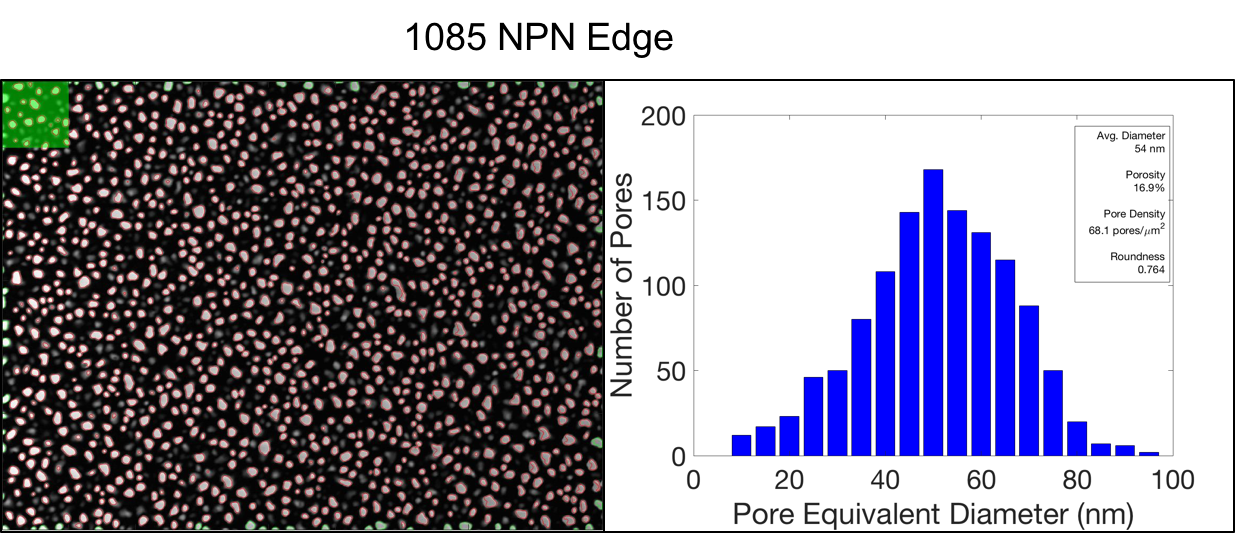
Methods:
- Chamber was cleaned with O2 plasma for 5 minutes, then seasoned for 5 minutes.
- 1257 NPN (100 nm thick, 5-slot version) was placed face down on carrier wafer in etch chamber
- Membranes were etched from o-100 seconds, in 10 second increments.
- SF6 recipe
- 10 sccm CHF3, 30 sccms SF6, 15 sccms O2
- 1e-4 base pressure
- 30-50 mTorr etch pressure
- 100/2 W (FWD/REF) power
- Tuned plasma stabilized in ~5 seconds
- Membranes were imaged using TEM, tilt stacks were gathered for eventual ET reconstruction.
- Pore Distributions were calculated using the pore processing software (8900x). Images were thresholded to the boundaries of the narrowest orifice, 400 pixel background correction. Pits were removed manually.
Results
All membranes were etched within 2 hrs of each other. Membrane loss occurred above 50 seconds of etch, so only 0-40s time steps were imaged, as a matter of practicality.
Tilt Stacks (-14 to +14 degrees, 2 degree increments, 64 kx)

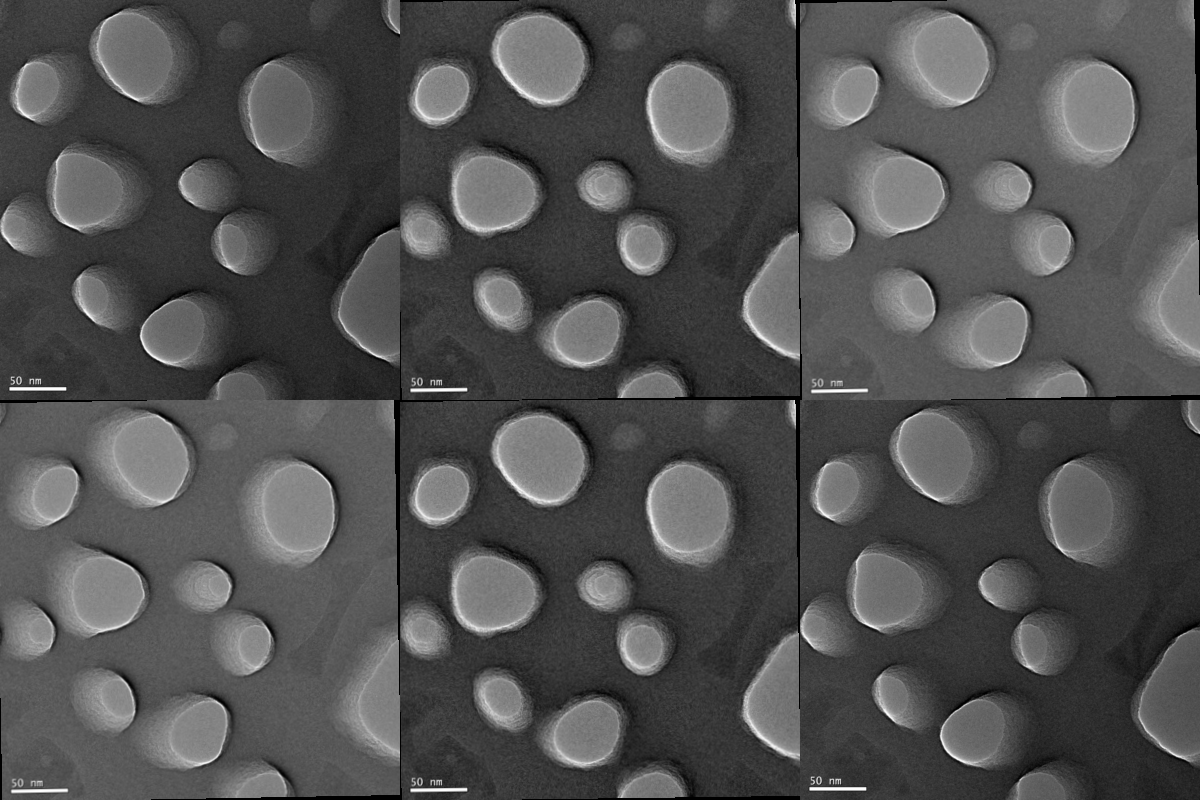

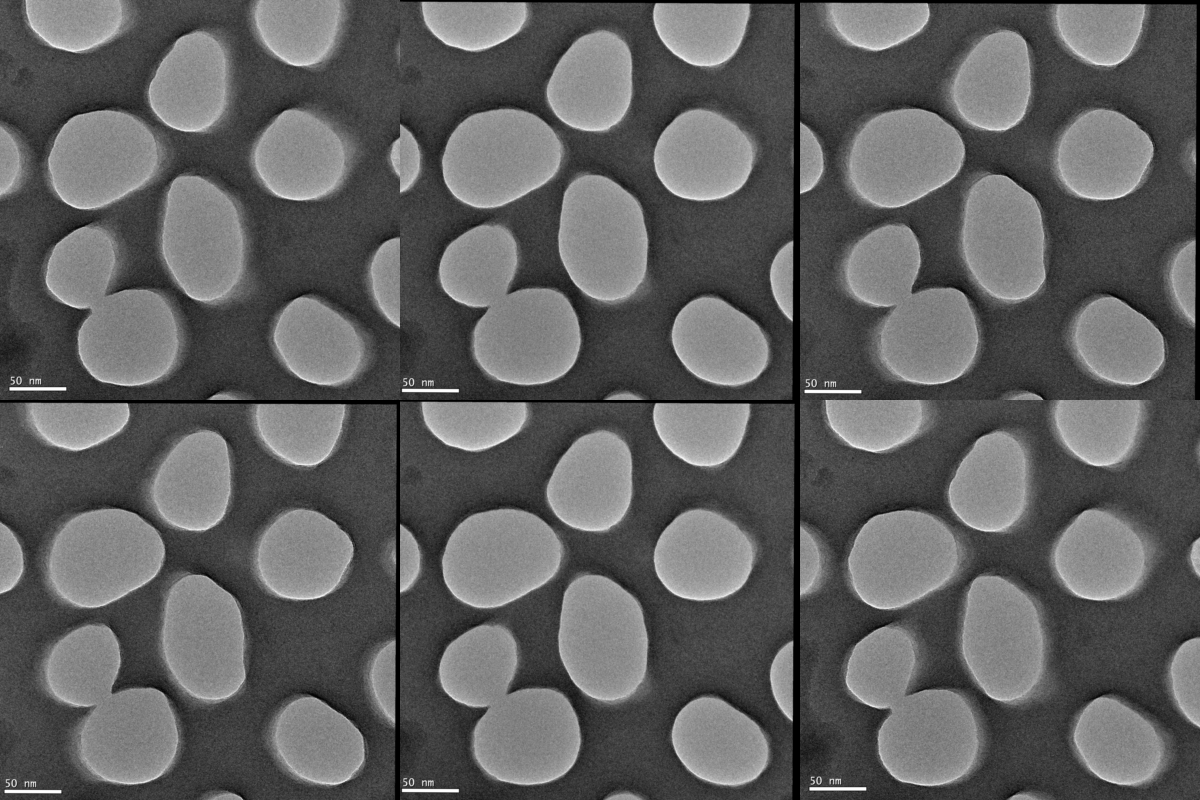

Montages

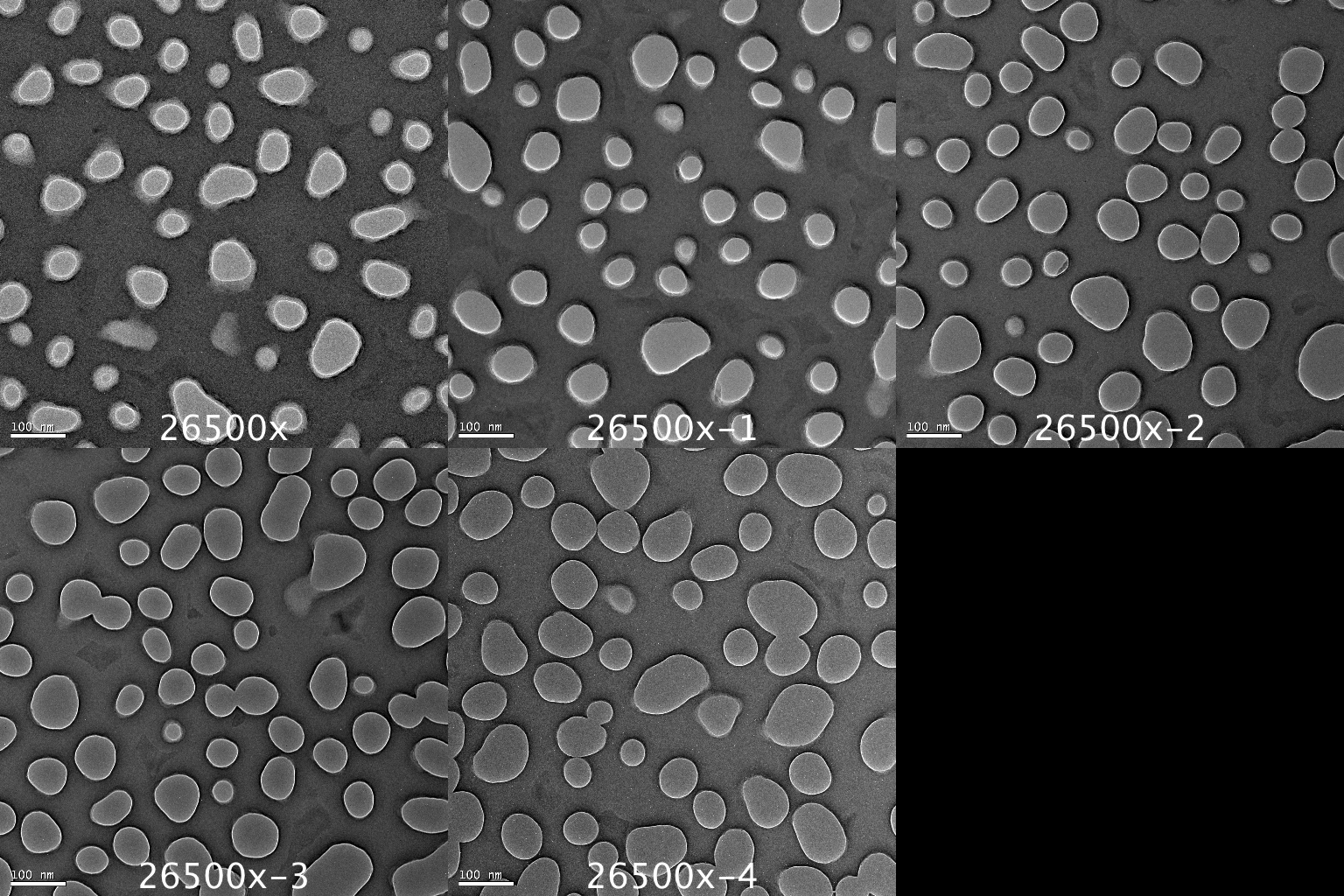

The membranes thin as we etch for longer periods of time. Pore merging begins above 20s of etch. The inner surface of pores seem to be roughened from the backside etch, though it seems also to smooth out as etched for longer. This may be coincidental; the longer the etch, the thinner the membrane, so we might be seeing less rough contours overall.
Pore Distributions:
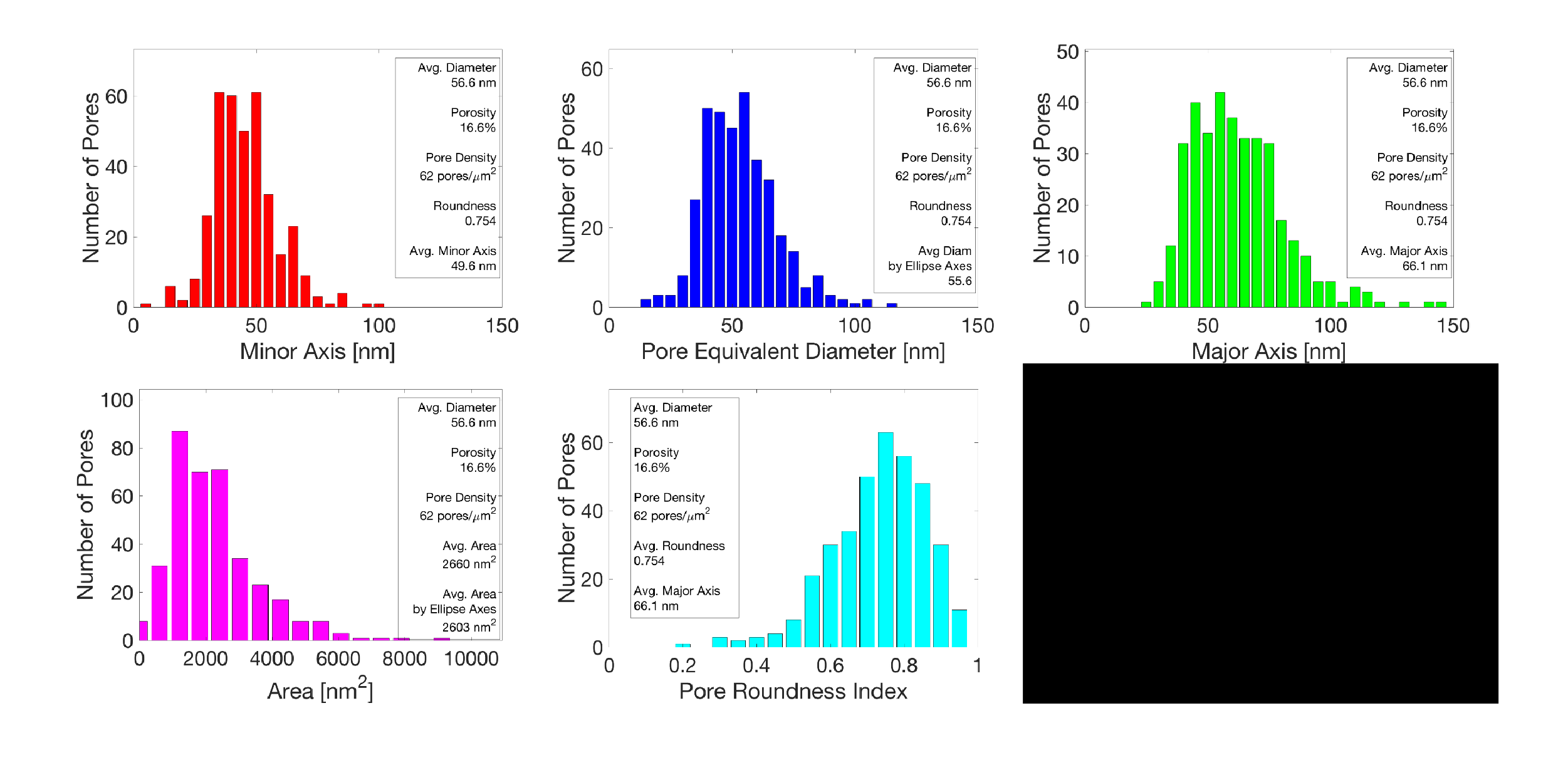
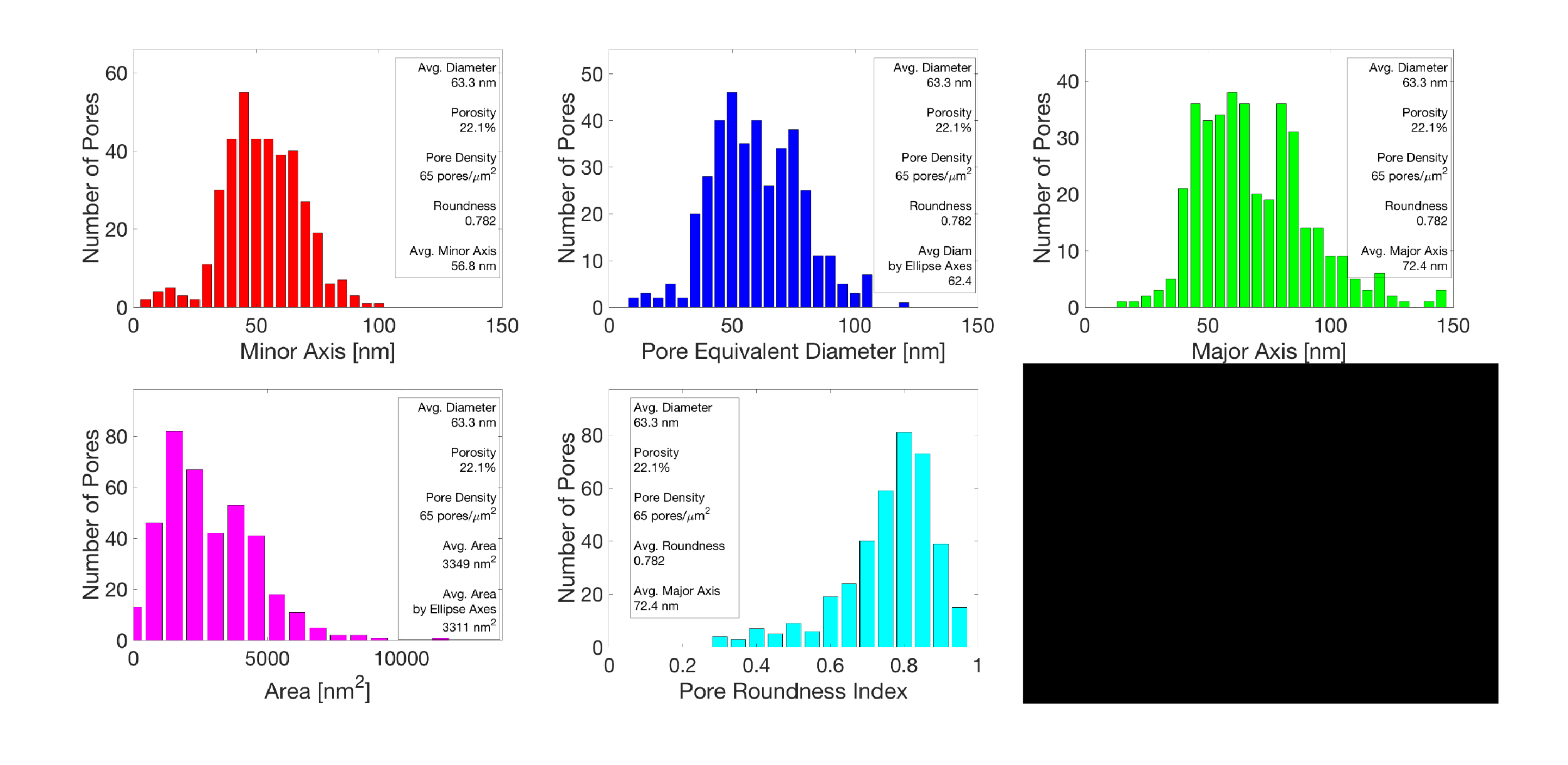
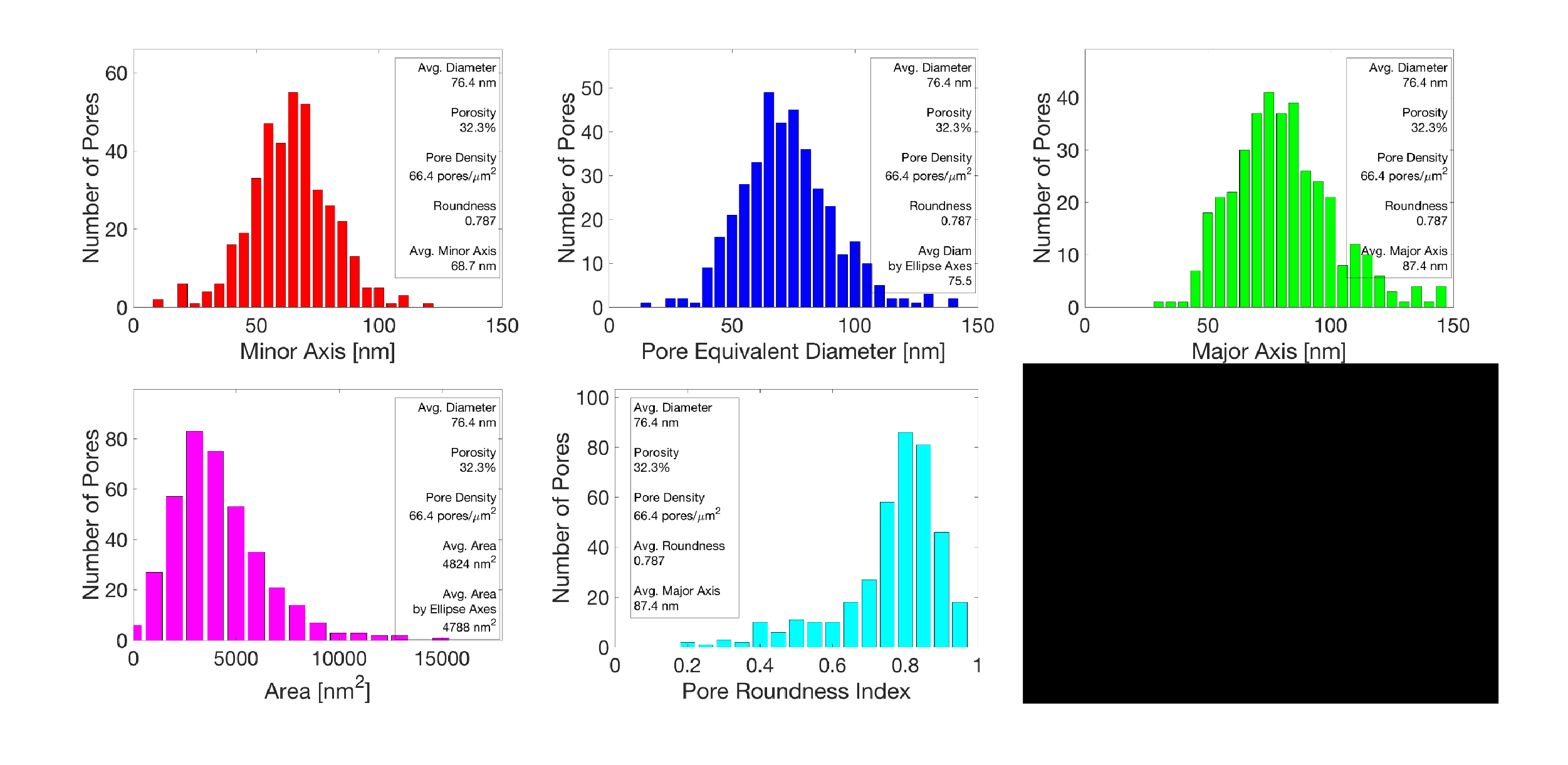
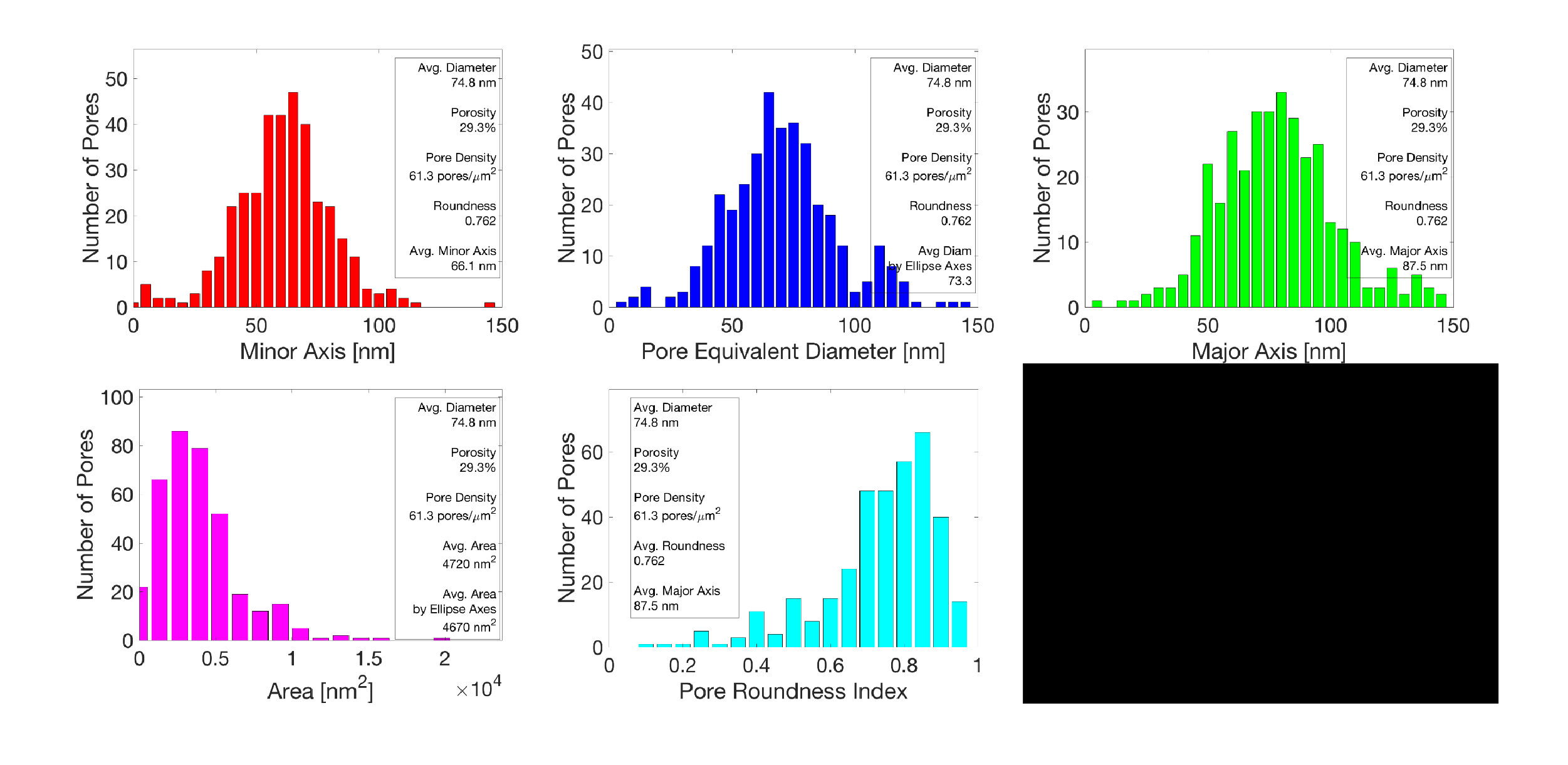
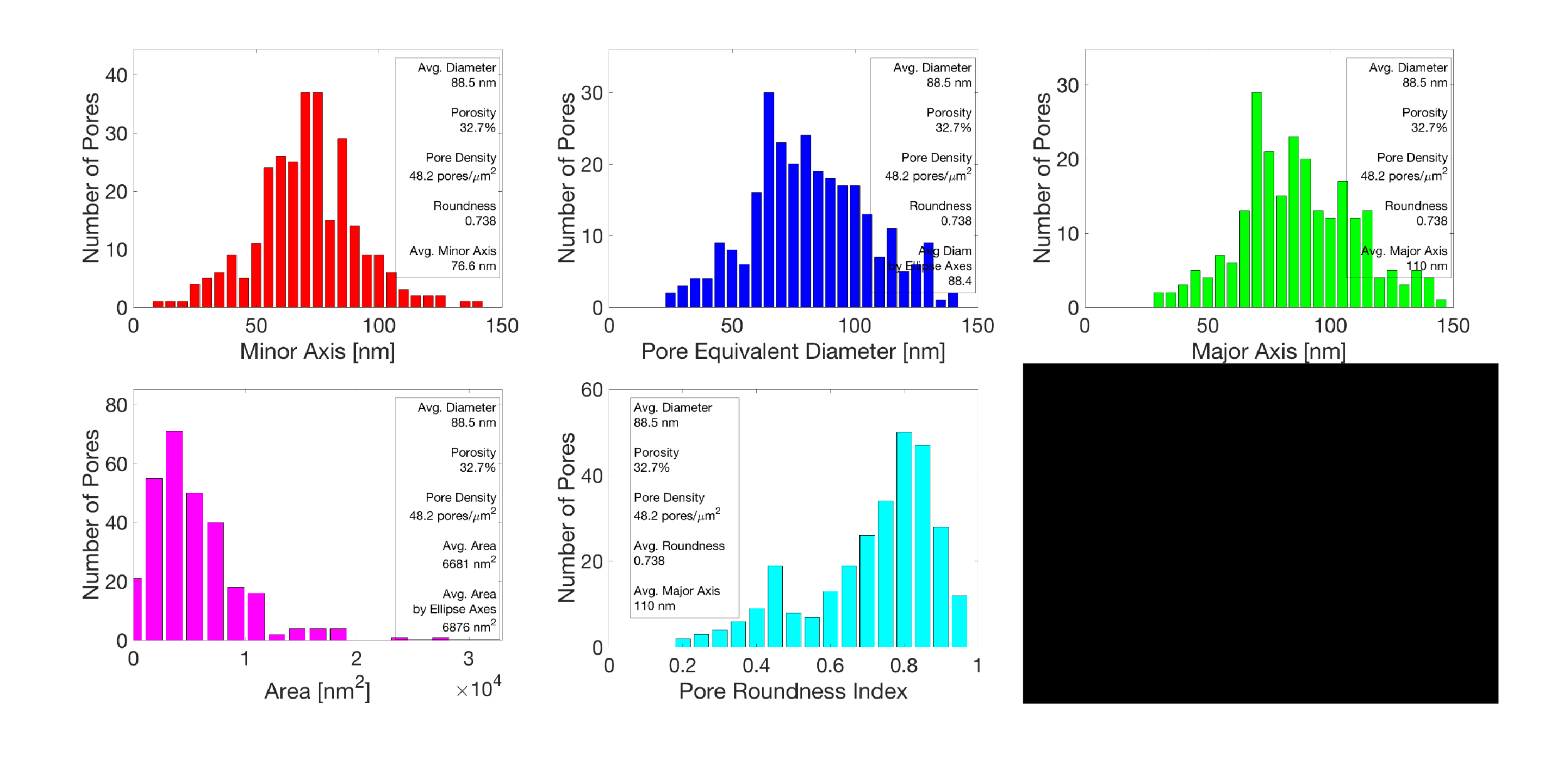
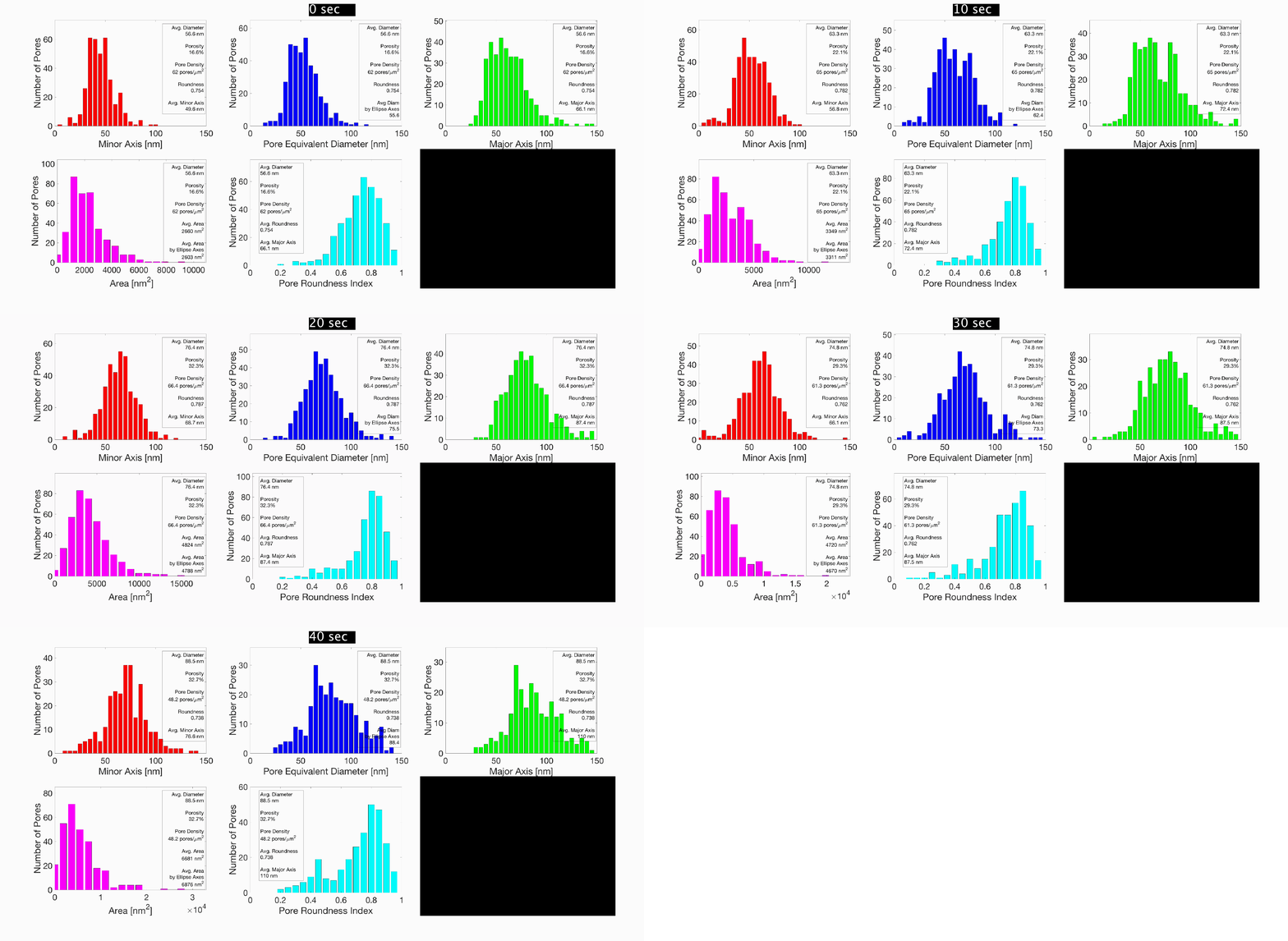
Interestingly, the increase in porosity slows down as we etch for longer times. We’re really thinning the membrane instead of blowing out the pores. Most of the porosity is achieved in the first 20s of etch, indicating pits with thin bottoms. The effects of pore merging also becomes more obvious in the pore roundness index and the multi peak pore equivalent diameter indices.
Animated Pore Distribution Shift:
Conclusions
We have a method for sculpting 100 nm thick NPN down to approximately 70 nm thick, recapturing pore characteristics that appear similar to 1085 NPN (large pores, 60-70 pores/um^2). A balance between the desired thickness of the etched membranes and the pore merging will have to be struck. Reconstructions will confirm the thickness of the etched membranes.