Integration of in situ Heating for Microplastic Melting Assay on Silicon Nanomembranes
Document: Ian’s Presentation
Thanks to Ian Krout for the experiment and the writeup, which I have organized here.
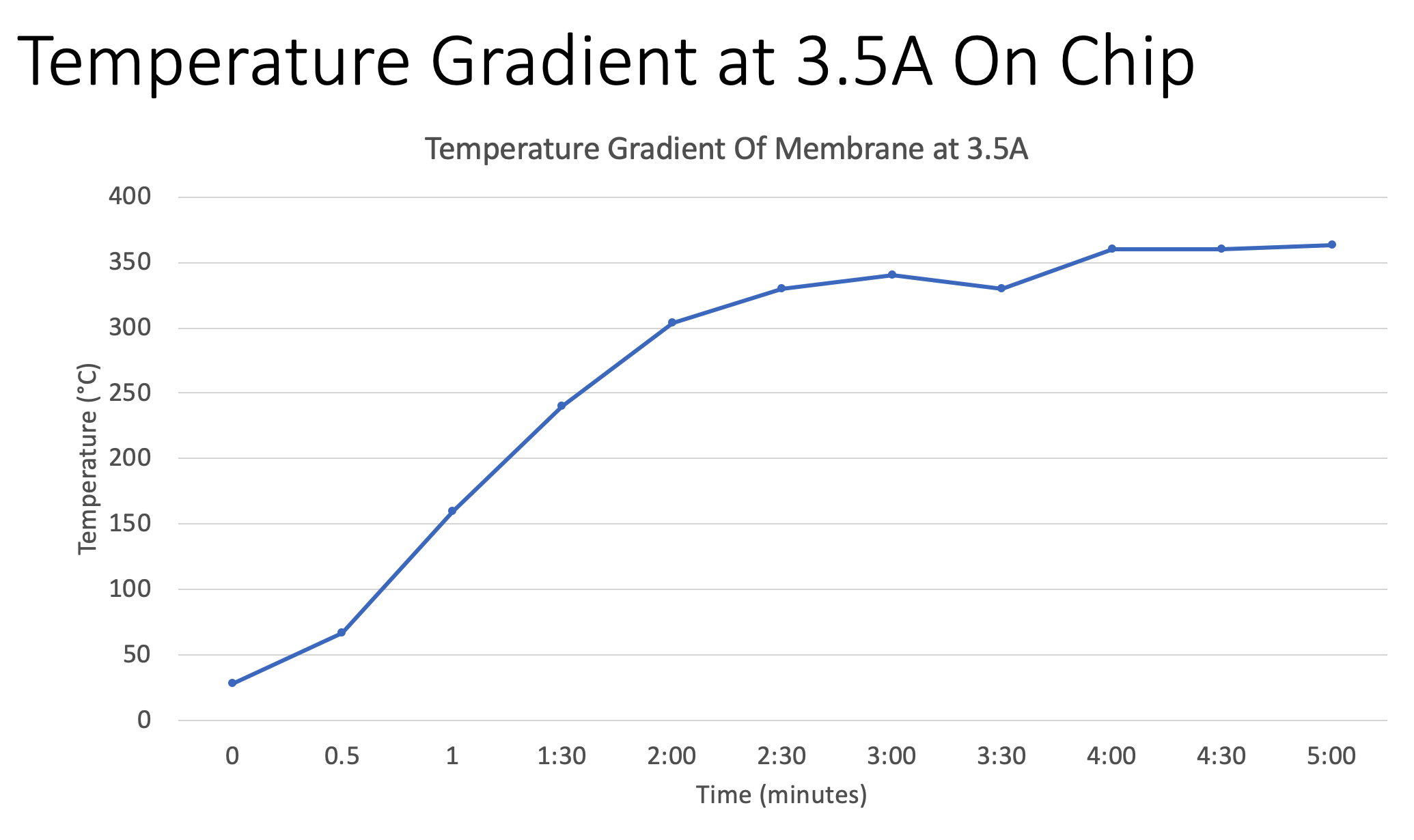
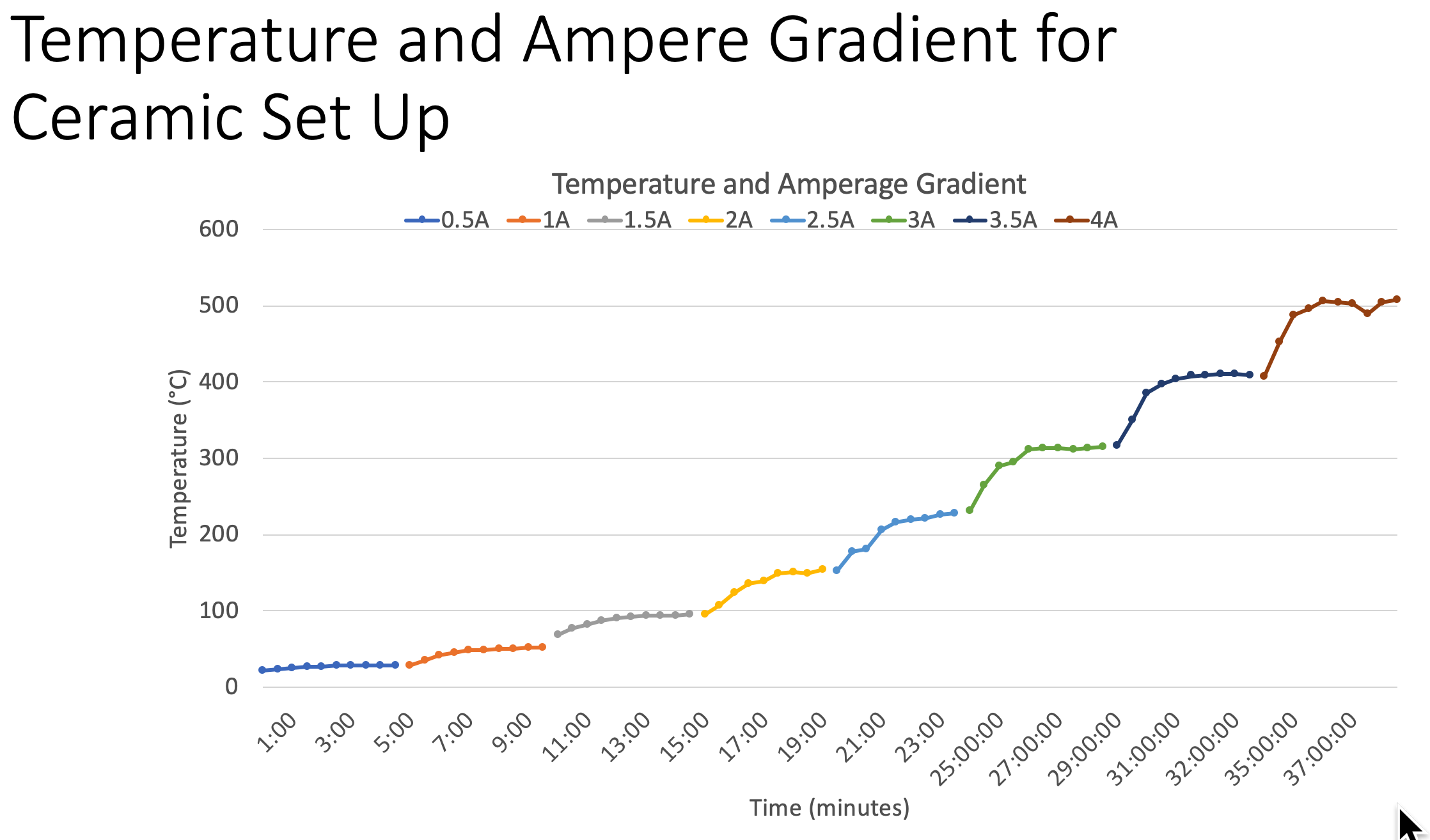
The purpose of this set-up was to develop a tool to melt plastic particles collected on the silicon nanomembranes membranes. Due to the different melting temperatures of plastic polymers this tool allows users the ability to rapidly and easily analyze the type of plastics collected from an environmental sample. What it consists of is a resistor running through a ceramic plate. Investigation of the steady state temperatures at different amperes, allowed us to develop a thermal gradient, depicting the amperes and time needed to reach a desired temperature. This allows user manipulation to set the ceramic plate as needed. Through manipulation of the amperes flowing through the resistor the steady state temperature, temperature ramping speed, and max temperature desired to fit the experiment at hand. The setup can be easily placed under a microscope in order to film or time-lapse the melting of these plastics. In this way our set up is able to mimic the “hot-needle” technique used commonly in plastics research on a much larger scales, quicker, and providing more information. The “hot-needle” method has been historically used as a way to simply determine if something is plastic or not. By use of this resistor technique not only can we determine what is plastic and what is not, but by manipulating the temperature of the plate, determine what the polymer make up of the plastic is. Overall this technique will allow for efficient characterization of plastics within environmental samples without the need for time consuming spectroscopy.
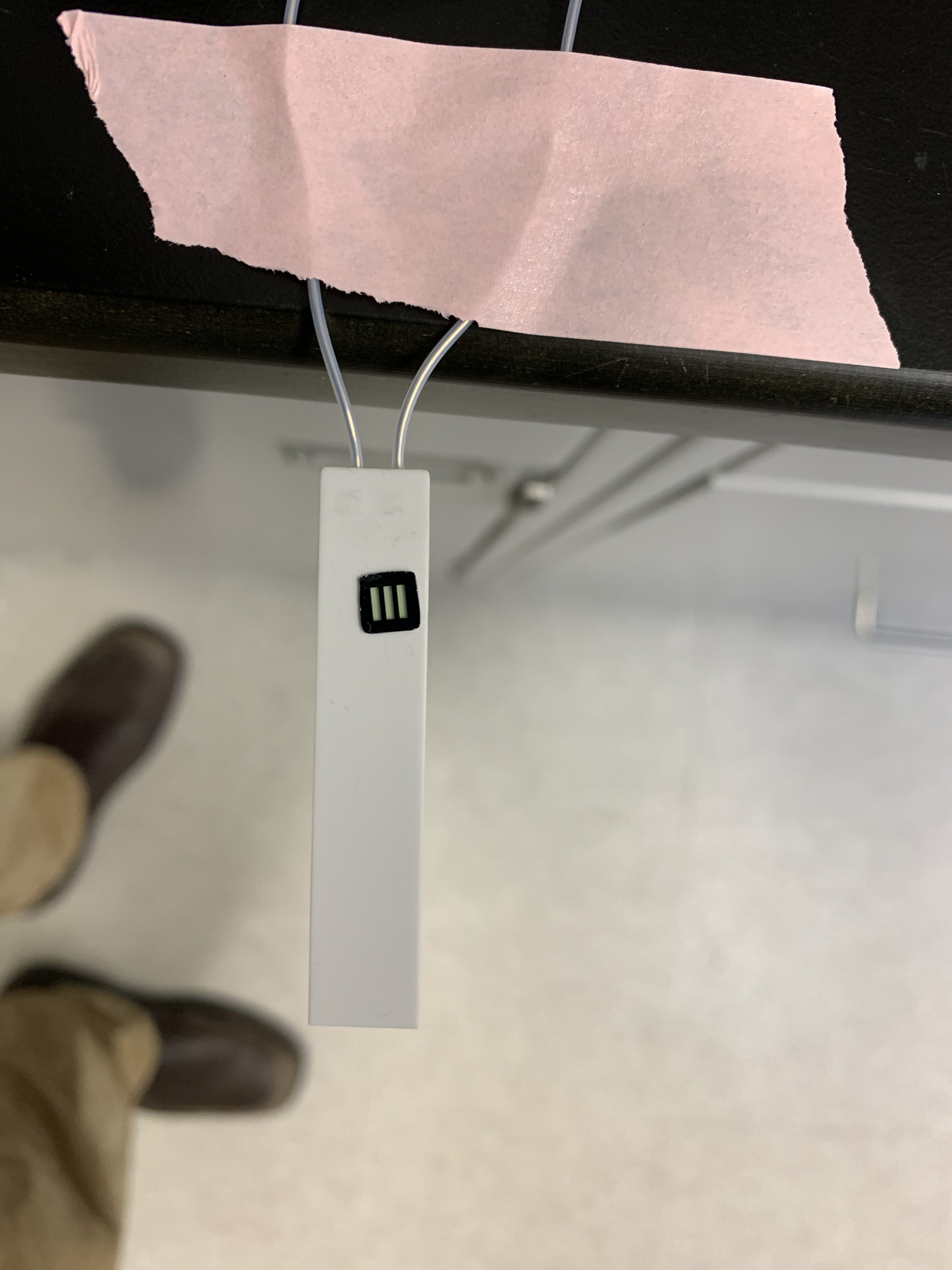
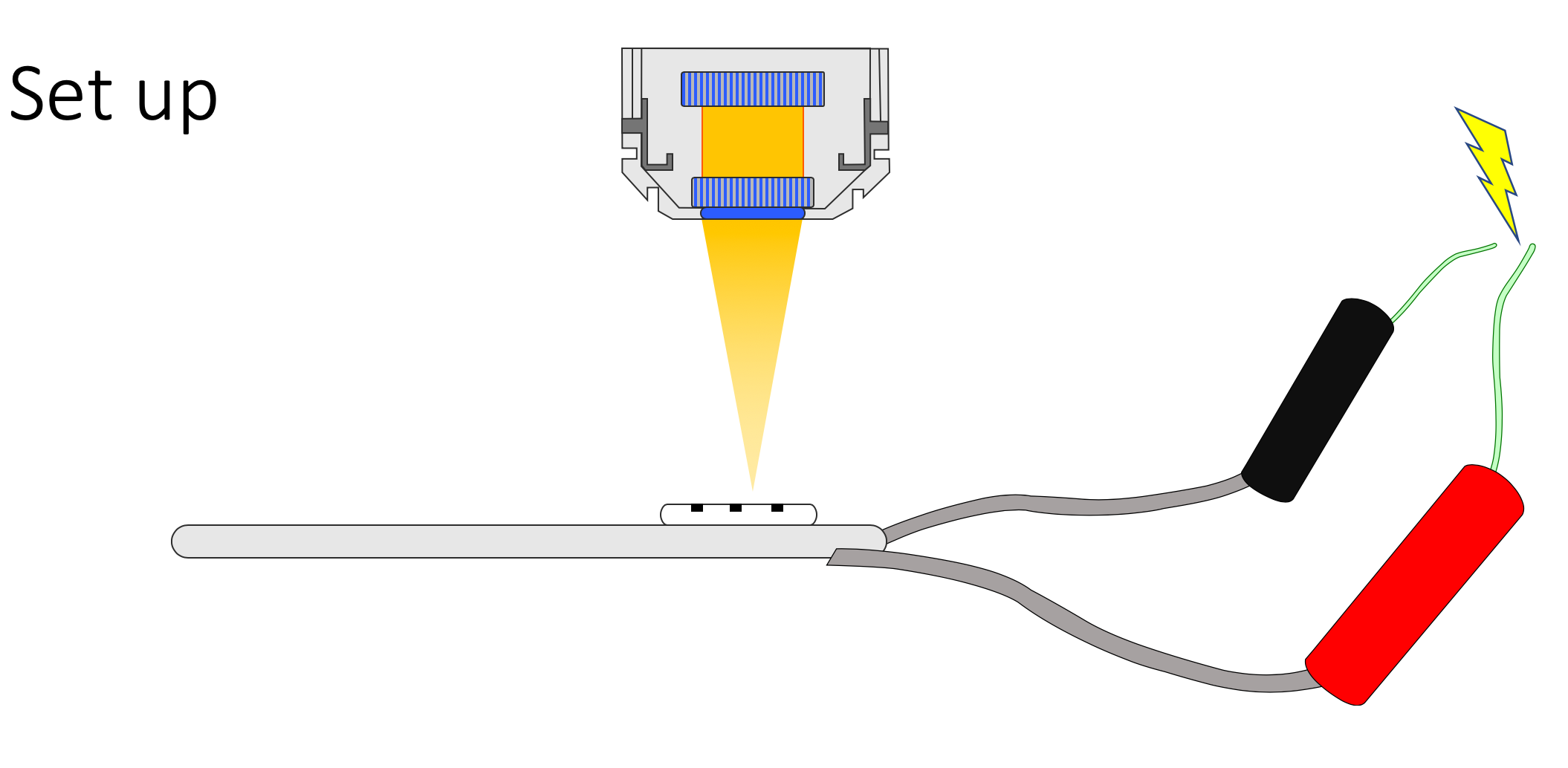
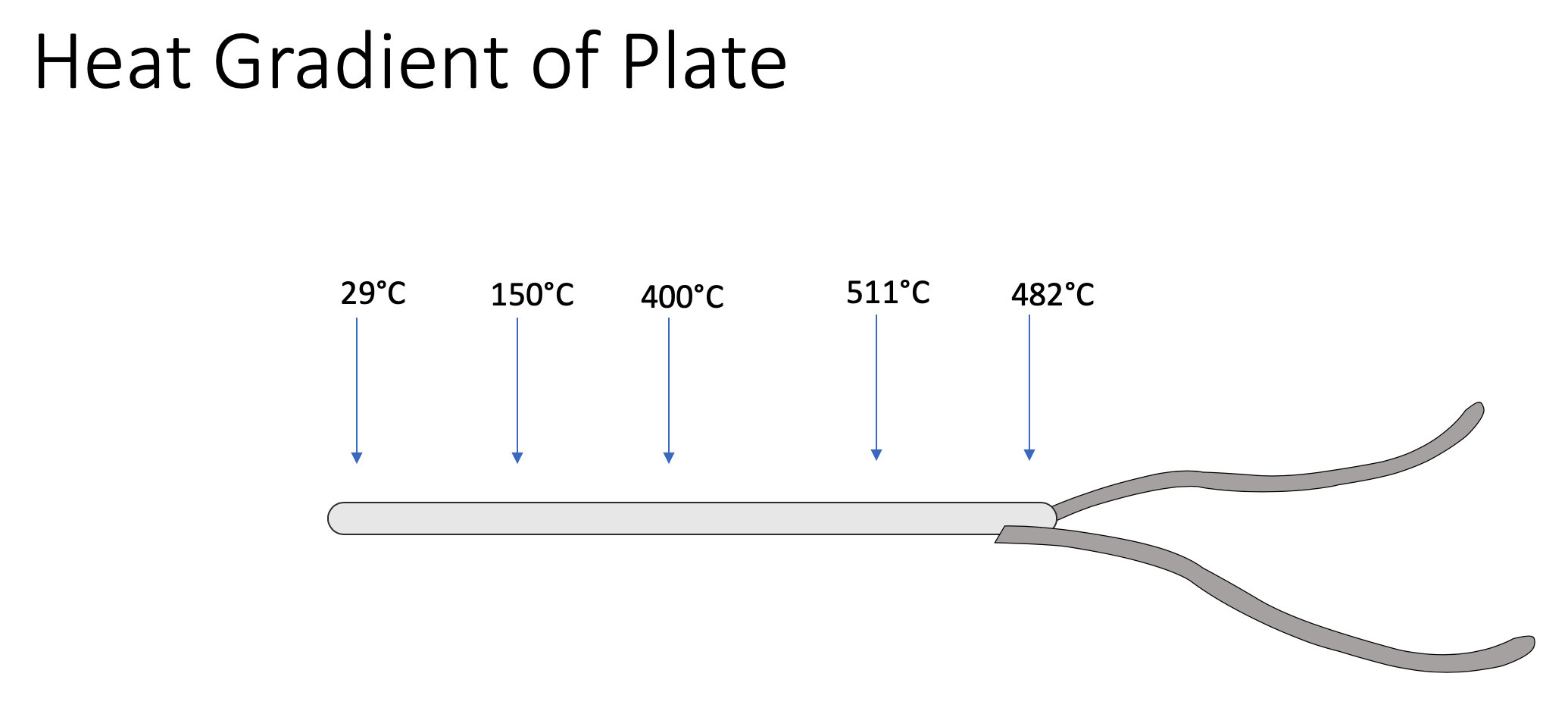
In order to confirm the ability, the ceramic plates, we tested their abilities to melt plastics with a high melting point, polyethylene (~248°C). To do so we referred, to the thermal gradient to decide on the amperes needed. We then placed the chip containing the polyethylene on the ceramic plate and ran 3.5A through the resistor. The plate heated up and after about a minute the plastics starting to fuse together, change colors, shrink and become aqueous. Thus, we were able to confirm the ability of the ceramic plate to transmit heat at sufficient temperature to melt plastics with even the highest of melting temperatures.
Aligned Video (8x speed)
This video was stabilized with Image J. Original file was sped up with iMovie (8x), then individual frames were converted to PNG images using Adobe Media Encoder. These images were then aligned in FiJi using the Linear SIFT registration plugin. This movie was then saved as an AVI, and converted to MP4 using Handbrake.
Unaligned (8x speed):
Unaligned (1x speed)
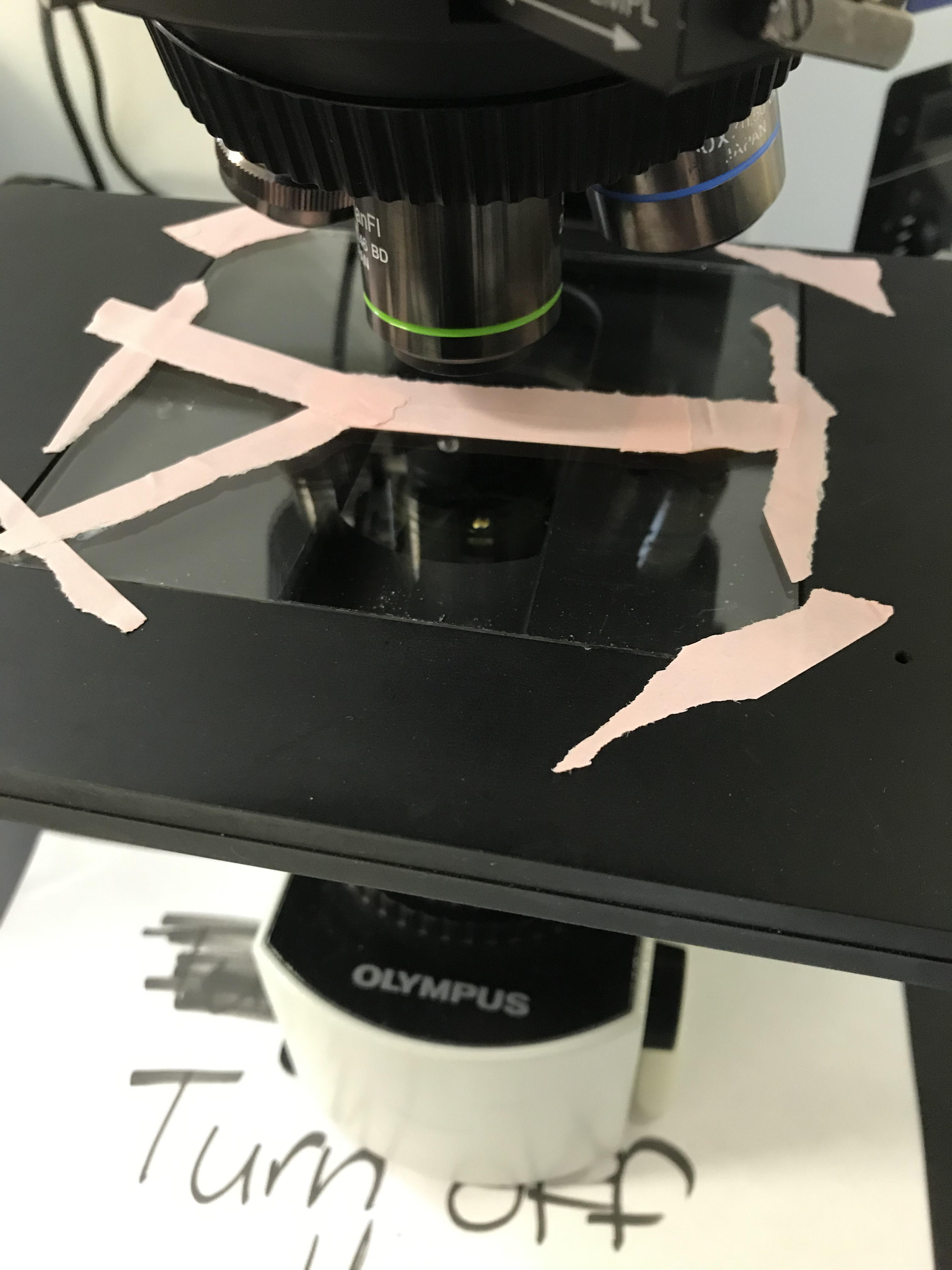
EDIT: When doing this on a microscope, do not apply the heating directly to your stage as the glass is not heat resistant (Microscope stages are not borosilicate) and therefore heating will produce this unsavory result that all your lab mates will harass you for:
Comment courtesy of Greg’s conscience.