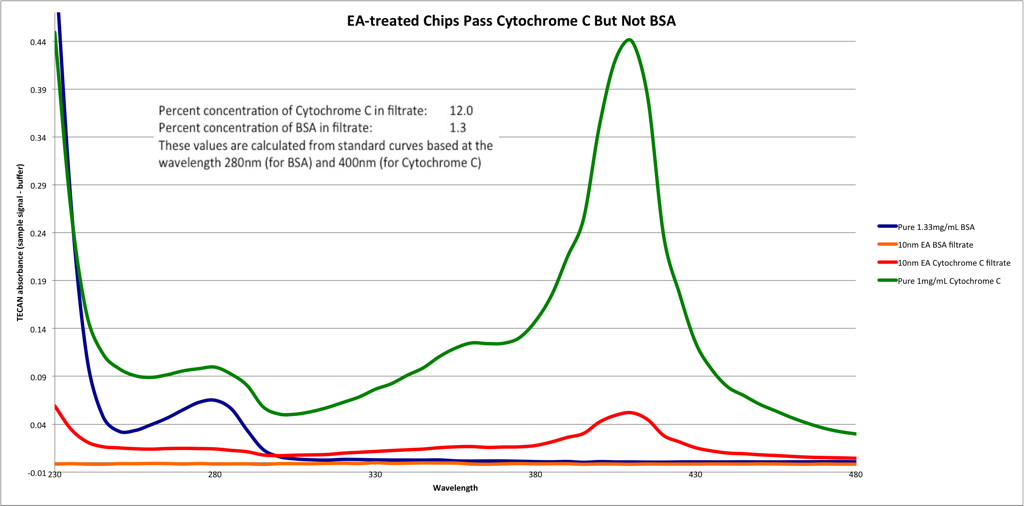
Cytochrome C can pass through 10nm EA-treated Sepcons
Using the remaining 10nm EA-treated chips (all of the 15nm EA-treated and all of the PEG-lyated chips had either been used or broken) I was able to pass cytochrome C through Sepcons. As usual, yields were low (~8-12uL) but the curves were of high quality. The passage of Cytochrome C is not surprising because we know from experience that the molecule is unusually slippery (although we’re not quite sure why). We can show this post and my previous post on BSA being held back by EA-treated membranes to the Coulter Foundation to show that 10nm EA-treated membranes (and presumably 15nm EA-treated) can be used for separating BSA from Cytochrome C.
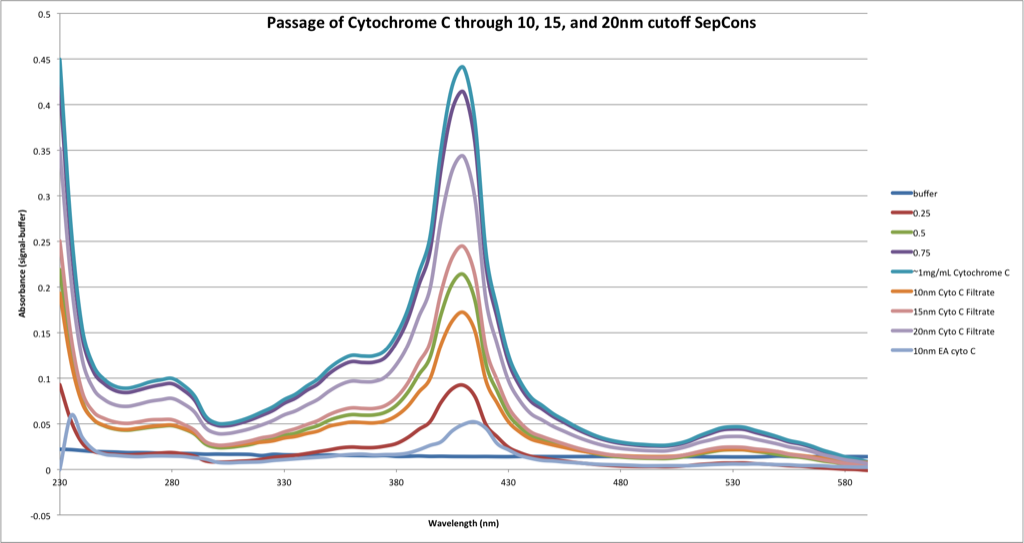
The figure shows the spectrum of a standard curve for cytochrome C along with the TECAN curves for the filtrate of separations with untreated 10, 15, and 20nm cutoff Sepcons as well as the 10nm EA-treated Sepcon Cytochrome C filtrate curve (second curve from the bottom, sky blue).
Methods: Initially, the Sepcons were wetted with 12uL water on the backside and loaded with 400uL of water. They were then spun at 2000rpm for 5 minutes to be sure that the membranes were intact. If between 20-200uL of water passed into the filtrate, we considered them intact. Next, they were loaded with 400uL of 1 mg/mL Cytochrome C and again spun at 2000rpm for 5 minutes. The filtrate was then put in the TECAN to generate the curves in the post.
Here’s a much prettier (and clearer) synopsis of this work:
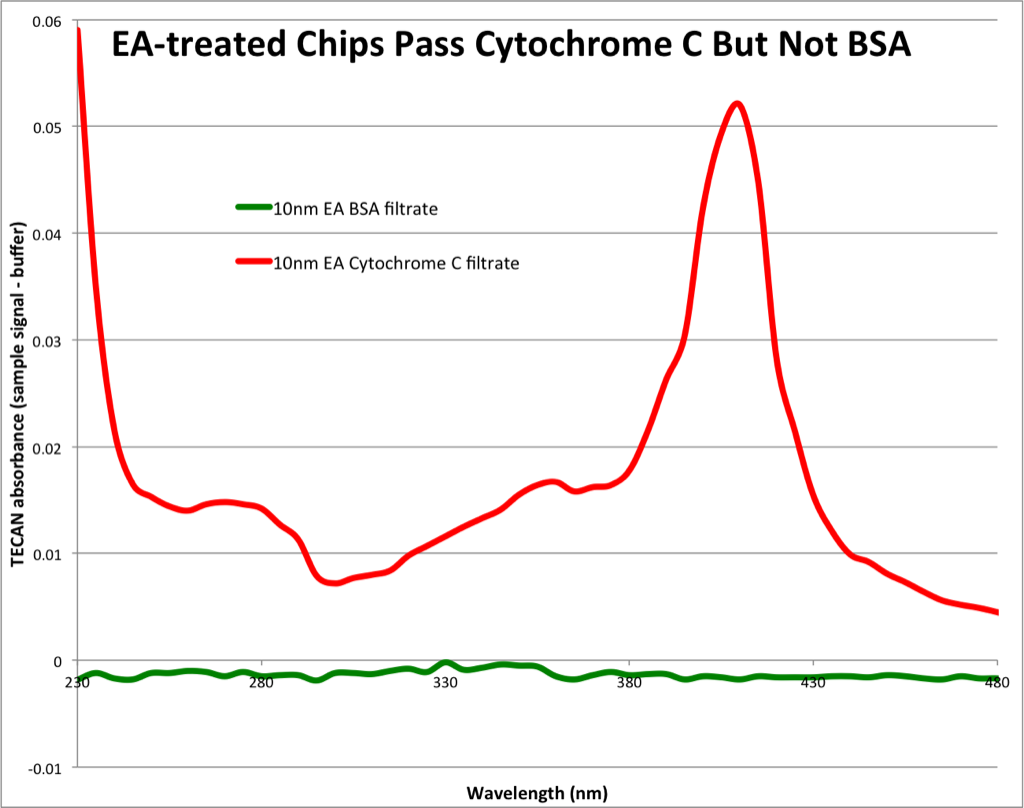
And here is the same graph with percent concentration included: