Microporous Membrane Transfer
We’ve had quite a bit of success transferring nanoporous membranes now, but a lot of questions about the exact nature of the physics at work during the transfer process remain. Pursuant to those questions, we wanted to try changing a variable — switching from nanopores to micropores — to see how that changes the behavior of the membrane during and after the transfer.
Our first attempt at transferring microporous SiN onto glass failed outright — we found that the transfer simply did not occur when using the same method we had seen success with NPN with previously. Interestingly, if the microporous membrane was removed quickly after vapor was applied, condensation was visible on the underlying glass, indicating that the problem was not a lack of vapor between the surfaces, but a lack of sufficient force from condensed water between the glass and the SiN to break away the membrane from its chip.
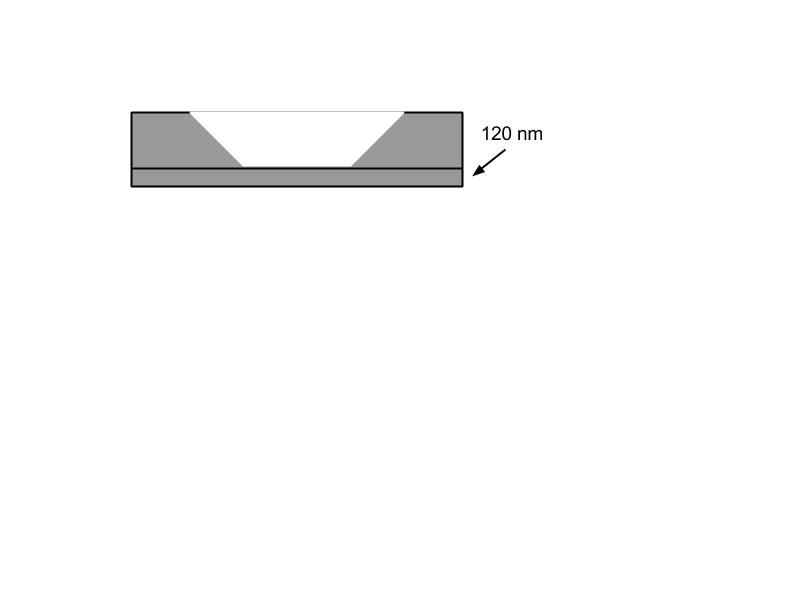
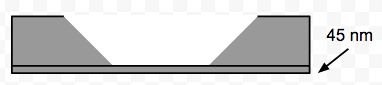
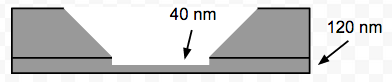
We concluded that the added thickness of the microporous material (~120 nm compared to ~50 nm of NPN previously) was the likely culprit and resolved to use the RIE to etch down the microporous chips pre-transfer in order to weaken them and promote detachment. We first needed to quantify the etching rate so we could have a good idea how how thick the materials were post-etch, so we ran etches for 30, 90, and 150 seconds to compare results using the SEM.
The 150 second etch simply removed the freestanding membrane, but we got some great shots of the other two as well as the control (no etch,) which were broken by hand to allow us to see them in cross-section.
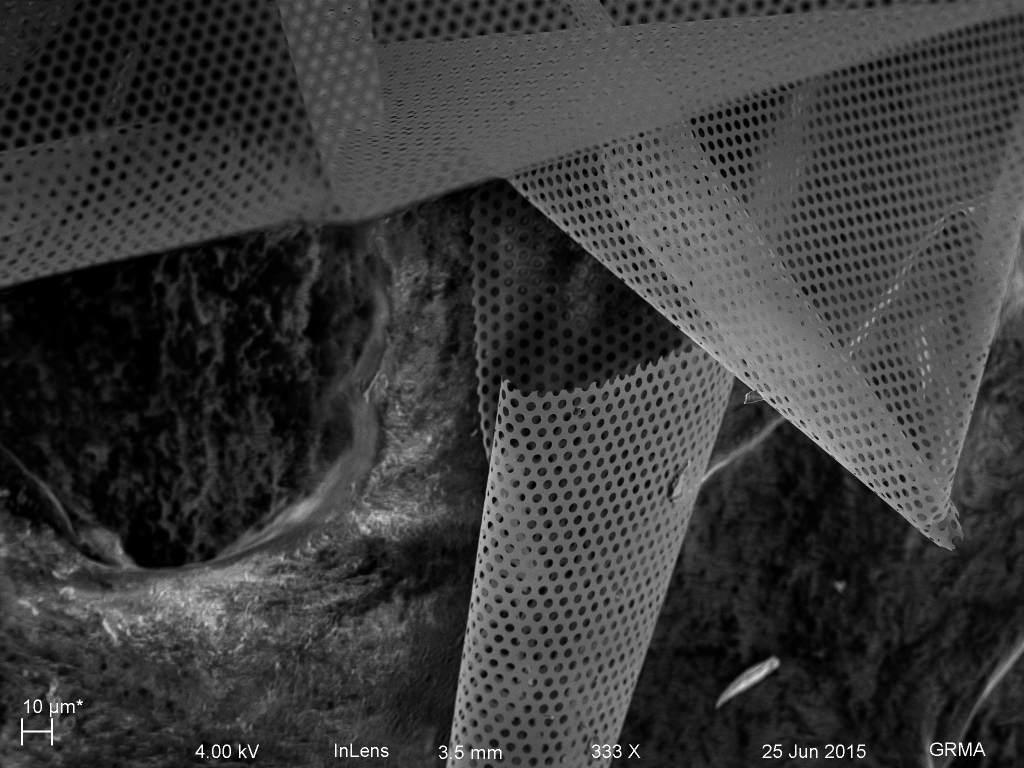
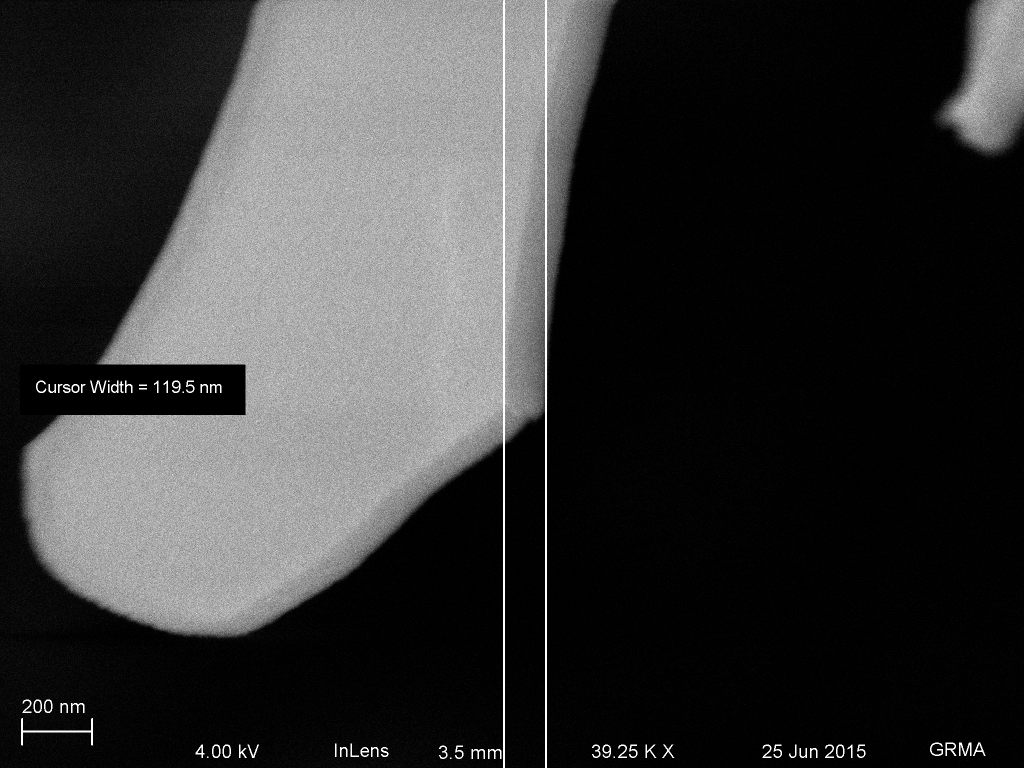
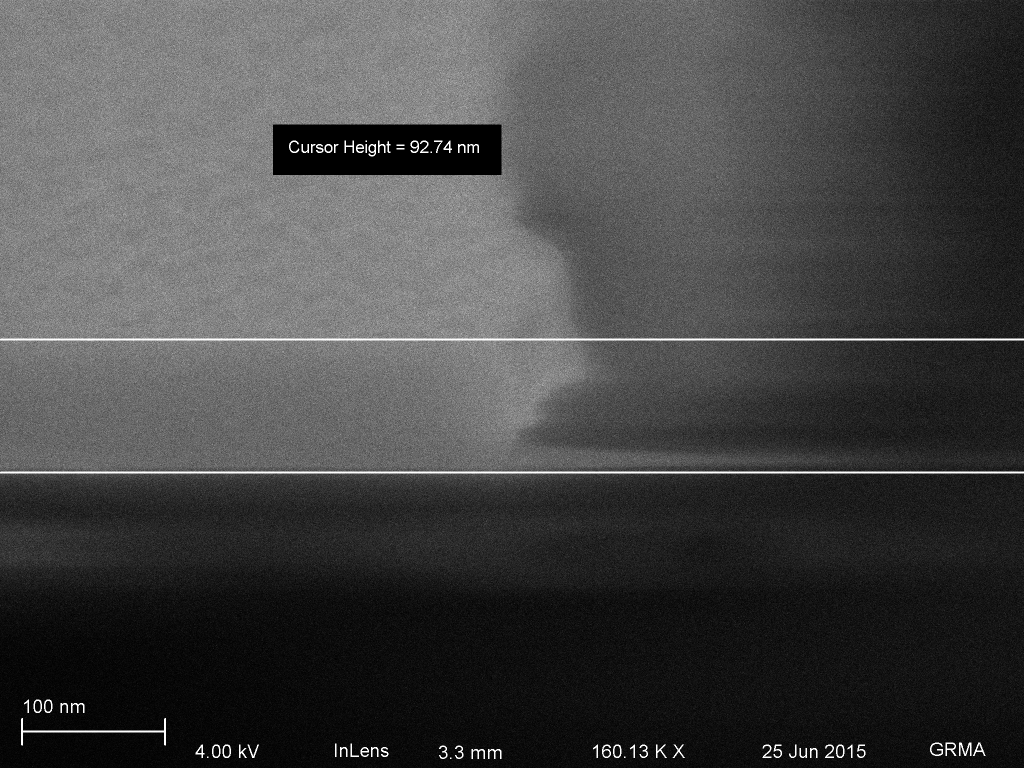
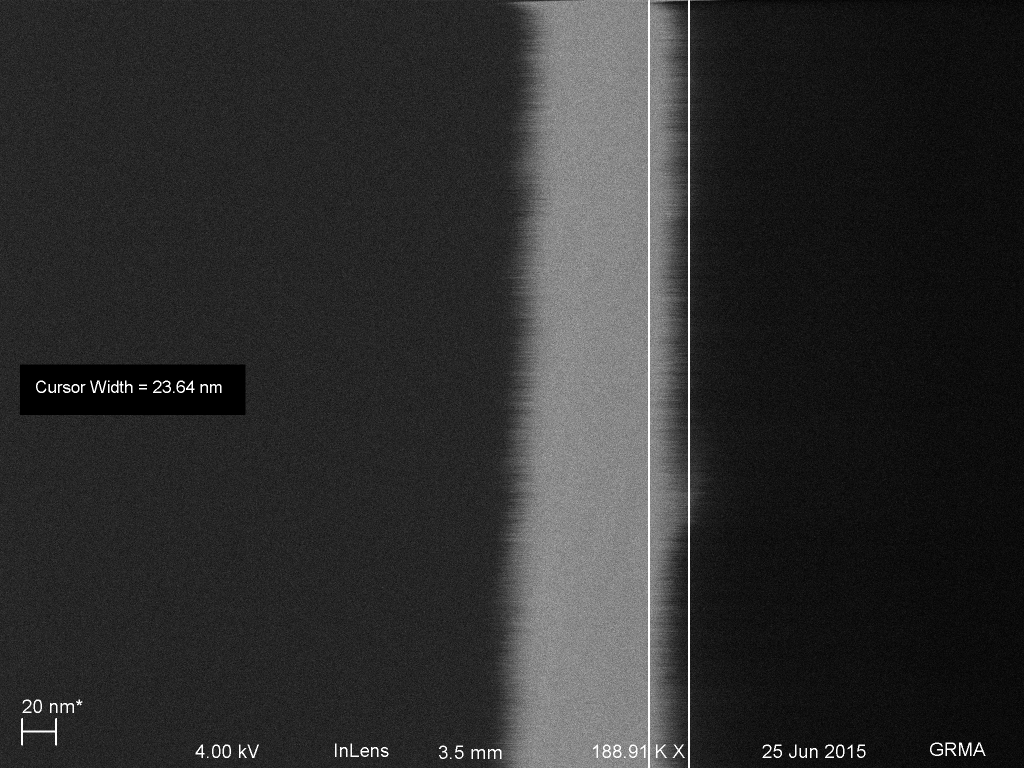
The 90 s etch actually got the membrane so extremely thin that we were able to watch it flapping around in the breeze through the rapid heating created by the electron beam:
From these images, we concluded that the etch rate is very close to 1 nm/s (how convenient), so we proceeded to etch a batch of chips for 75 s to get it down to a similar thickness to the NPN which we had success transferring before.
While this worked great for transfer onto glass substrate, we still couldn’t make it happen when transferring onto SiN, which we can explain with the fact of SiN’s increased hydrophobicity compared to glass: more hydrophobic surface -> decreased capillarity -> less force required to pull surfaces apart -> less force applied to break away freestanding membrane. Greg suggested a backside etch instead, motivated by an attempt to create regions of high stress at the edges of the membrane with the etch to decrease the required force to break it away. This worked pretty well.
|
 |
 |
 |
||
| Glass | X | 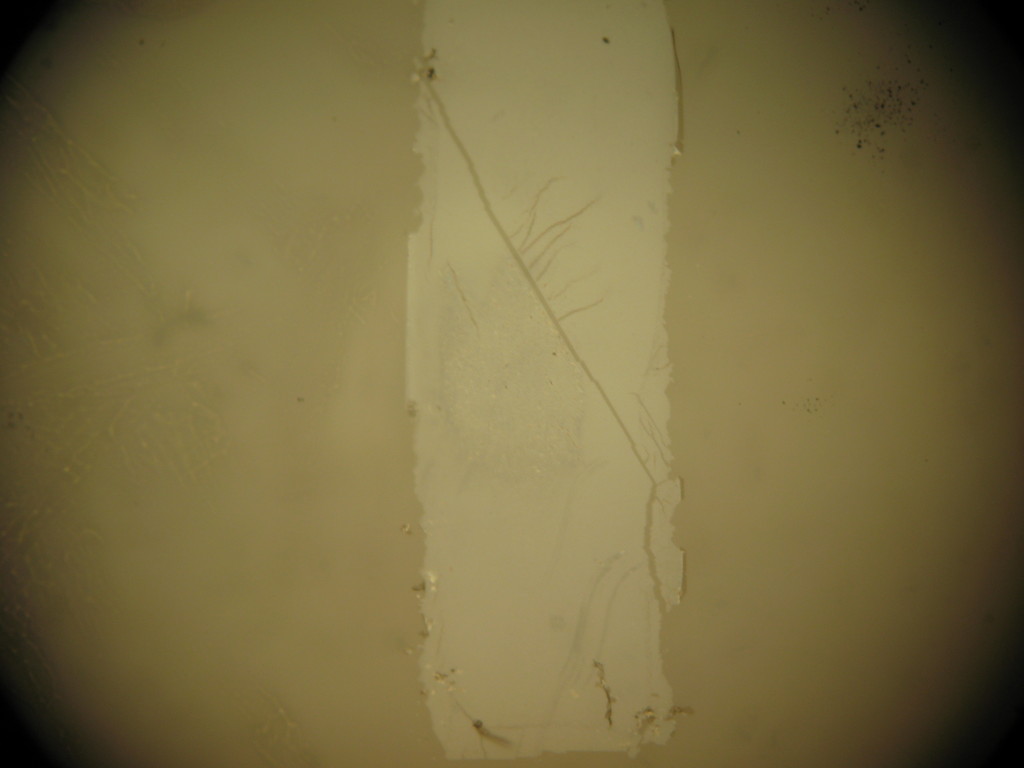 |
(presumably would’ve worked) | ||
| SiN | (presumably would not have worked) | X | 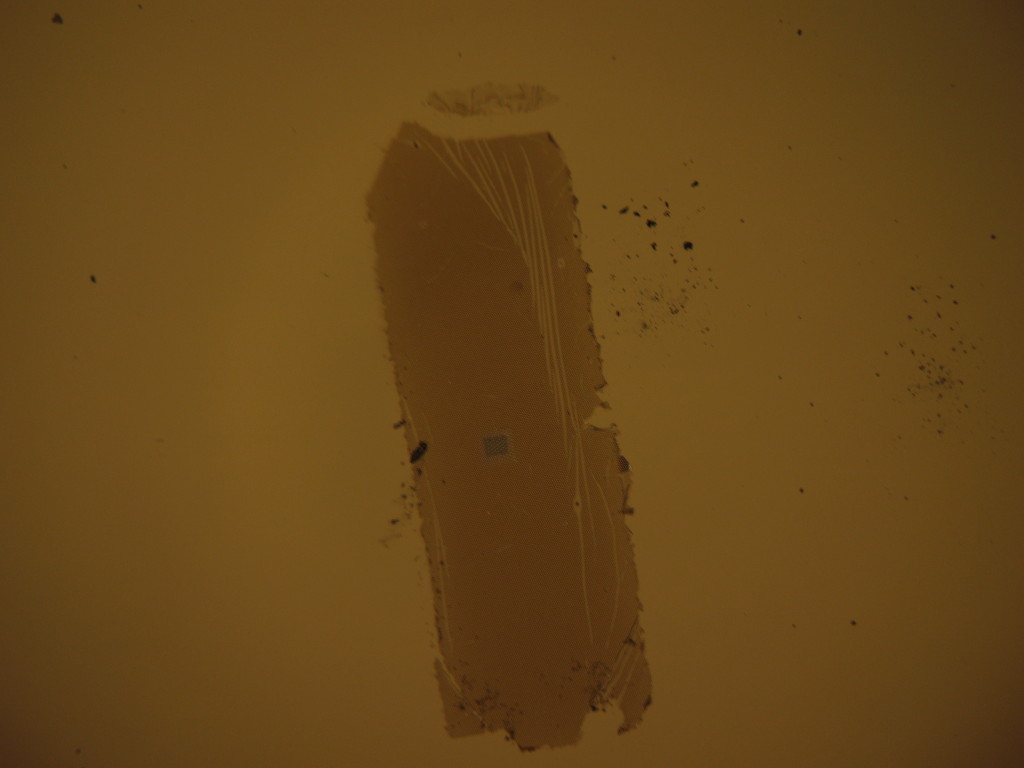 |
Now that we’ve got the transfer working, we ran a couple experiments similar to those performed on the NPN transferred membrane earlier: a sliding experiment in which the membrane was transferred onto glass and then submerged in water sideways to allow gravity to drag it along the glass surface, and a shear experiment in which the membrane was transferred onto SiN and subjected to high shear from water flowing overtop of it.
In both experiments, we saw results identical to those from their nanoporous counterparts: no movement of the membrane. The sliding experiment membrane remained in place after a week of being submerged, while the shear membrane withstood the flow without budging:
This shoots down the hypothesis that the microporous membranes would float on a considerably thicker layer of water and therefore by subject to moving under flow or gravity, leading us to believe that the pore size is not a significant factor in the transfer behavior of this material — at comparable thickness, it behaves very much like the nanoporous material we worked with previously. This implies that the ultimate stress experienced by the material is critical to the transfer process. We believe that an initial defect at one of the corners on the nanomembrane nucleates the transfer process, and this condition is difficult to achieve with thicker membranes.
We also believe that there might be a critical surface-area to weight ratio that determines whether or not the membrane will slide down a wall. We’ve established that the thin layer of water underneath the membrane is responsible for the adhesion, so either capillary forces or Van der Waals forces are counterbalancing the weight of the membrane. Like Gecko skin, these forces are directly proportional to the contact area.
It’s an interesting problem.