Imidazole functionalized graphene oxide/PEBAX mixed matrix membranes for efficient CO2 capture
Abstract
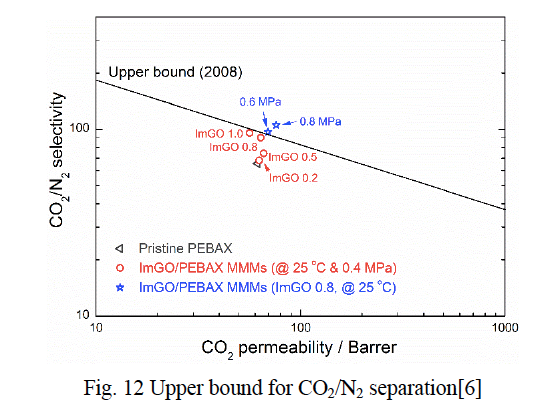
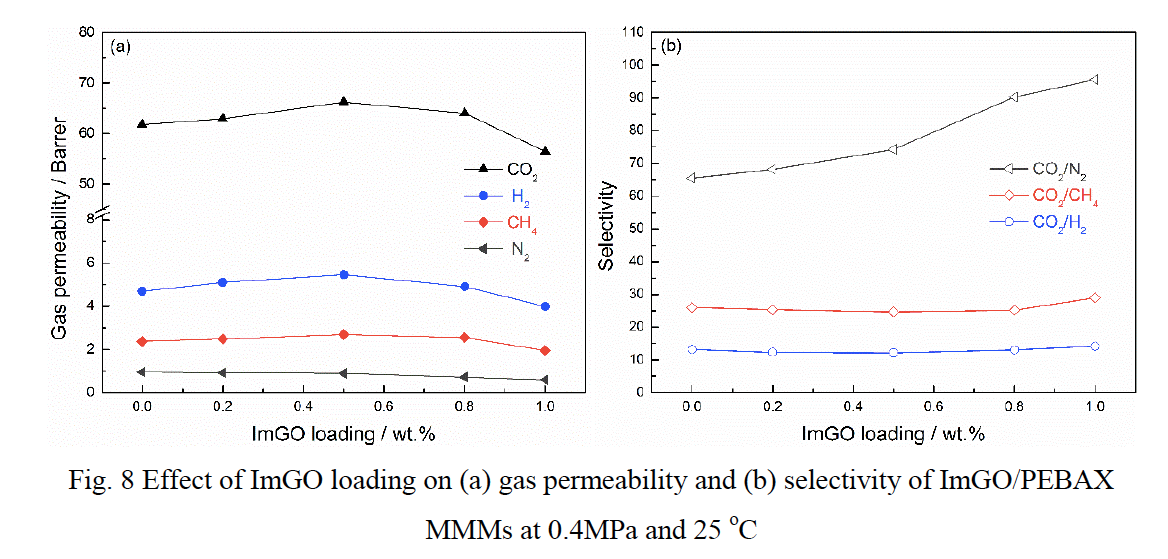
Mixed matrix membranes (MMMs) were composed of imidazole functionalized graphene oxide (ImGO), a CO2-philic nano-sheet inorganic material, and poly(ether-b-amide) (PEBAX) for CO2 capture. MMM doped with 0.8 wt.% ImGO exhibits the best CO2 separation performance, which shows the CO2/N2 selectivity up to 105.5 combined with CO2 permeability of 76.2 Barrer (1 Barrer=10-10∙cm3(STP)∙cm-1∙cm-2∙s-1∙cmHg-1), surpassing the Robeson Upper Bound of 2008. The selectivity of MMM for CO2/N2 increases by 46.0% compared to pristine PEBAX due to the interaction between CO2 and imidazole groups. With the increase of feed pressure, CO2 permeability increases significantly because of its higher solubility in polymer matrix and plasticization. It is effective to separation CO2 from N2 at lower temperature for MMMs because the apparent activation energy of the N2 permeation process in ImGO/PEBAX MMMs is much higher than that of CO2. Tg of MMMs are increased gradually because the polymer chain mobility is restricted by the presence of ImGO and a rigidified interface generates between polymer and filler. The mechanical properties have been significantly enhanced by the ImGO sheet as expected because of the presence of H-bonding. Having distinct improvement of CO2 separation performance, the ImGO/PEBAX MMMs indicates promising applications in CO2 capture processes.
Mixed matrix membranes – Like in this paper, these are typically a co-assembly of a polymer with an inorganic phase. Polymer provides the ‘backbone’ while inorganic phase provides function.
Graphene Oxide – Oxidized Graphene to give it function ….
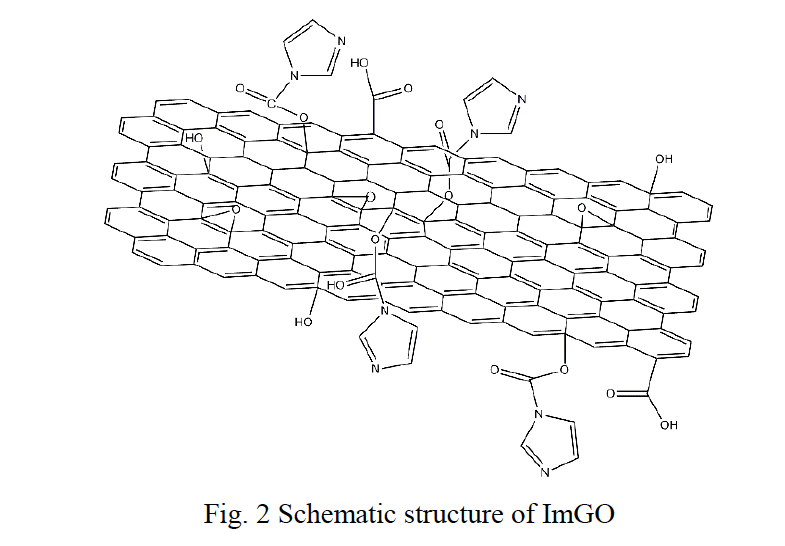
Like graphene, this stuff comes in flakes …

and is usually compacted to make useful material …
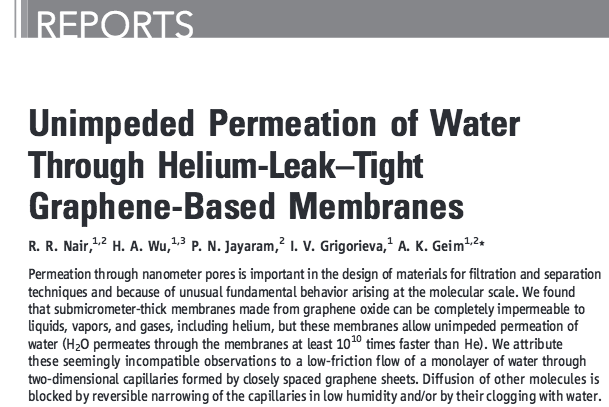
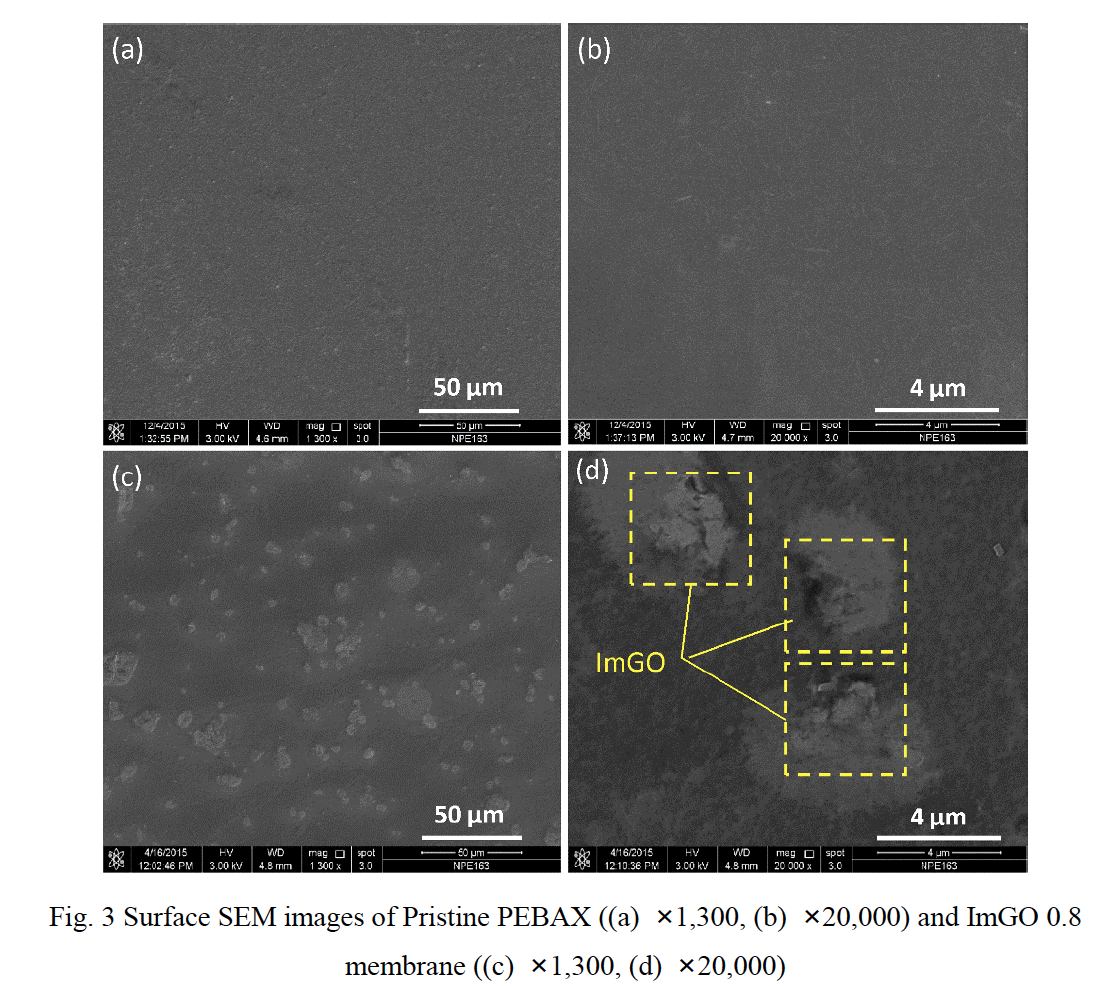
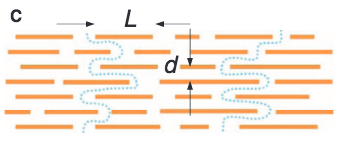 But that is for another Journal Club. Here they use embed ImGO in a polymer to improve gas separation characteristics. They get clumps of ImGO in the polymer …
2.2 Membrane preparation
3.0 wt.% PEBAX solution was prepared by dissolving polymer in the mixture of anhydrous ethanol/DI water (70/30 wt.% ) under reflux and stirring at 85 oC for 4 h [19, 38-40]. The solution was filtered through a 5 μm polytetrafluoroethylene filter (MILLIPORE, USA). Certain amount of ImGO was added into the PEBAX solution and kept stirring overnight for good dispersion. Bubbles were removed by ultrasonication for 5 minutes with an ultrasonic bath (AS5150B, Tianjin Automatic Science Instrument Co., LTD, China). The PEBAX or ImGO/PEBAX solution was cast on a flat Teflon® plate with a glass ring attached. Membrane thickness (30-50 μm) was controlled by the amount of solution added to the casting ring. Pristine PEBAX or ImGO/PEBAX membranes were obtained by drying the casting solution at 40˚C for 24 h. In order to remove residual solvent, the as-prepared membranes were further dried in a vacuum oven at 60˚C for 72 h.
In this work, pristine PEBAX membrane and MMMs with different ImGO loading of 0.2, 0.5, 0.8
and 1.0 wt.% were prepared. According to the ImGO loading, membrane samples were named
Pristine PEBAX, ImGO 0.2, ImGO 0.5, ImGO 0.8 and ImGO 1.0.
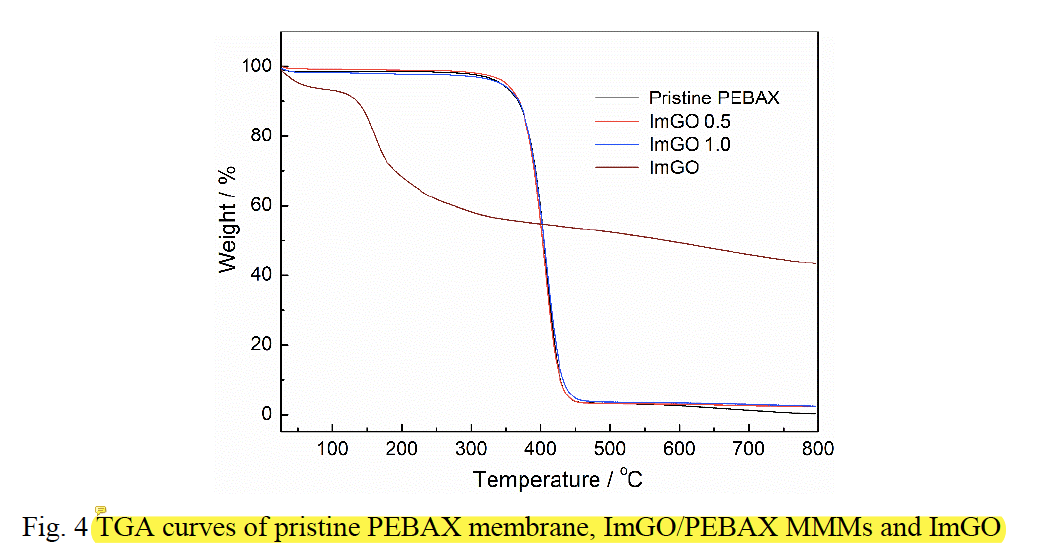
 TGA – Thermal Gravitational Analysis – used here to measure thermal stability or melting temperature
 DSC – Differential Scanning Calorimetetry – used to detect glass transition temperature – where a polymer transitions from a brittle crystalline material into an amorphous rubber like material
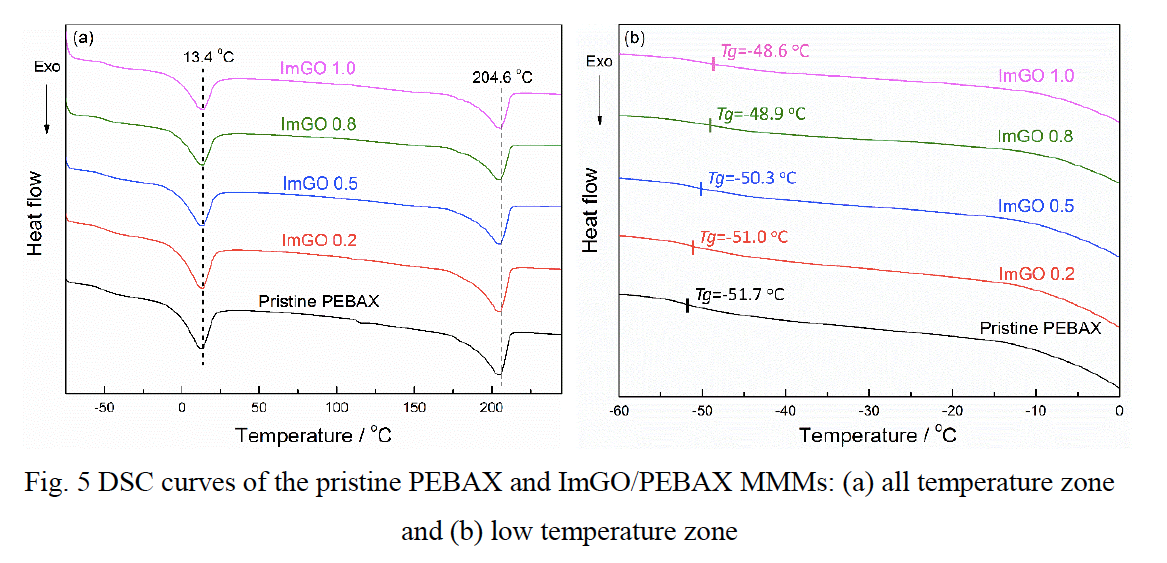 Fig. 5 (a) presents two exothermic peaks at 13.4 and 204.6 oC for the membranes, which are assigned to the solidification temperature of the polyether block and polyamide block, respectively. The pristine PEBAX shows a Tg of -51.7 oC that agrees well with literatures [18, 21, 37]. The Tg of ImGO/PEBAX MMMs are higher than that of pristine PEBAX membrane, which increase gradually from -51.0 to -48.6 oC with the increase of ImGO loading from 0.2 to 1.0 wt.%, as shown in Fig, 5(b). The mobility of polymer chain is restricted by the presence of filler in PEBAX matrix.
XPS – X-ray photoelectron spectroscopy – Elemental analysis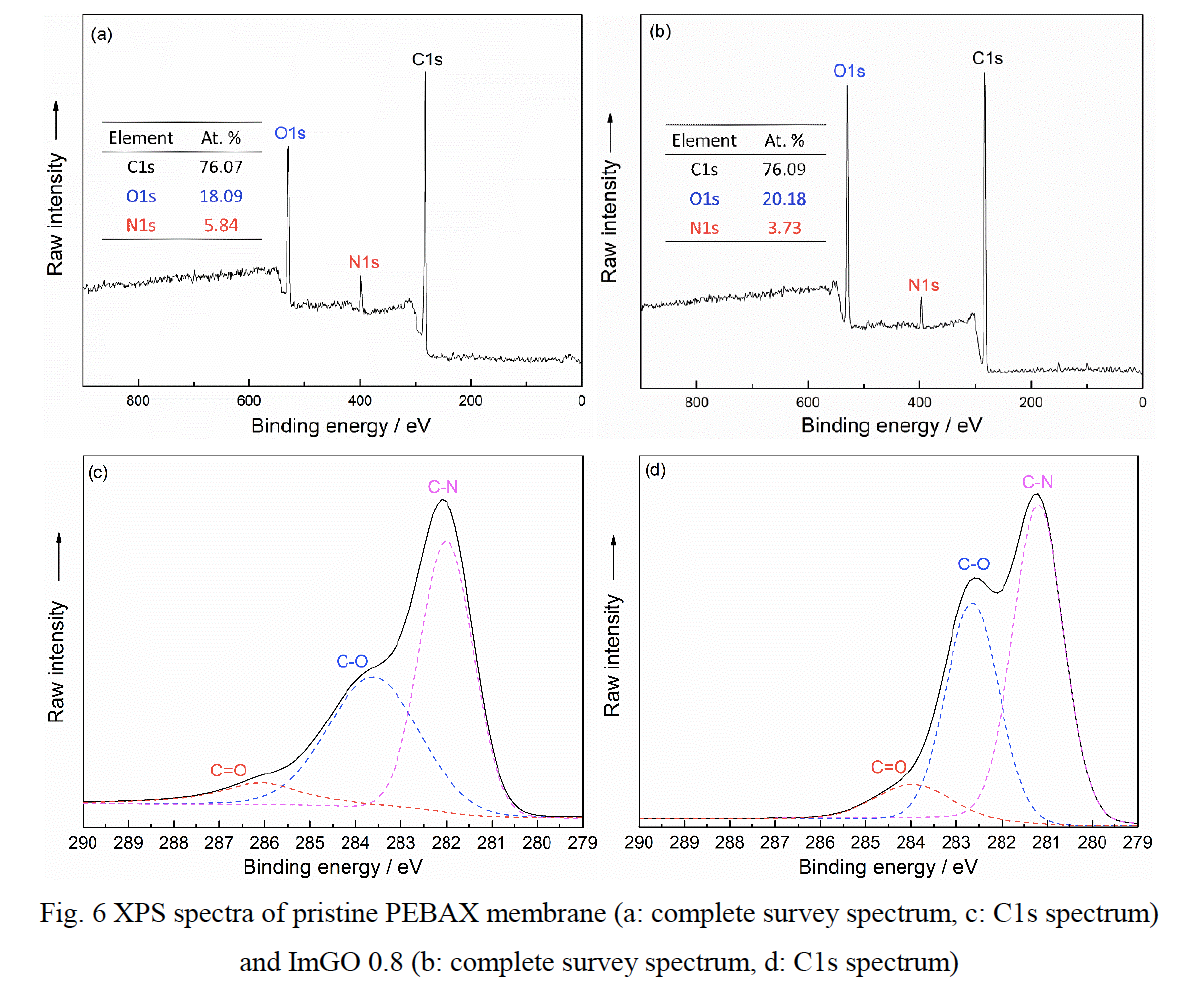 3.1.3 XPS analysis
XPS measurement was utilized to investigate the change of element (C, N and O) contents. The complete survey spectra of pristine PEBAX membrane and ImGO/PEBAX MMMs are displayed in Fig. 6(a) and (b), in which the atom ratio of C, N and O is listed. Compared with pristine PEBAX membrane, the content of O element in ImGO 0.8 increases by 11.6 % due to addition of 10 ImGO. Meanwhile, the content of N element decreased by 36.1 % compared to pristine PEBAX. There are plenty of hydroxyl and carbonyl in graphene oxide-carboimidazole. Herein, the presence of ImGO in polymer results in the change of element contents mentioned above. Fig 6(c) and (d) show the high resolution spectrum of C1s of pristine PEBAX membrane and MMMs, which were curve fitted by three peaks. The addition of ImGO increases the electron cloud density of C atoms [28]. Herein, the C1s component peaks shift from 286.2 eV (C=O), 283.7 eV (C-O) and 282.0 eV (C-N) to 284.0 eV, 282.6 eV and 281.2 eV respectively.
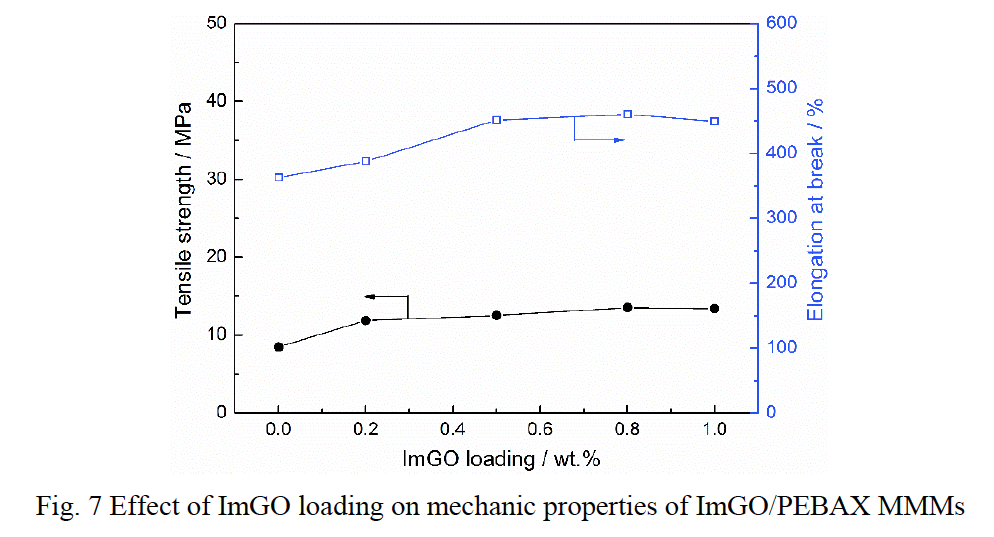 The tensile strength of the MMMs is significantly increased compared to that of pristine PEBAX membrane because of the strong interfacial adhesion, which is caused by the H-bonding interactions formed between graphene and the polymer matrix [43].
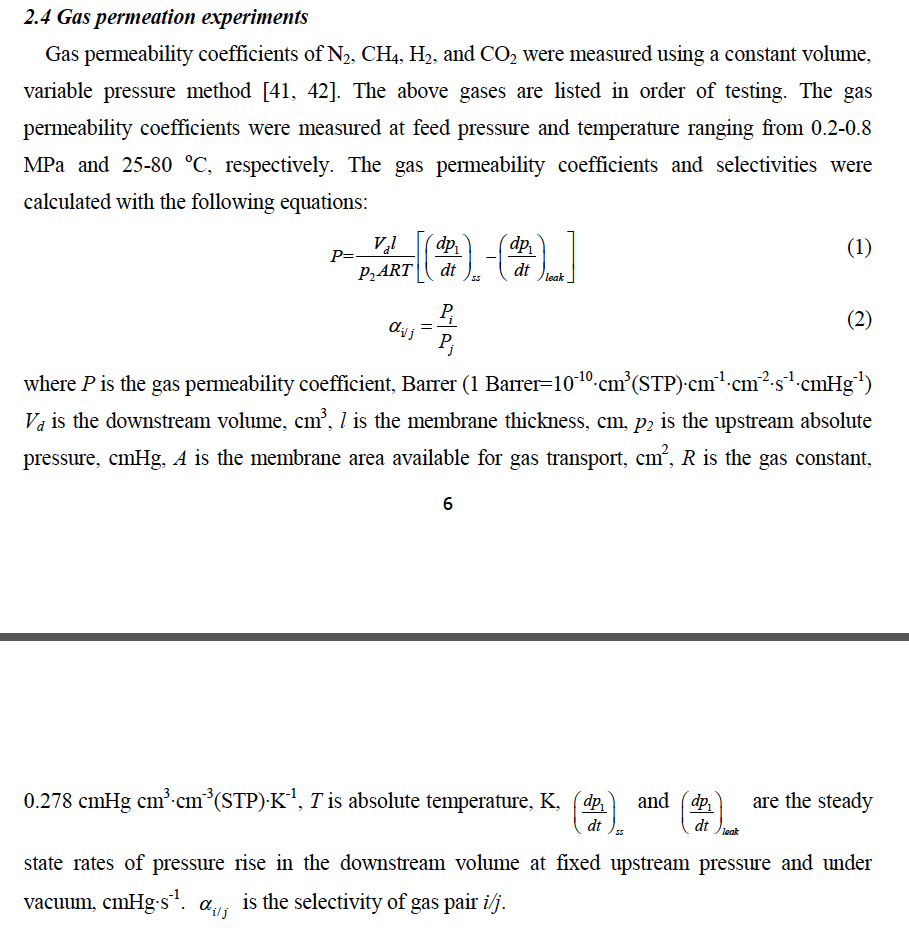 Reference on measurement: Park(Hill)JMS10
The kinetic diameter of CO2 (0.33 nm) is lower than those of N2 (0.36 nm) and CH4 (0.38 nm), so CO2 is easily to diffuse in the ImGO/PEBAX MMMs than N2 and CH4.