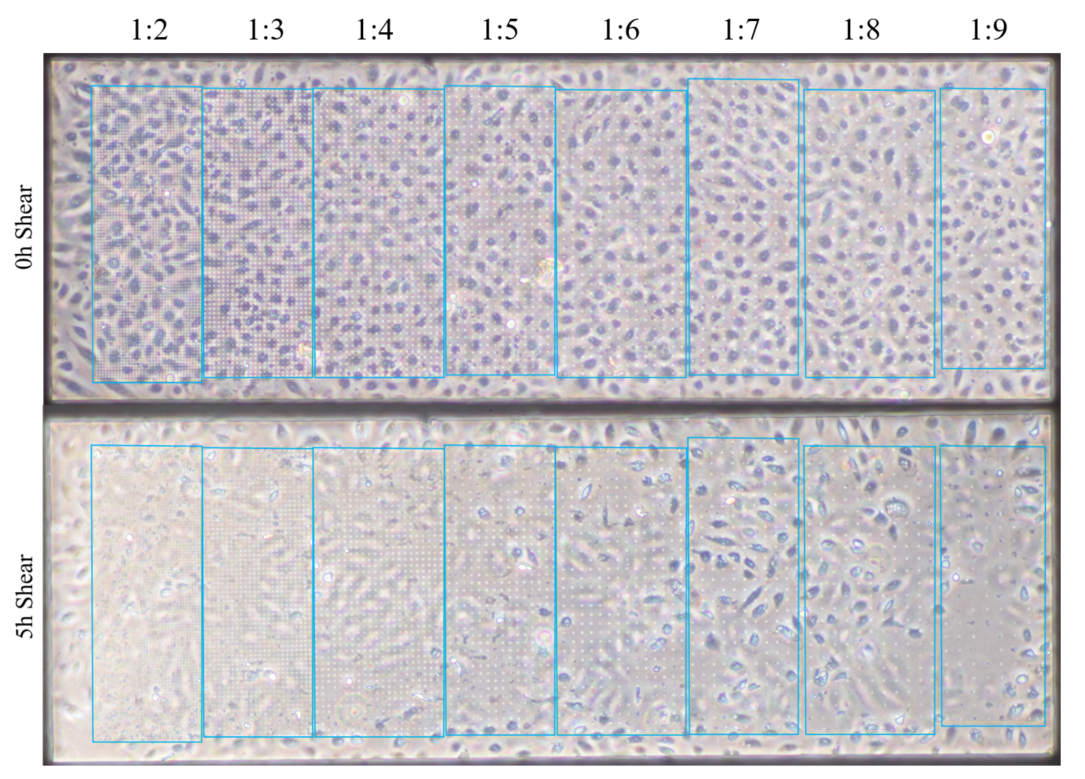
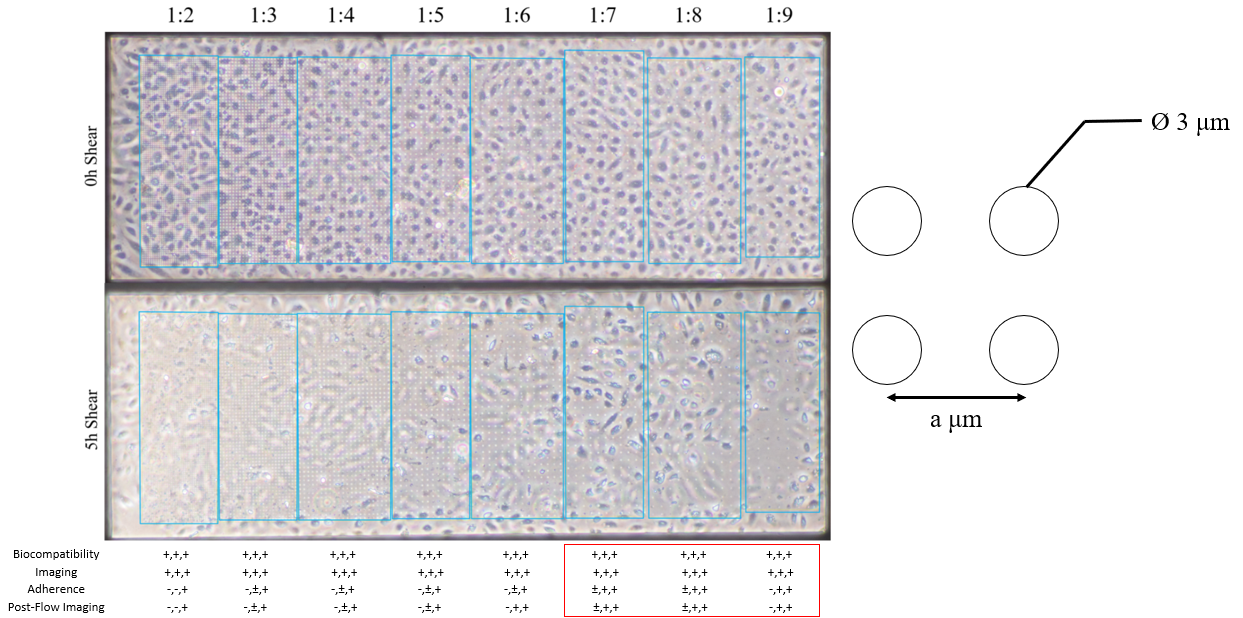
As a continuation to my previous post, I am running a triplicate of cell culture adhesion tests to observe cell lose on our membranes following physiological shear stress.
Methods
HUVECs (P3,4,5) were seed within our mimetic and left to grow to confluent for 24 hours. Shear (4.5 dyn/cm2) was initiated and images were collected following 5 hours.
Figure 1. Preliminary data on cell adherence to μ-NPN material. Cell loss in the first 5 hours is most prominent in the first three regions (1:2, 1:3, 1:4).Figure 2. Data collection and characterization. Results were binary and collective result was used to base my final membrane group selection (n=3).
Figure 3. Heterogeneity in shear results a function of pressure?
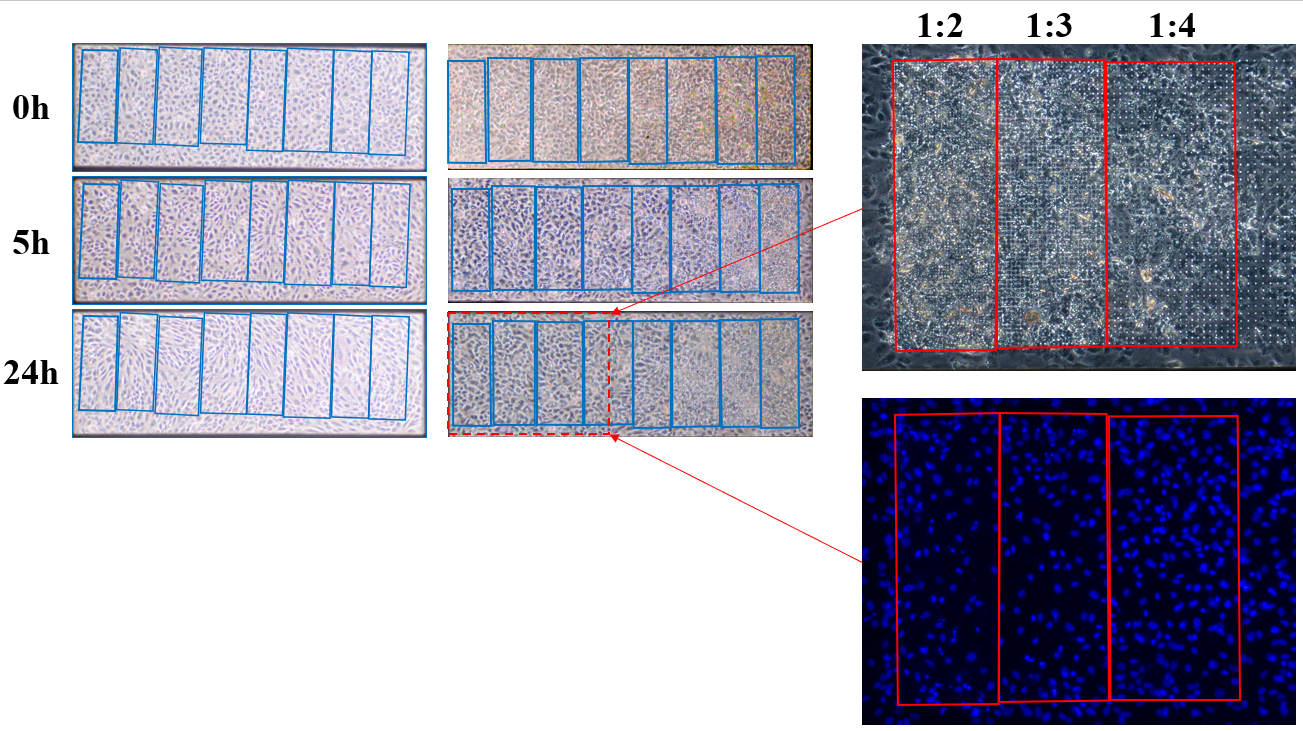
Figure 4. Cell loss under cell material in side by side pattern experiments.
Introduction The modular μSiM is based on a 96-well plate format with a 100 μl open well. While these devices have proven extremely useful for various barrier models including the blood-brain barrier1 and the tendon-vascular interface2, there is a need to transform the open well into a fluidic channel. A closed channel device would enable…
Separations were performed at 2 different salt concentrations with equal volume filtrate and retentate (to avoid dilution problem). Separation time was 40hrs rather than the usual 24. The lower salt concentration run has a lower cutoff – which is just like what we see in the DNA separations. Remember though that proteins have different charges…
Inspired by JP, we decided to try to etch amorphous (unannealed) wafers this week to see if pinhole density changed. To my surprise, the amorphous membranes had no pinholes! Furthermore, I tried to anneal the membranes after the etch and they went flat indicating crystallization! Refer to the table below for the results. Wafer 565:…
Hi all, the technique of UV Ozone bonding (of PDMS to glass, Si or pnc-Si) is now complete, serendipitously. Hsin from Miller lab want to bond PDMS to glass, they tried plasma oxidation treatment and it worked. The method is as followed: plasma oxidation treatment for 35 sec (which did not bond the sample, when…
Introduction This post will detail the work completed in the last chapter of my Thesis. The overarching goal of this chapter was to perform dialysis on whole blood utilizing a serial-separation system. This system would first: generate plasma from whole blood and second: remove uremic toxins from plasma employing microporous and nanoporous membranes, respectively. Conducting…