Permeance and Hydraulic Permeability of ~500 nm pores in 5-slot chips
Permeance Testing
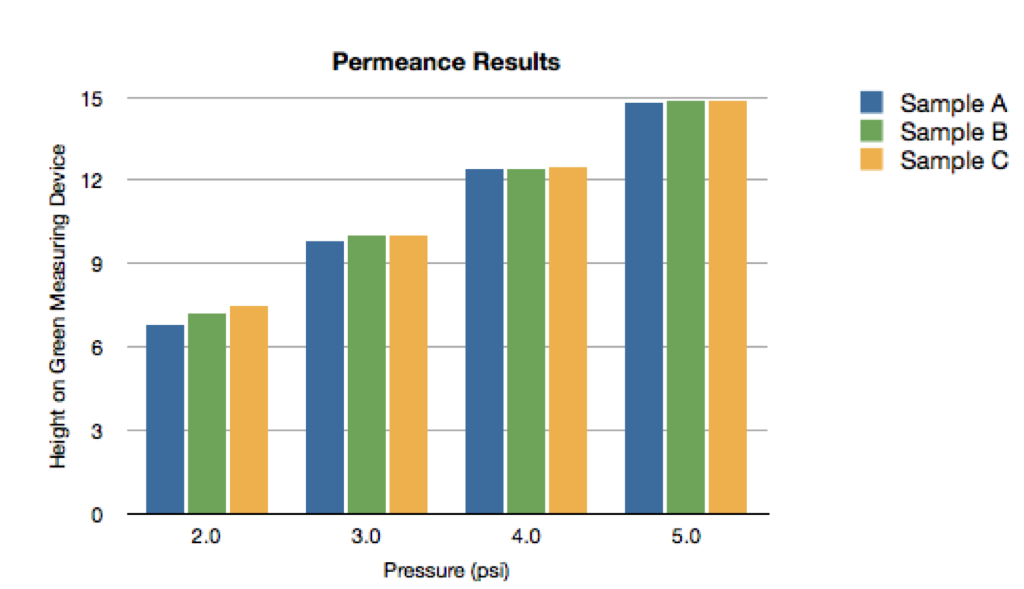
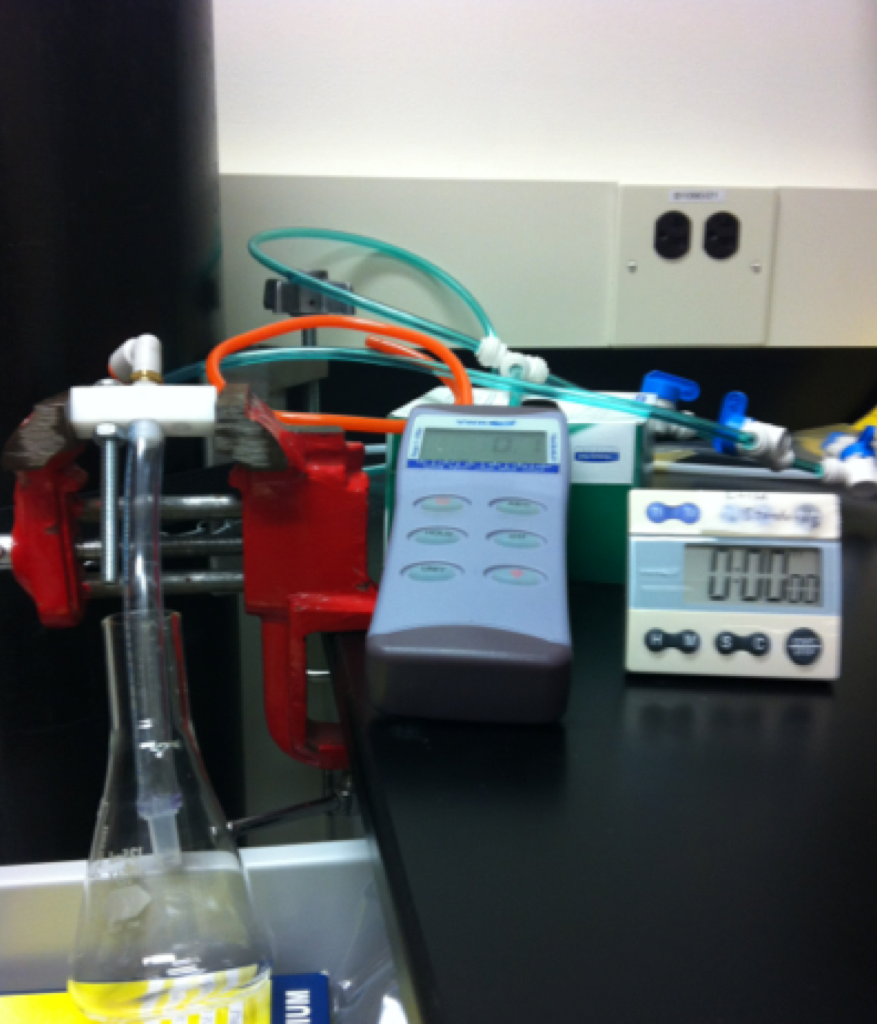
Sepcons were built with 500 nm 5-slot chips. Permeance tests were performed on Samples A-C. Nitrogen gas was pushed through the membrane at a given pressure, and the height on the flow meter tube (green graduated column pictured below) was recorded according to the location of the center of the silver ball. No units were listed on the device, but we are working on calibrating it. The nitrogen flows through the assembled SEPCON into the the lower port of the of flow meter.
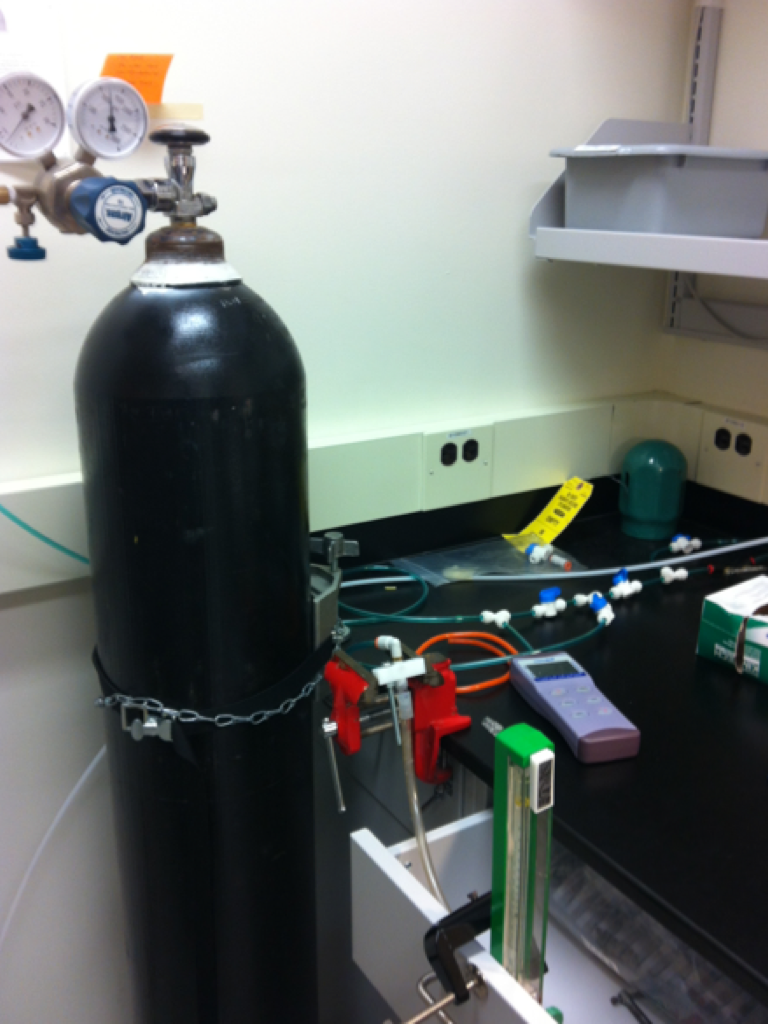
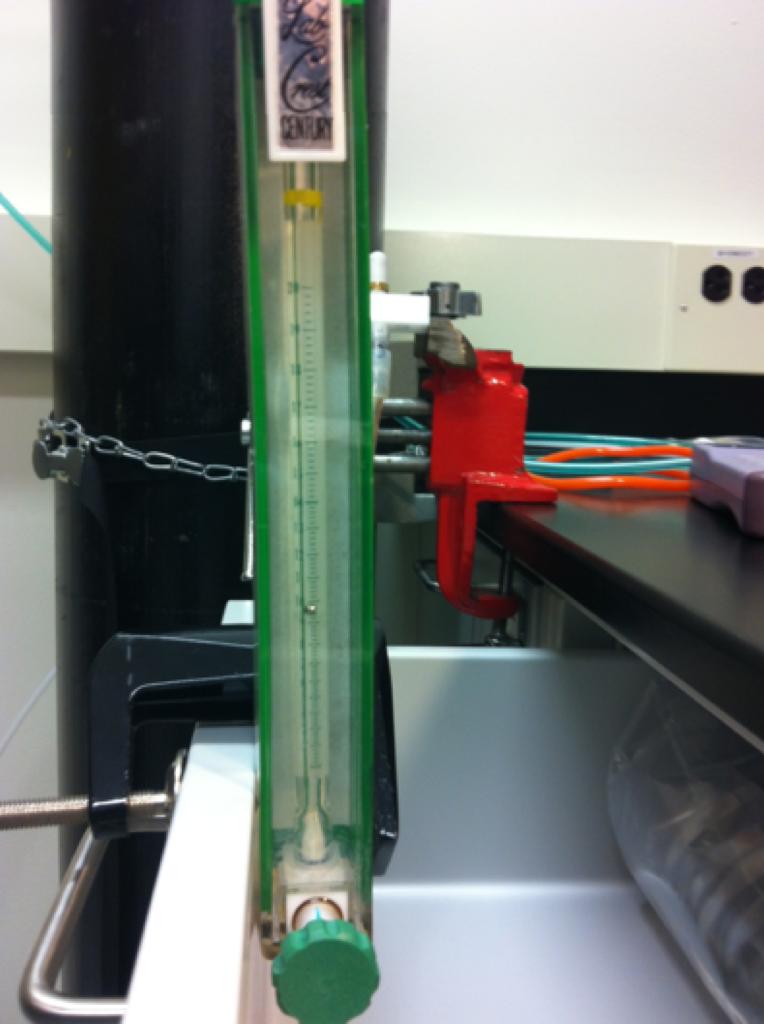
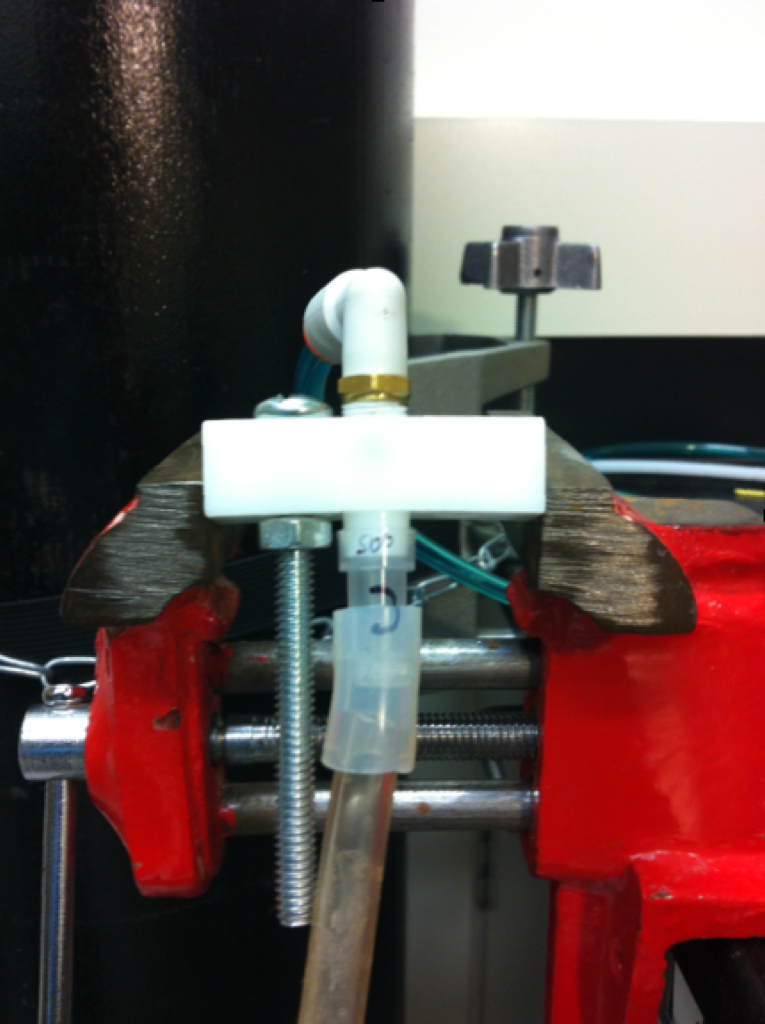
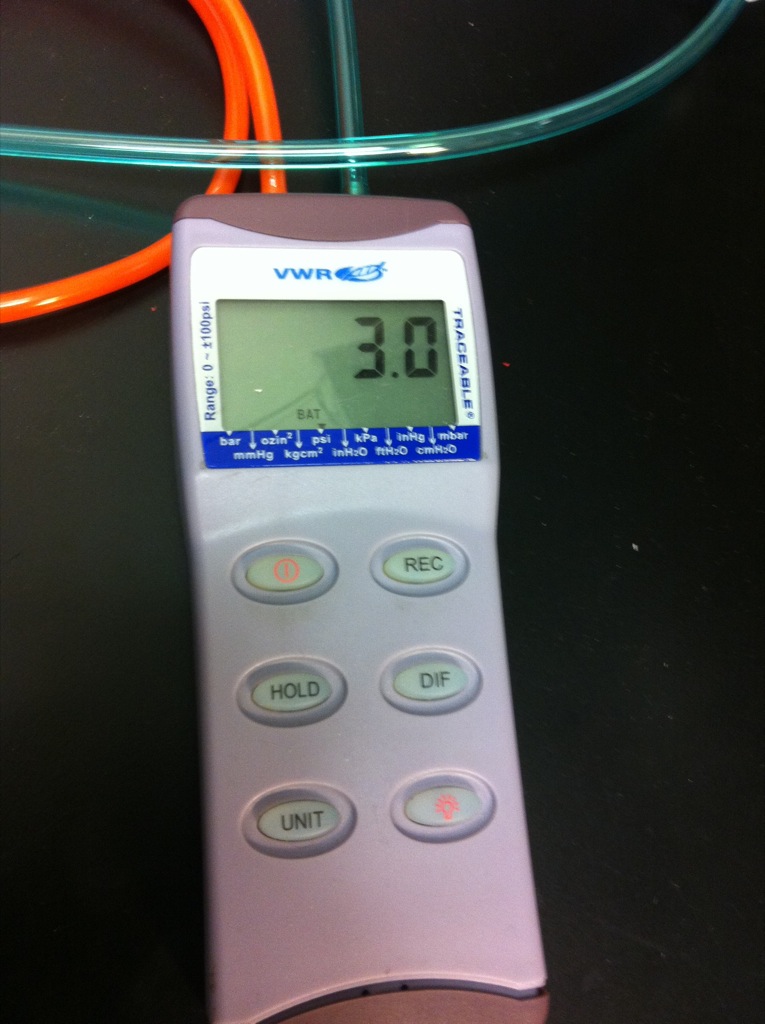
There is consistency among the height for each sample at the given applied pressures. While these tests are not quantitative, they show that we can quickly do a non-destructive quality control test on these higher porosity chips.
Hydraulic Permeability Testing
This test was done by applying a constant pressure of nitrogen gas to a 3/8″ ID plastic tube full of filtered D.I. water, pushing the water through the membrane. The mass of the beaker was measured before and after each test, and a timer was used, in order to calculate the flow rate of each chip.
The chart below plots the results of multiple tests for samples A, B, and C.
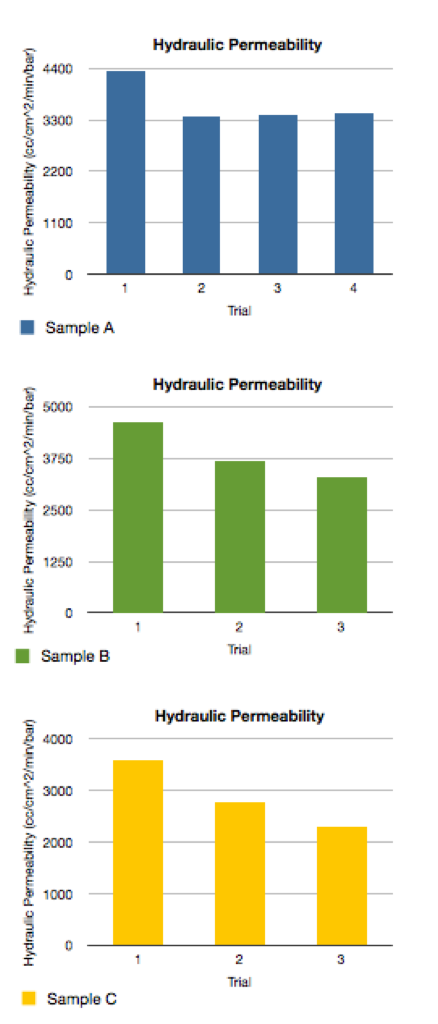
I did a quick calculation of the theoretical hydraulic permeability using the Dagan equation for the first test of Sample C. We measured a flow of 12.7 mL/min and I calculated a flow of 17.1 mL/min.