Zetapotential of Uncharged Nanofluidic Transistor Devices
Last week Sarah and I made several standard nanofluidic transistor (NFT) stacks (3 nm Ti, 12 nm Ag over a 3-slot SiN membrane – wafer # 1024) in the cleanroom. I then measured the zetapotential of these devices at pH 7.43, and we thought that because the outer layer of the chip was Al2O3 that the charge would be less than that of bare SiN (my previous post on pH vs. Zetapotential for bare SiN). Here were the zeta plots:
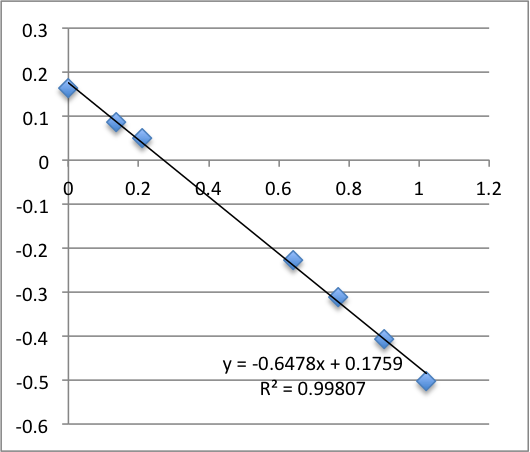
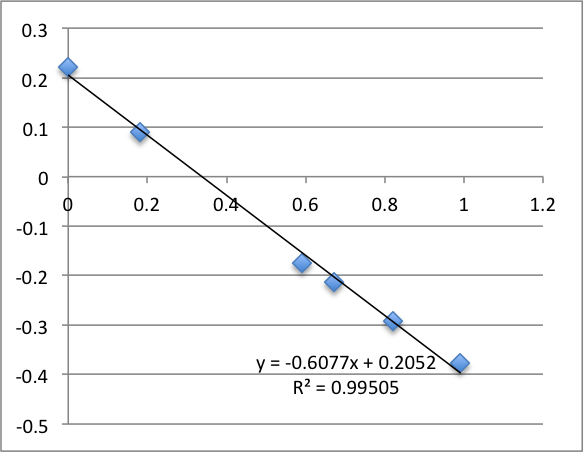
NFT 1 (all plots are psi (x axis) vs. mV (y axis). All slopes are multiplied by a factor that depends on the specific conductivity of the buffer I used, but is typically around 35.):
NFT 2:
NFT 3:
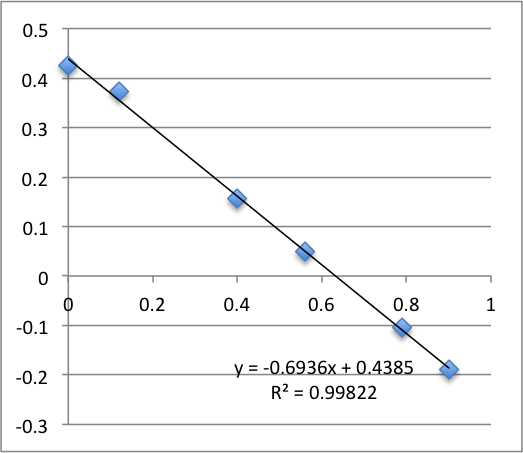
Average Zetapotential: -20.59 +/- 1.36 mV
Keep in mind that the bare SiN has a zetapotential of -18.76 +/- 1.03 mV at pH 7.43.
So it is strange that Al2O3 seems to have a nearly identical, if not higher, zetapotential at pH 7.4 as that of bare SiN. This could be because of organic crud accumulating on the surface, and we might see a more distinct difference if I plasma clean the membranes first. Before I try that, though, I am going to see if pumping -1 V or -6 V into the metal film of the NFT can change its measured zetapotential. That would be powerful evidence that the NFT is doing what it should be.
Also, note that the R^2 values for the slopes are higher than some of my earlier measurements. It appears that the electrodes are continuing to become more stable with additional measurements. In particular, note how well the zero pressure point corresponds to the rest of the points. If you recall from my previous post, that zero pressure point often seemed to add a disproportionate amount of error to the measurements.
Finally, during the fabrication process we used double-sided kapton tape to affix individual chips to the platen. Greg had some problems using this tape during his process, but he is heating the platen, so I believe we’re safe (our platen is unheated). The double-sided tape dramatically decreased the time it took to affix the chips to the platen and increased the yield of the process, since I destroyed less chips during the affixing and removing steps.