Nanomembrane transfer onto glass and SiN using vapor from tap and deionized water
Introduction: After meeting with Tucker, he showed me the experiment he conducted to induce membrane transfer to, supposedly, any kind of surface. The method he used was initially with breath, and then he passed on to deionized water vapor. The results were not satisfactory because of the wrinkles on the membrane and not much uniformity along its surface. My work was to modify his method so I could use a more controlled procedure and potentially get better results.
Objective: By using the basis of the previous method, perfect membrane transfer onto glass and SiN.
Methods: The nanomembrane transfer procedures were all done with the chip under pressure with a glass support, clamped to a metal structure. With that, most of them were exposed to vapor for transfer to occur and the vapor was created by heating water with a 1L becker in the microwave.
Experiment one
Sample: Three-slot chip with SiN membrane, 41nm.
For my first tries, I didn’t take any pictures of the results, but the conclusions that came from them were obvious in the way that either the transfer went correctly or it just did not occur.
A nitrogen jet was used for some trials as shown in the sketch. The becker was heated until the boiling point was reached and then put onto a heating plate to minimize heat loss. The water was initially at 80°C but fluctuated around 70°C and 80°C during the experiment.
Transfer Surface: Glass
Sketch:
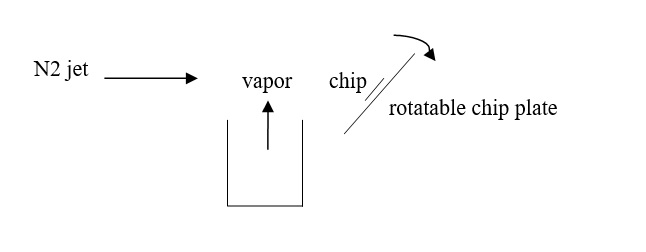
- Rotating the plate while applying one air spray, when it was in the position indicated above, there was transfer.
- With the plate fixed to an oblique angle, after two air sprays there was transfer.
- With the plate directly above the becker and with its plane perpendicular to the vapor flux there was transfer with no air spray.
- With the plate fixed in a parallel position to the vapor flux (not above the becker), there was no transfer after one spray.
- Using the chip from the previous trial, it was positioned directly above the vapor flux with the membrane’s major axis parallel to it. There was transfer.
- The air spray was used directly on the plate, with no vapor and close to the chip, and it ruptured the membrane.
- Same procedure as the fifth trial, but with membrane’s major axis perpendicular to the flux. There was transfer.
- After every trial, I breathed on the membranes to see if wrinkles were formed, which they did, but all of them disappeared after the water droplets evaporated.
Results
- The transfer presented a couple of cracks, but I assume it was from the removal of the chip.
- Cleaner then the first trial, but with some defects on the sides.
- One strip was uniform, but the other two presented a little crack in the middle.
- No transfer.
- It was a uniform transfer, with little defects on the tips
- Membrane ruptured
- Only more lateral imperfections than the fifth trial were noticed.
Conclusions for experiment 1
The different methods, for those that worked, presented little difference from each other, and compared to the results obtained by Tucker, no membrane had wrinkles. But what I concluded from the sprayed transfers is that vapor volume is not a contributing factor for a good transfer, although the whole area of the membrane must be exposed to vapor, little is actually needed. Also, the temperature of the vapor in the air current was lower, so it seems that high temperature is not a strong factor.
For the transfers without the air sprays, it seems that just by exposing the membrane to vapor in a large area will give out good results, but it was noticeable that the third and fifth trials were better than the others.
Experiment two
Sample: Three-slot chip with SiN membrane, 41nm.
The second experiment had the intention to evaluate how the transfer depends on the vapor flux.
A filter flask was used with water at 80°C to generate vapor and tubes were attached to it to conduct the vapor to a box with the chip plate. The box was sealed and connected to a vacuum tubing to force the vapor out of the flask. The vacuum line was opened for a few minutes.
Sketch:
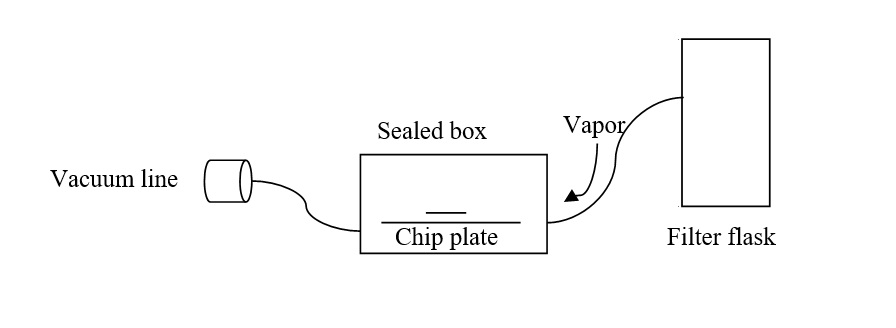
Results
The first trial did not work due to bad sealing, but after the adjustments there was transfer. The resulting membrane had a few bubbles over it, and after breathing on it the formed wrinkles disappeared.
Conclusion for experiment 2
The vacuum was weak and there still was transfer, so it can be said that a strong flux is not needed and that heat is also not a necessity, since the vapor lost heat in the tubing and was cooled down even more by the acceleration from the vacuum.
Note: The chips I used for the following experiments were the ones that already had missing membranes. If one is missing, it’s because it was broken before I used it – unless stated otherwise.
Experiment three
Sample: Three-slot chip with SiN membrane, 41nm.
The first two experiments above served for me to learn how to manipulate the membranes, I was not entirely focused on the results.
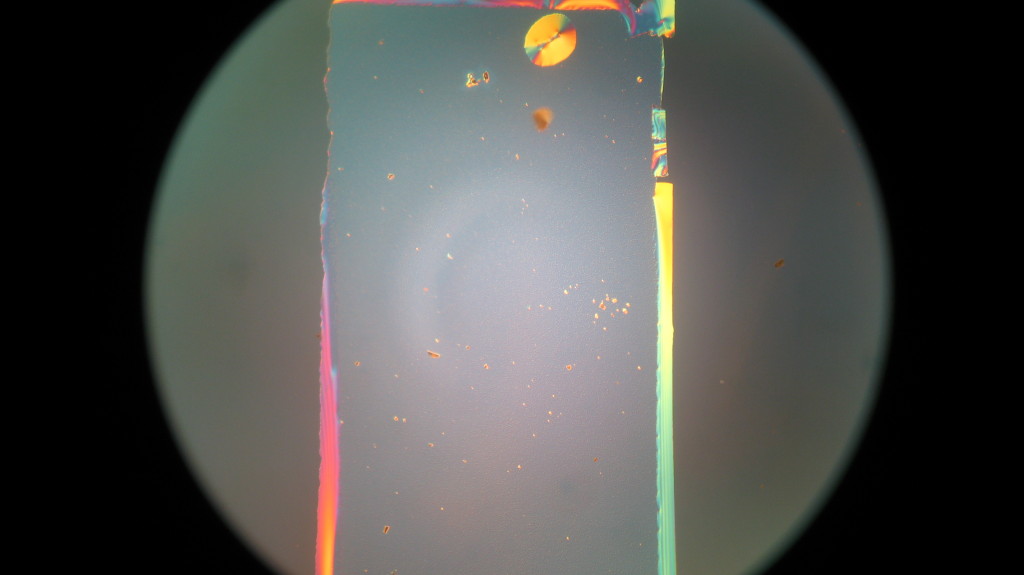
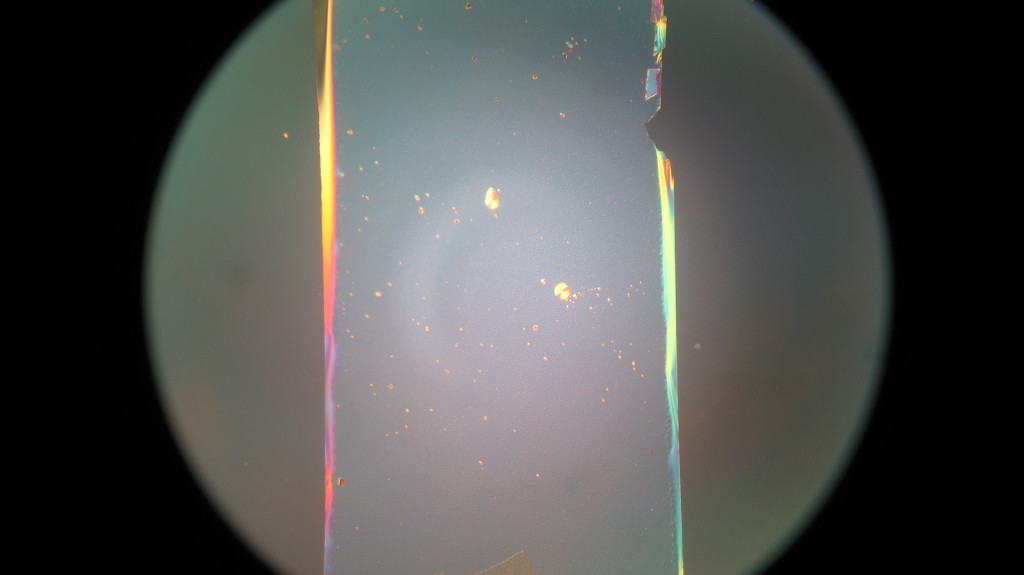
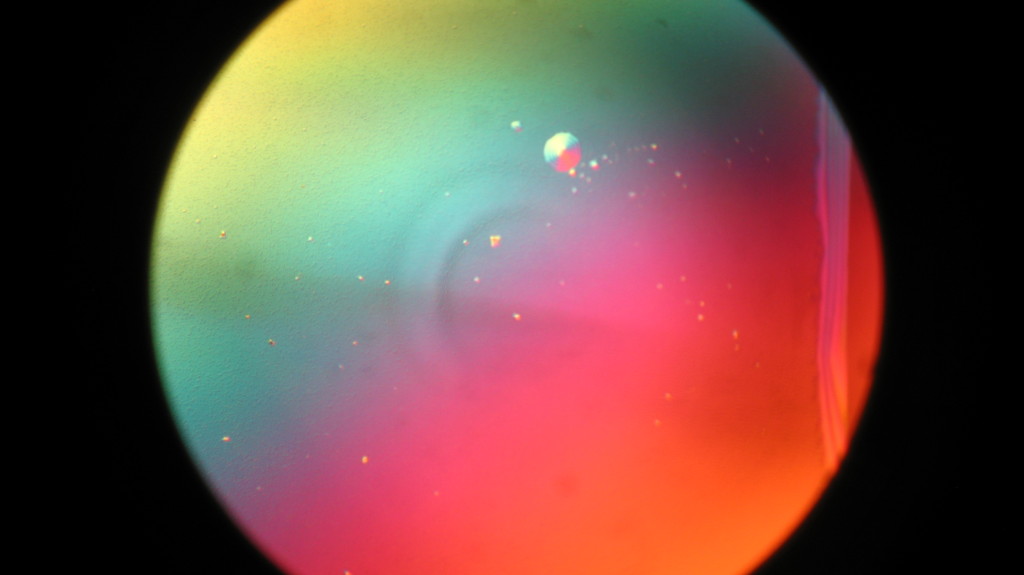
For this set of experiments, several conditions were used, varying between angles, beckers and water. Each one is discussed in more detail separately with their respective photos taken with the microscope camera. The exposure of the membrane – under pressure using the plate – to vapor was done by positioning it directly above the beckers.
Transfer Surface: Glass
1. Erlenmeyer 125mL w/ deionized water.
Position of the chip plate: Normal of the plate’s plane parallel to the vapor flux.
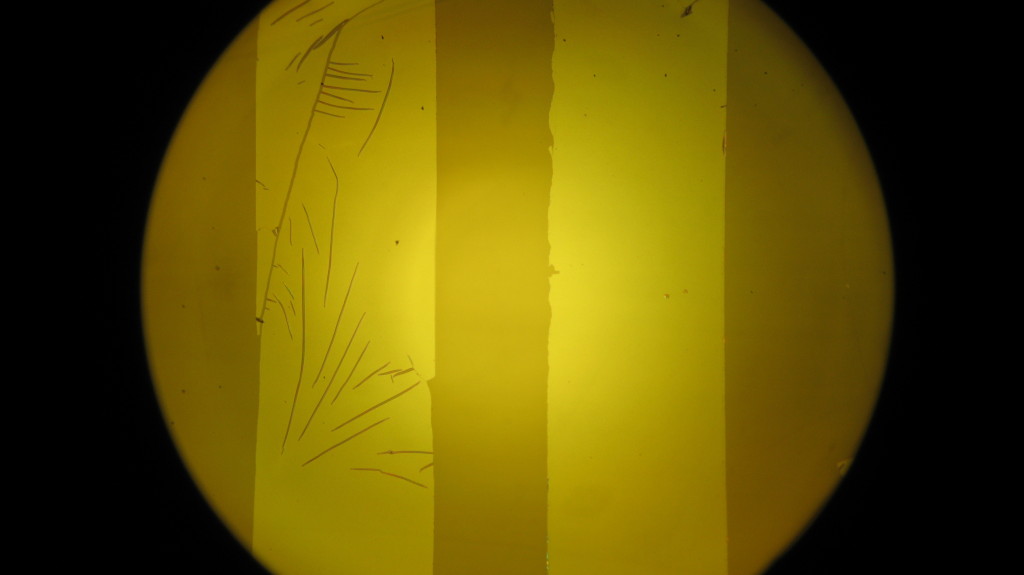
2. Becker 1L w/ deionized water
Position of the chip plate: Normal of the plate’s plane parallel to the vapor flux.
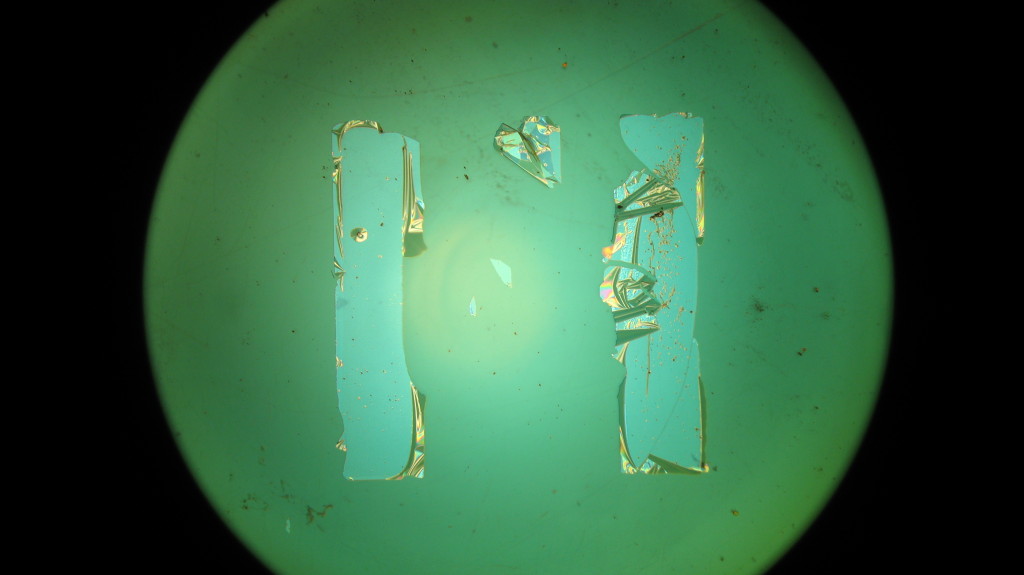

Note: For the next trials, exposition time to vapor was around 5 to 10s.
3. Becker 1L w/ tap water
Position of the chip plate: plate parallel to the vapor flux.


4. Erlenmeyer 125mL w/ tap water
Position of the chip plate: plate parallel to the vapor flux.

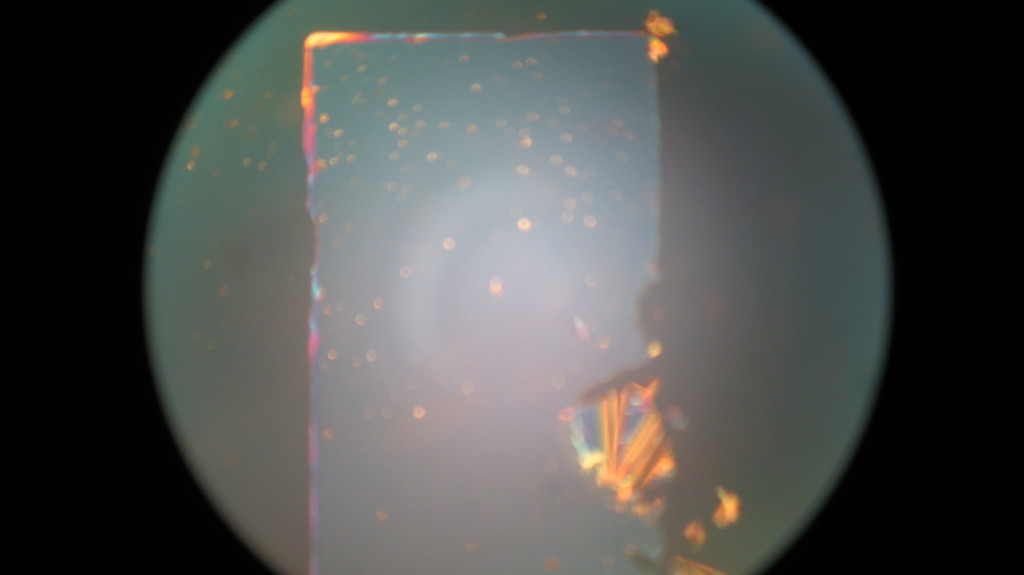
5. Becker 1L w/ tap water
Position of the chip plate: plate parallel to the vapor flux.


6. Becker 1L w/ tap water
Position of the chip plate: plate parallel to the vapor flux.
Note: Before transferring, the membrane – on the chip – appeared to be stretched, so I assume that the wrinkles on this sample are due to that.
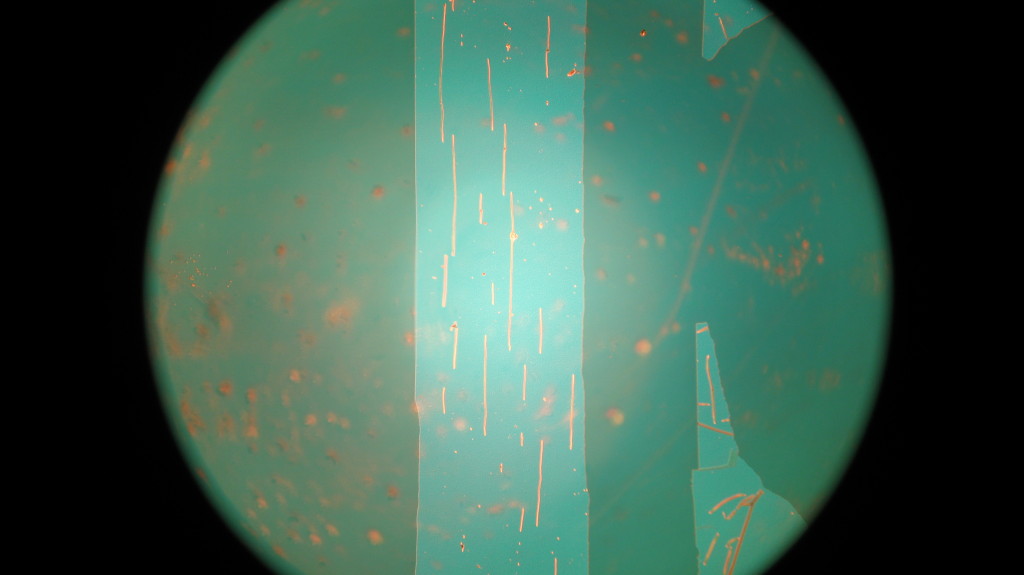
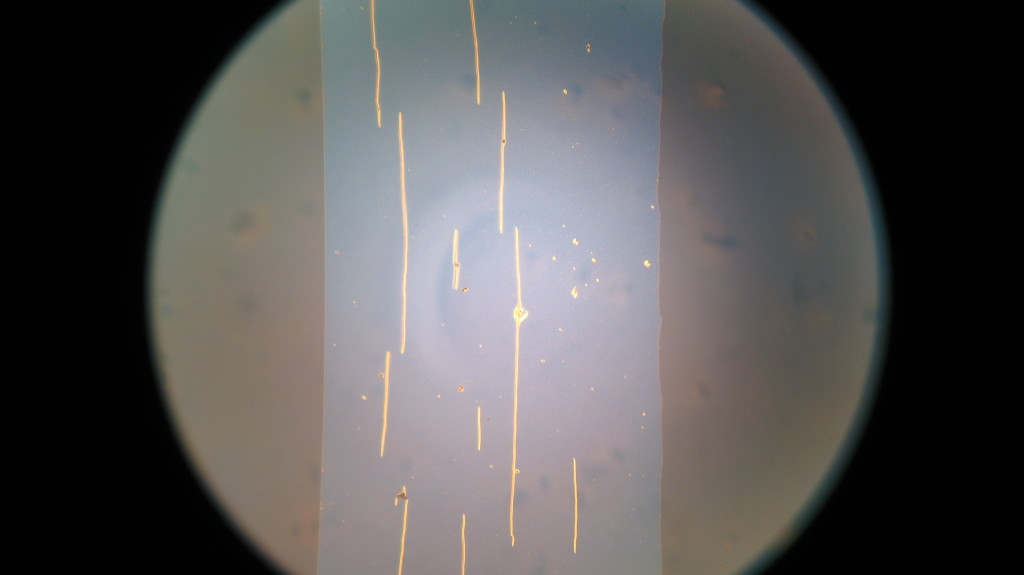
7. Becker 1L w/ tap water
Position of the chip plate: plate parallel to the vapor flux.
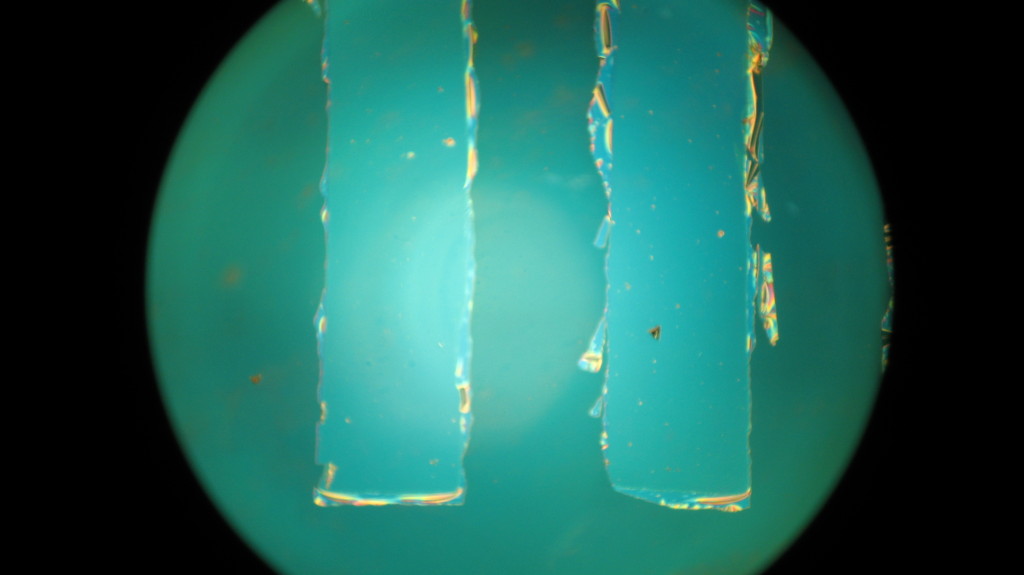
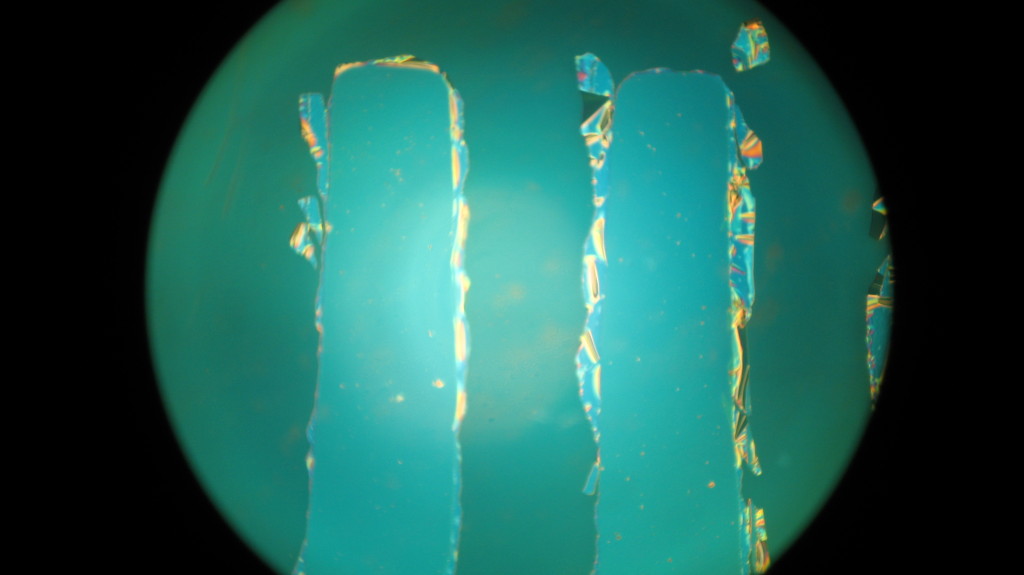
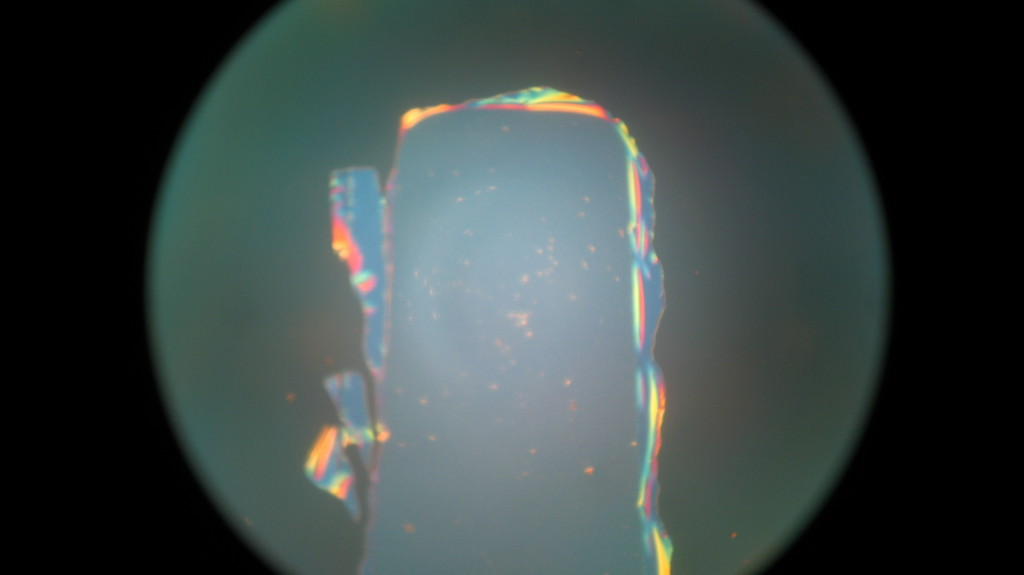
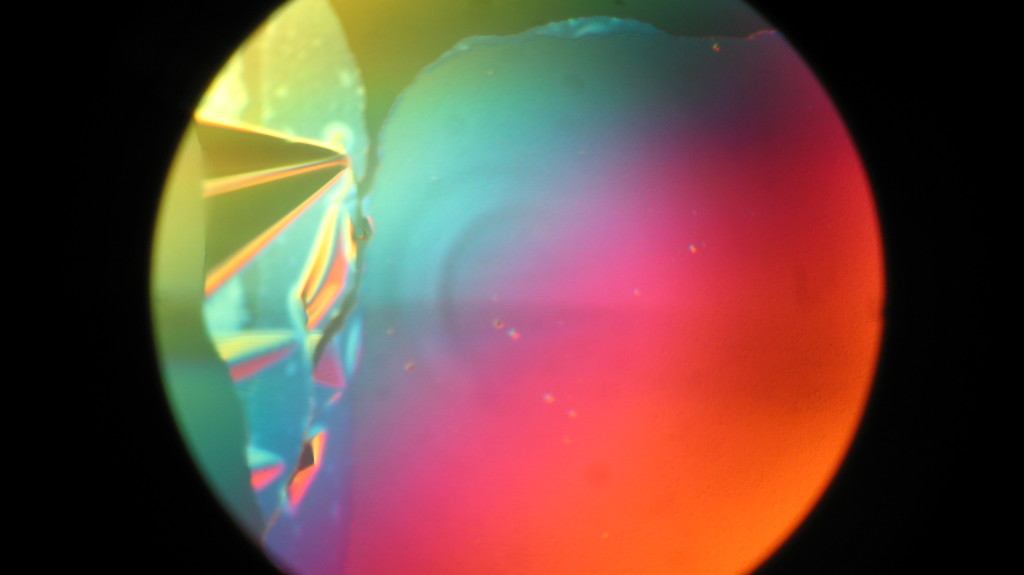
8. Becker 1L w/ deionized water
Position of the chip plate: Normal of the plate’s plane perpendicular to the vapor flux.
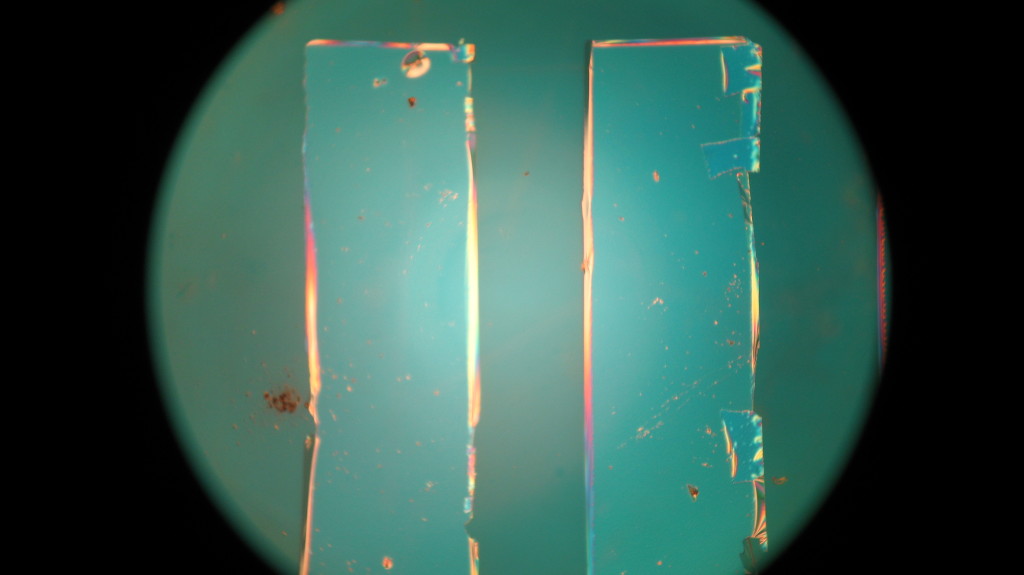

Observations for experiment 3
The tap water seems to work better for transferring onto glass. The deionized left more punctual imperfections and apparently are more susceptible to wrinkles.
Additionally, the lateral imperfections are likely caused by the removal of the chip, because our hands shake too much while doing it. The chip must be removed with a lot of care.
Experiment four
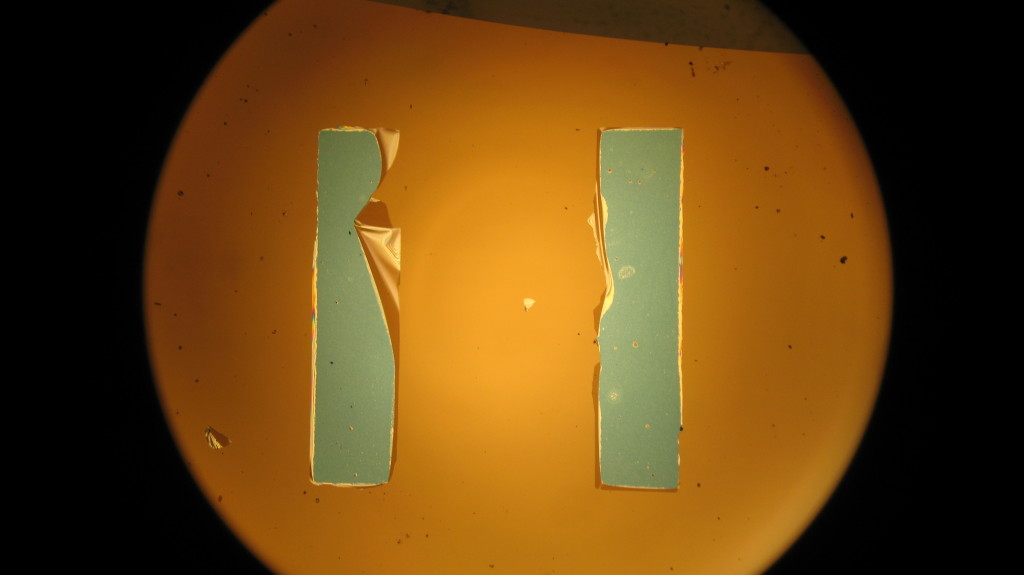
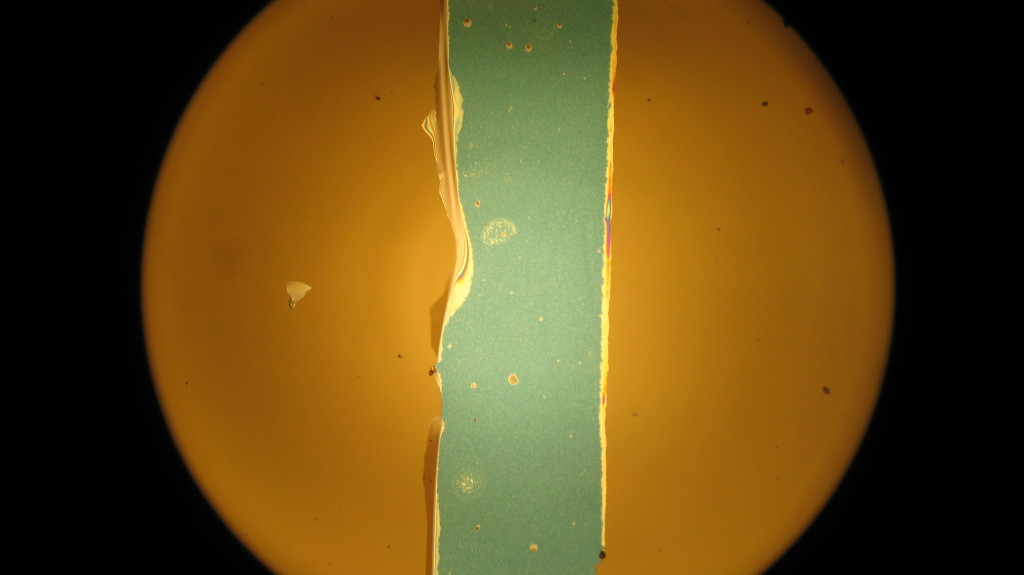
Sample: Three-slot chip with SiN membrane, 41nm.
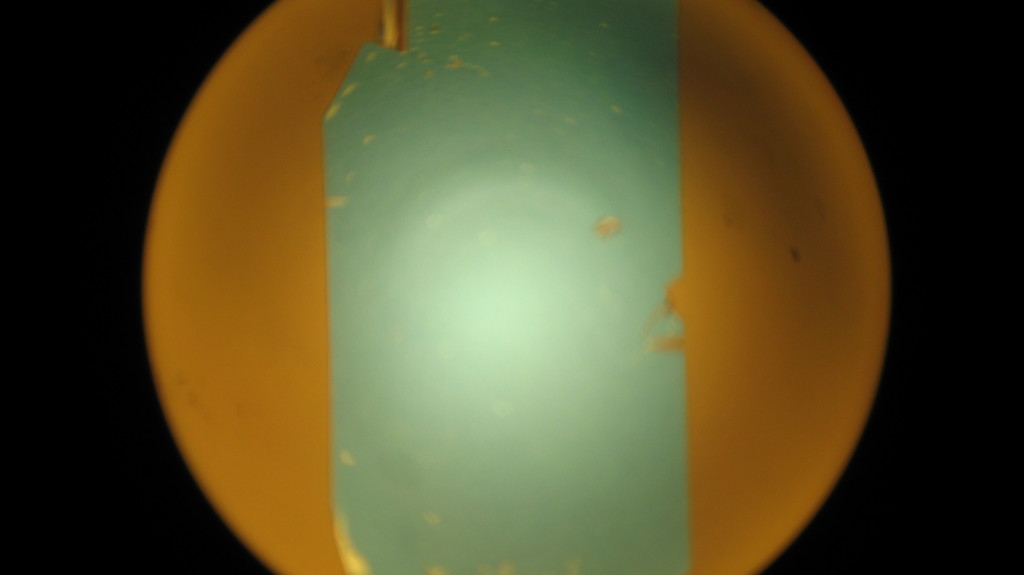
The following experiments were done with vapor from a 300mL becker heated for 2min in the microwave. As for experiment three, the exposure to vapor was done by positioning the membrane above the beckers. The initial temperature registered was 75°C.
New Surface: SiN
1. Deionized water; T = 62°C
Position of the chip plate: Plate’s plane perpendicular to the flux.
Note: The middle membrane did not transfer after two attempts.

2. Deionized water; T = 55°C
Position of the chip plate: Plate’s plane perpendicular to the flux.
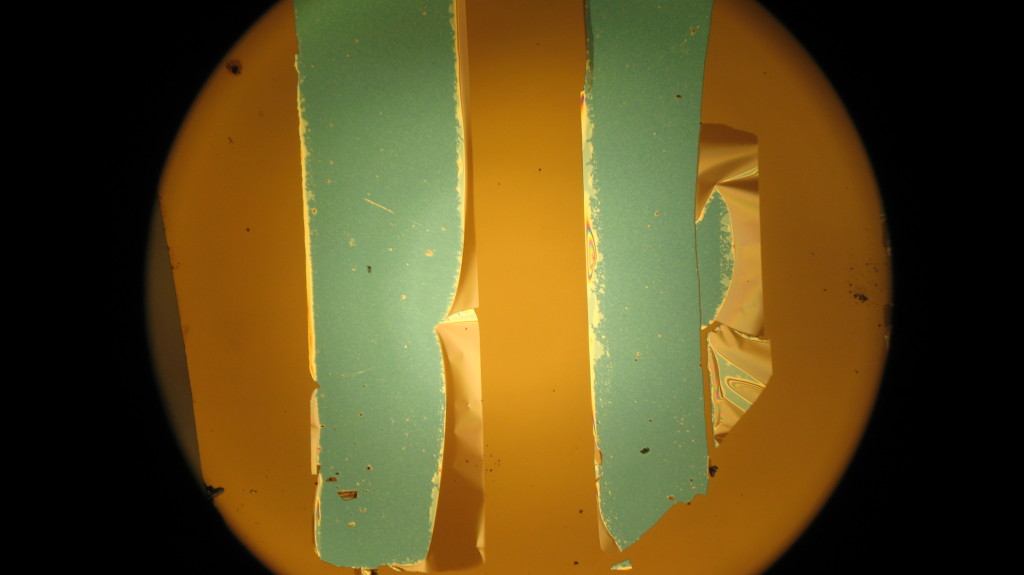
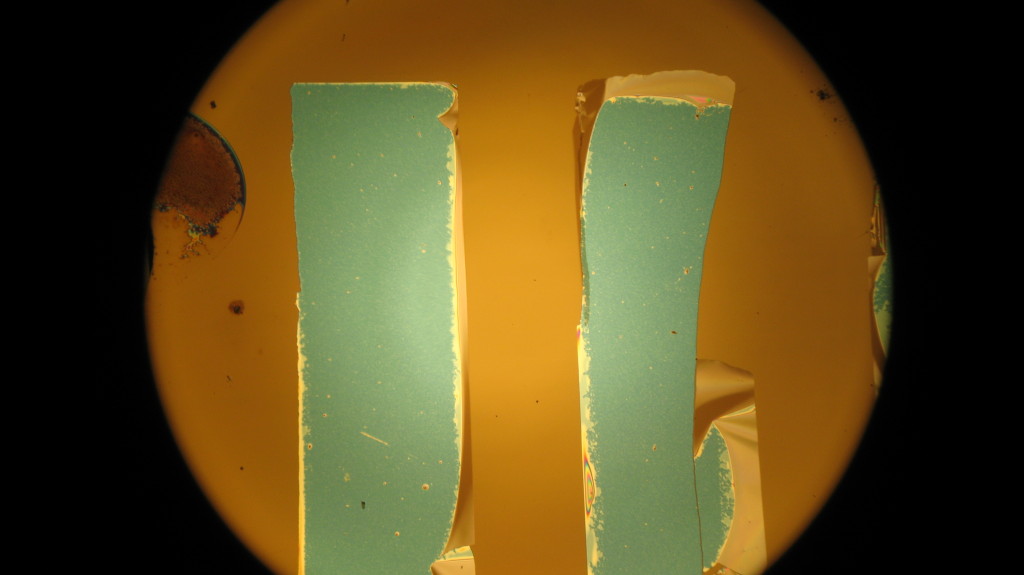

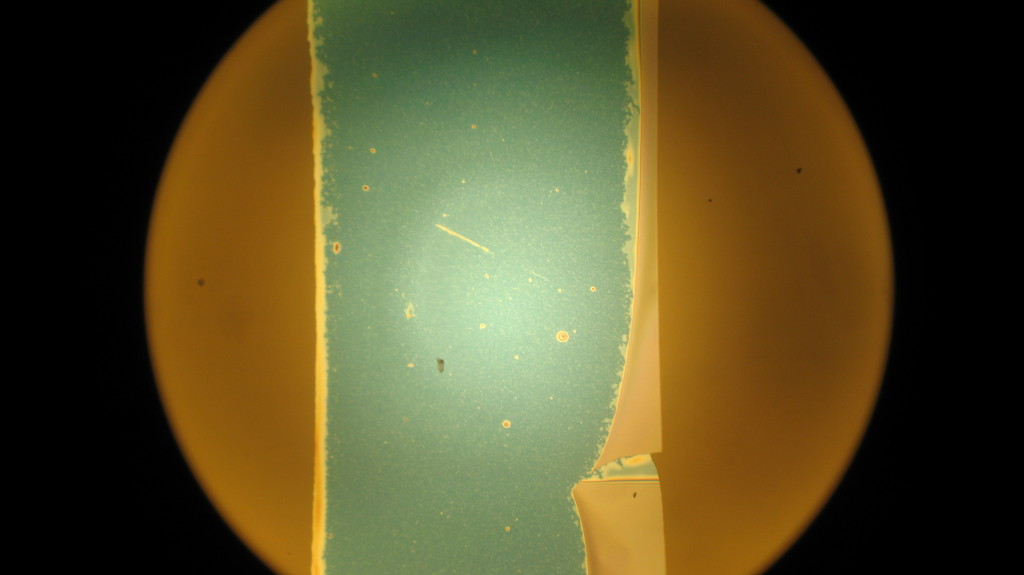
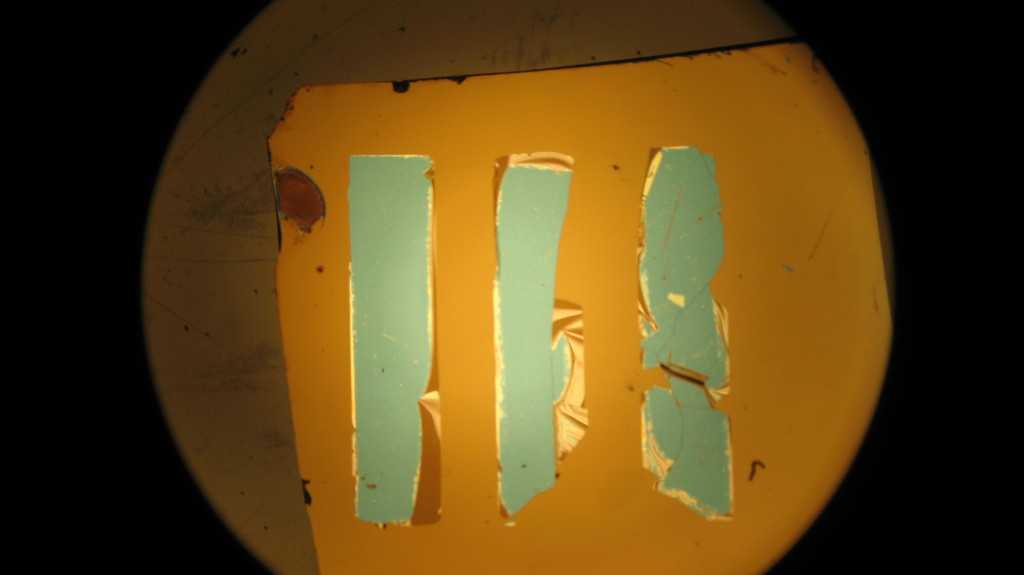
3. Deionized water; T = 54°C
Position of the chip plate: tilted.
Note: The middle membrane did not transfer after two attempts


Experiment five
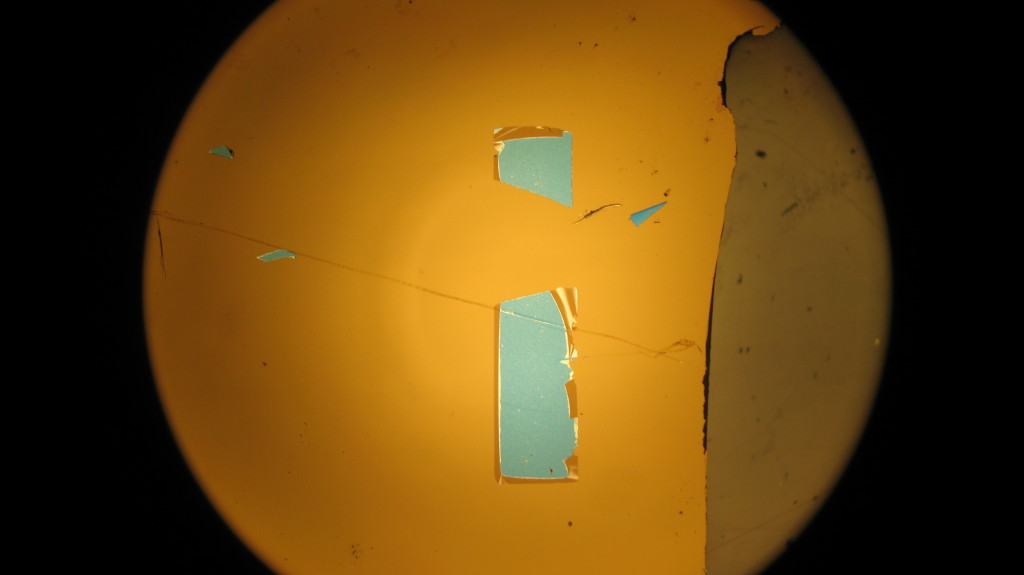
Sample: Three-slot chip with SiN membrane, 32nm.
All transfers were made with the plate perpendicular to the flux.
1. Tap water; T = 69.5°C
Exposition time: 5s – 10s
Note: The membranes broke when the chip was removed.
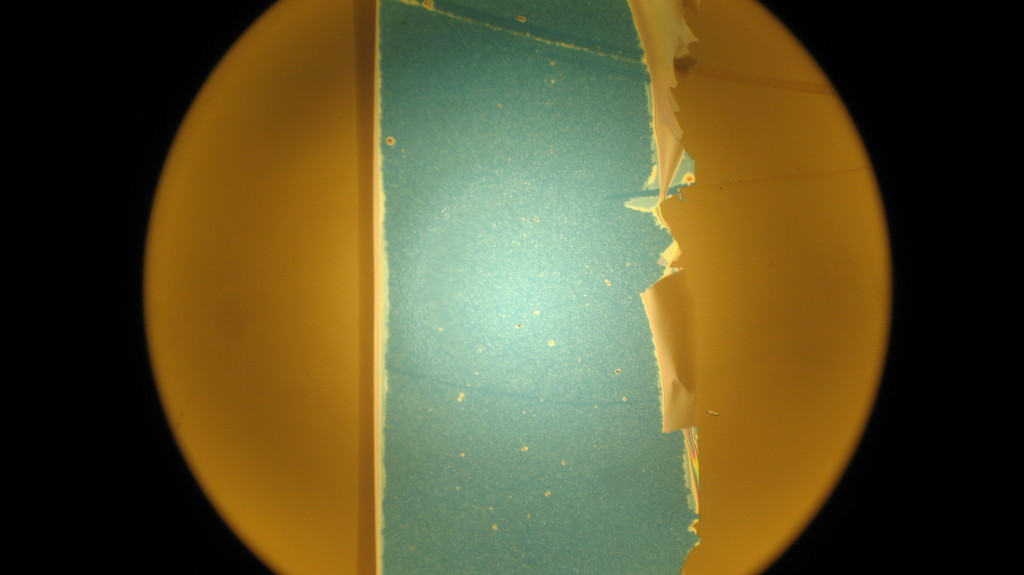
2. Tap water; T = 62°C
Exposition time: 5s – 10s

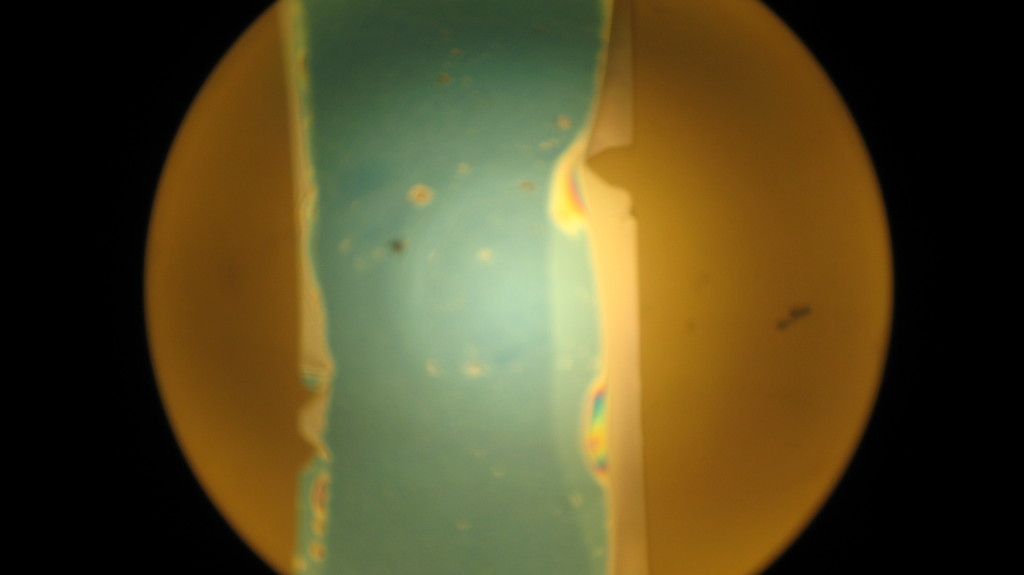
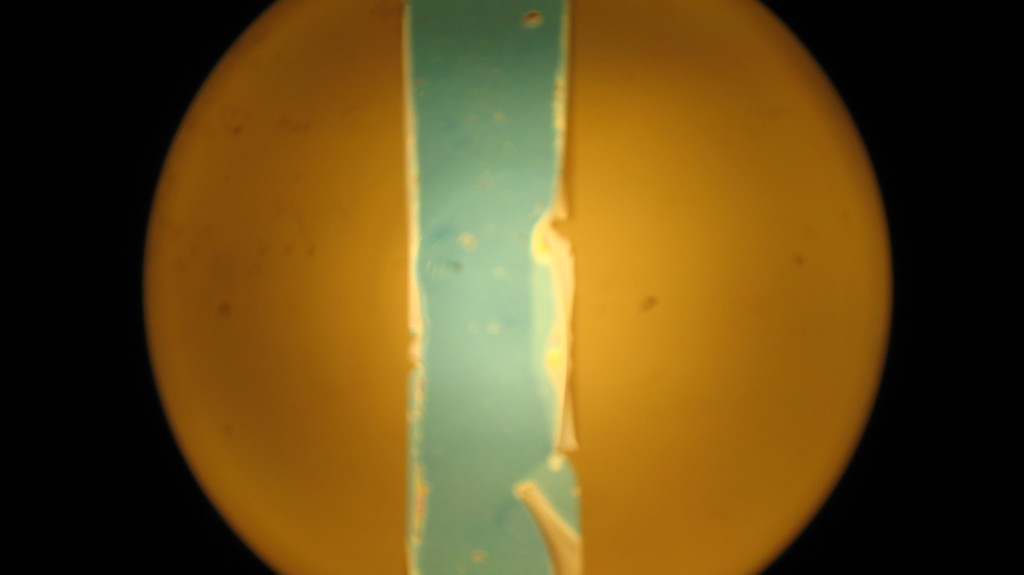
3. Deionized water; T = 82°C
Exposition time: 5s

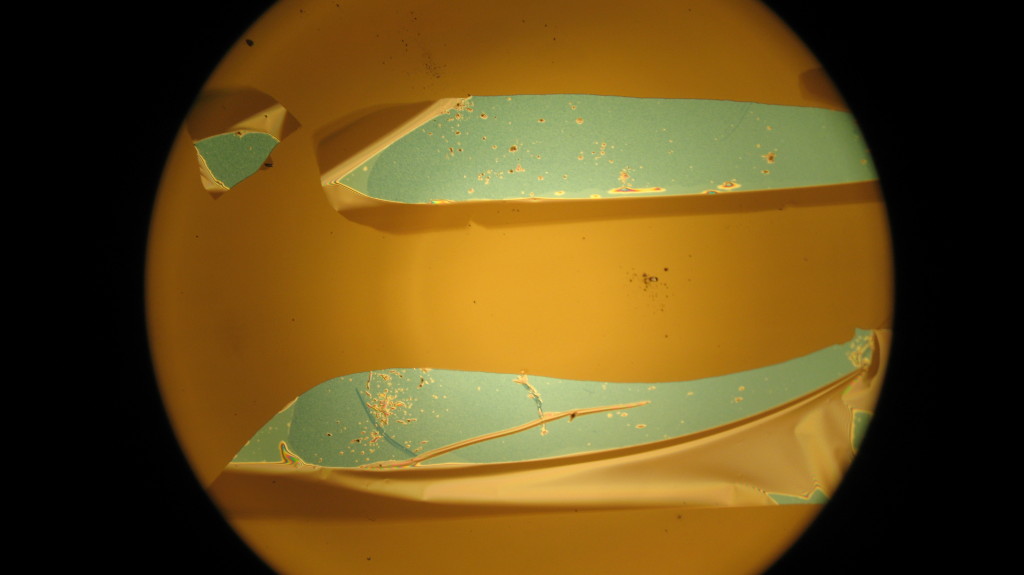
4. Deionized water; T = 62°C
Exposition time: 10s
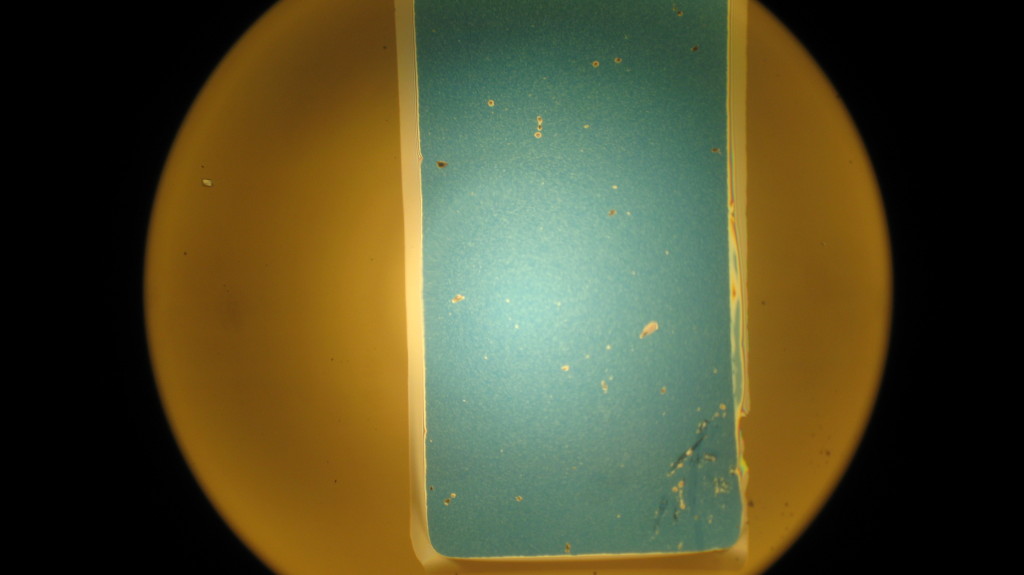
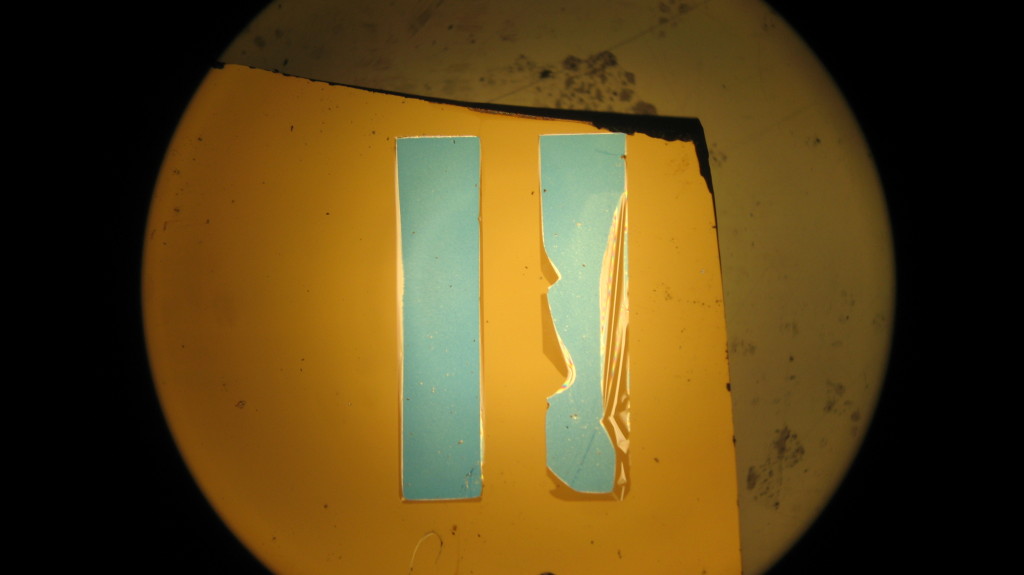

5. Deionized water; T = 57°C
Exposition time: 10s
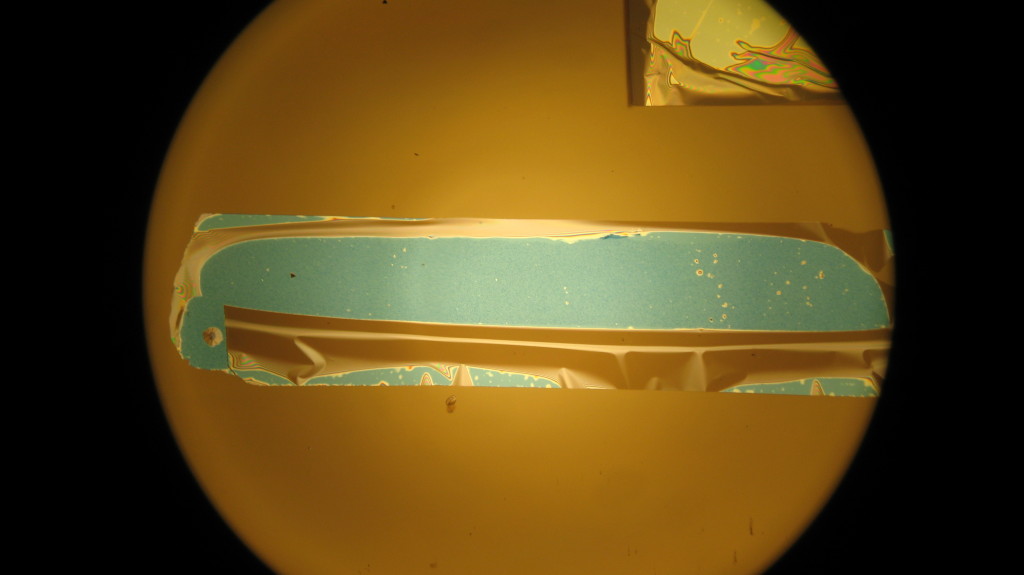
6. Deionized water; T = 51°C
Exposition time: 10s
With these parameters, the membranes broke completely when pressure was removed from the chip, but before that I could see some parts that were transferred and others that weren’t. After I exhaled, the membrane fully transferred and slowly returned to the previous state – seen by the naked eye.
7. Deionized water; T = 72°C
Exposition time: 10s
After I removed pressure from the chip the membranes broke completely.
Conclusions
For the first part of this project – experiment 3 – we can see that membrane transfer using tap water is a little bit more efficient than with deionized. Although in the beginning there were differences in the formation of wrinkles, after I got more familiar with the procedures both types of water started working well. The best result was obtained from trial #4: there is more uniformity and presented almost no spots that weren’t transferred. Using it as a reference we can see that the method can be improved and possibly a perfect transfer can be obtained. Unfortunately, there were some inconsistencies among the trials, and the causes might be from the differences between each chip – evident in trial #6 – and after some discussion the possibility of temperature dependence was considered.
The last part of the project – experiment 4 and 5 – had the objective to transfer the membranes onto the onto a new surface. So, it was priority to perfect the method for this rather than glass. From the trials, we see that SiN surface is more difficult to use. I used tap water in the beginning, but differently from transfer onto glass, deionized works better. What I could observe was that there is a dependence on temperature. I tried using very hot water T > 80°C and the membranes broke before I could remove the chip. Using water too cool, T < 50°C there was no transfer at all – there is also not enough vapor. From this, the interval I noticed that worked best is between 55°C and 65°C. The best results for transfer onto SiN were with the parameters of trials 4.1 and 5.4, with T = 62°C and deionized water.
A major concern with all attempts is, as stated before, the method used to remove the chip. I did it mostly with tweezers, but sometimes I used an adhesive tape. There were no big differences using one or the other.