PETL mixing with a membrane (not there yet)
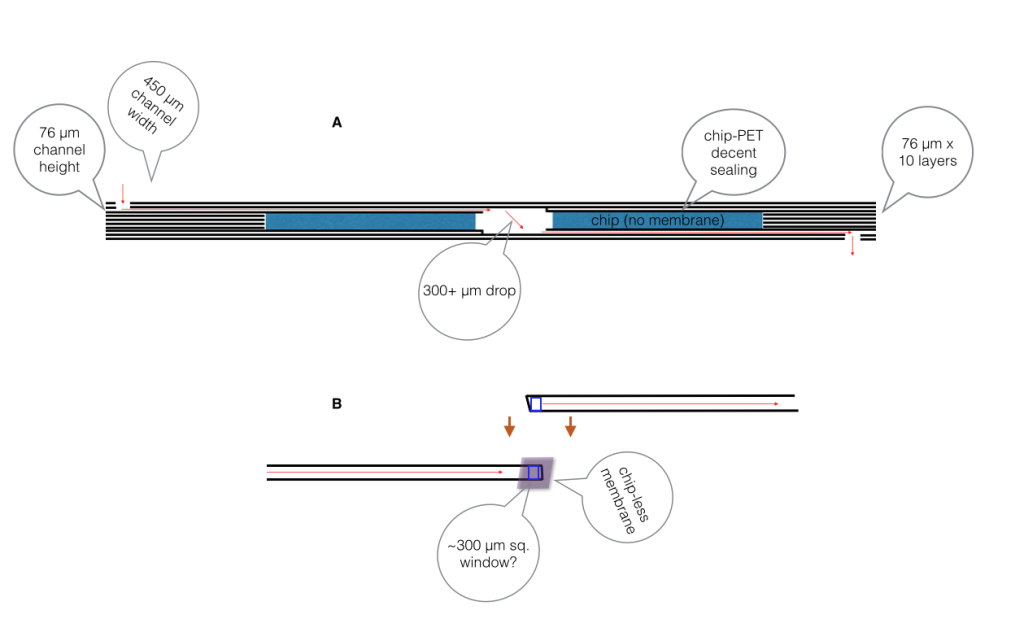
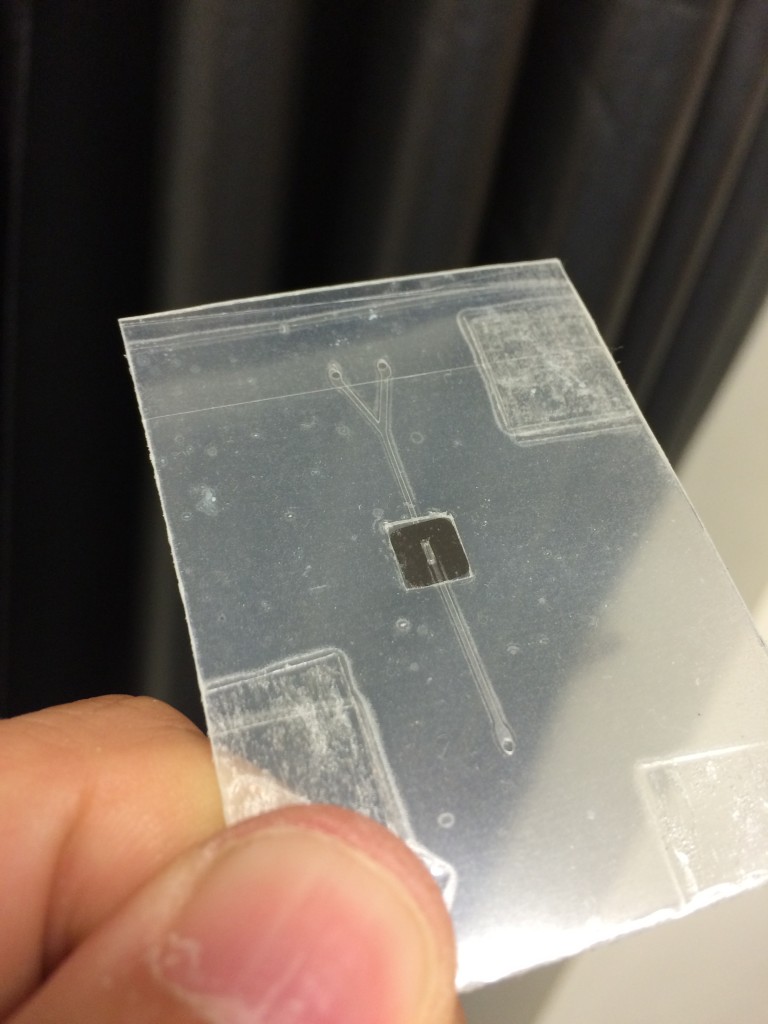
I followed Greg’s example and embedded a broken-membrane chip in a PETL. The idea was to use it as a negative control before I use an intact chip. Laminar flow should be maintained in this scenario in order for us to conclude that the membrane is responsible for mixing, should it occur. 4 layers of 76micron PET are just as thick as a chip, so it was easy to enclose it before adding a channel above and below it. No leakage was apparent, I added extra heat to the chip area to encourage sealing. The final device is 10 layers thick, 4 for the chip and 3 for each channel/port. I put the whole thing together in about an hour.
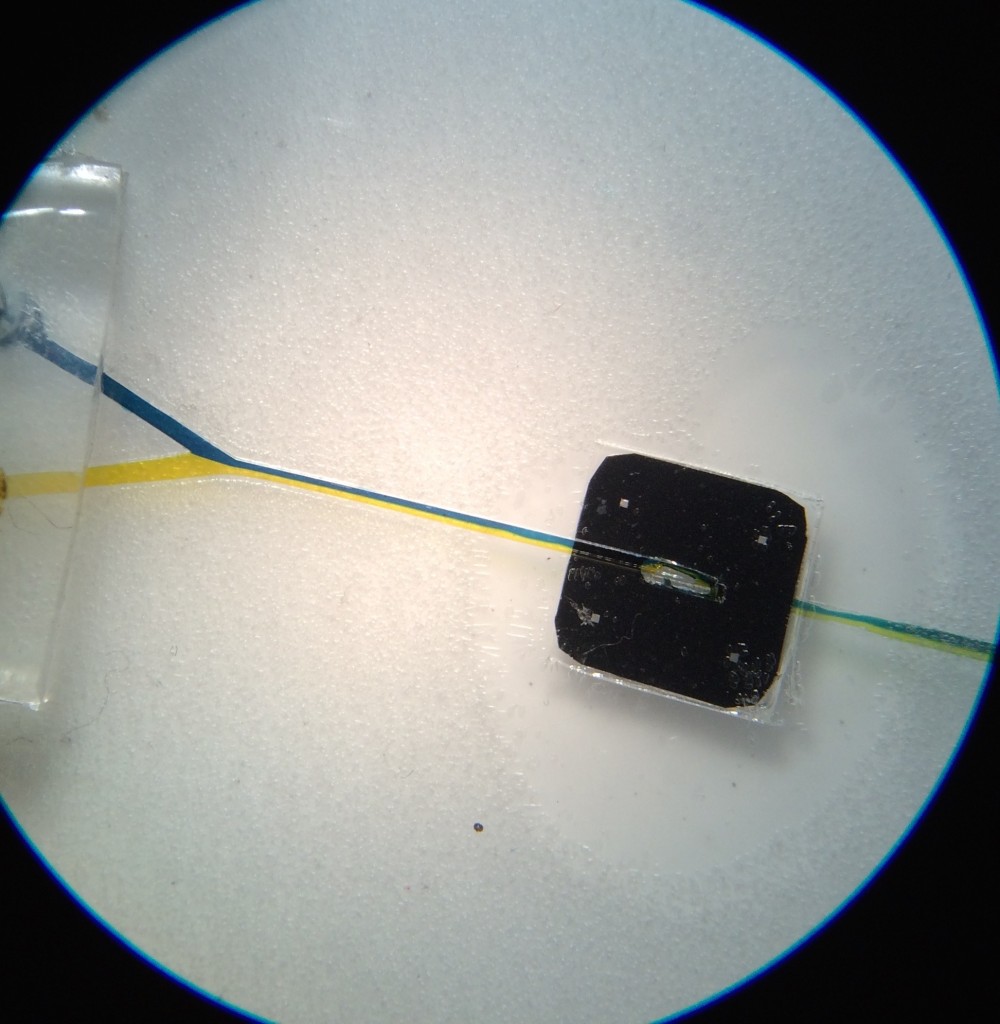
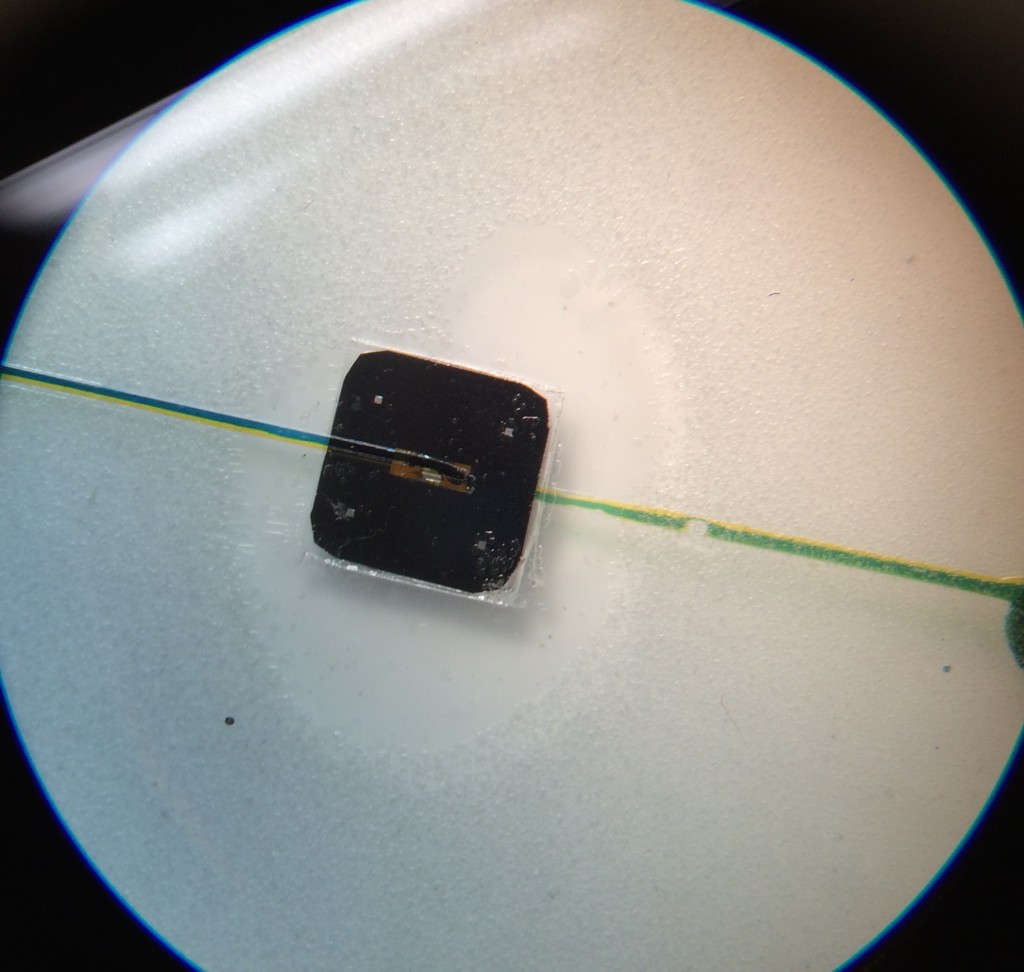
As you can see in the images, laminar flow exists before the chip, and is semi-maintained after; this was not always the case, at times mixing occurred, or even 3 streams were present after the chip. I think that the main problem is the big drop into the compartment created by the chip-region where the membrane is located; it creates a pretty big chamber (A) where the liquid kind of pools, and mixes. This might be less of a problem when the membrane is present (?), but even if this is the case, I feel like I am going to be left wanting for a good (negative) control. Advice is welcomed : )
What it occurred to me before is to simplify the final set up by using a delaminated membrane, sandwiched (B) between channels; that would take care of the “pooling chamber” created by the chip.


Perhaps you could flow one fluid through the membrane into the second fluid so the mixing at the pores is between the two fluids. This would cause Dean vortices of one fluid into the other. Without the membrane in place, the two flows would sit one on top of the other. If you reversed directions the two fluids should split. With the membrane, reversing the flow would mix even more.