Membrane fabrication – Nanosphere litho
This post is a recap on the nanosphere lithography based membrane patterning process. The results shown here are from a non-optimized run of the process.
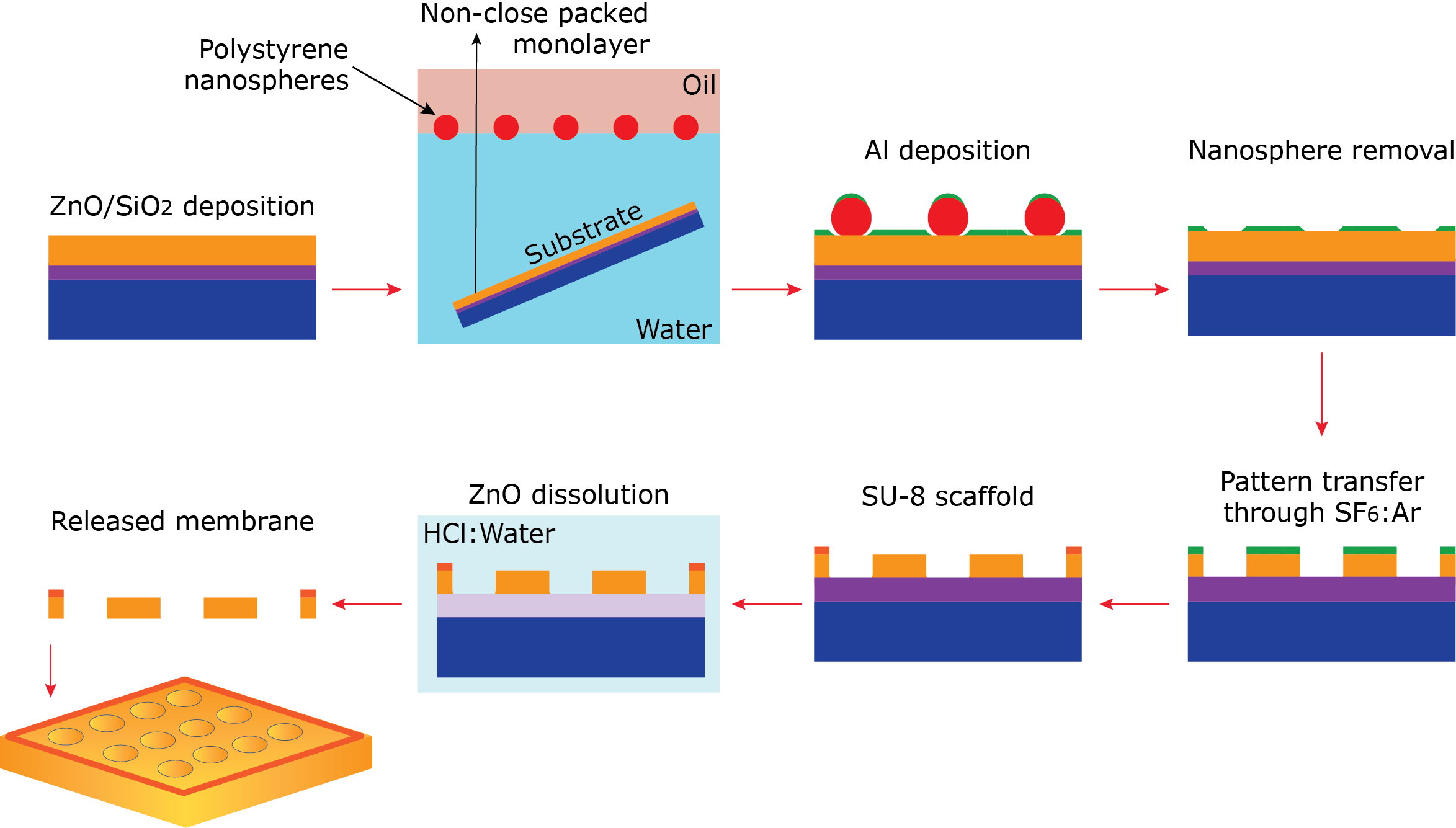
The image below shows an overview of the fabrication process used.
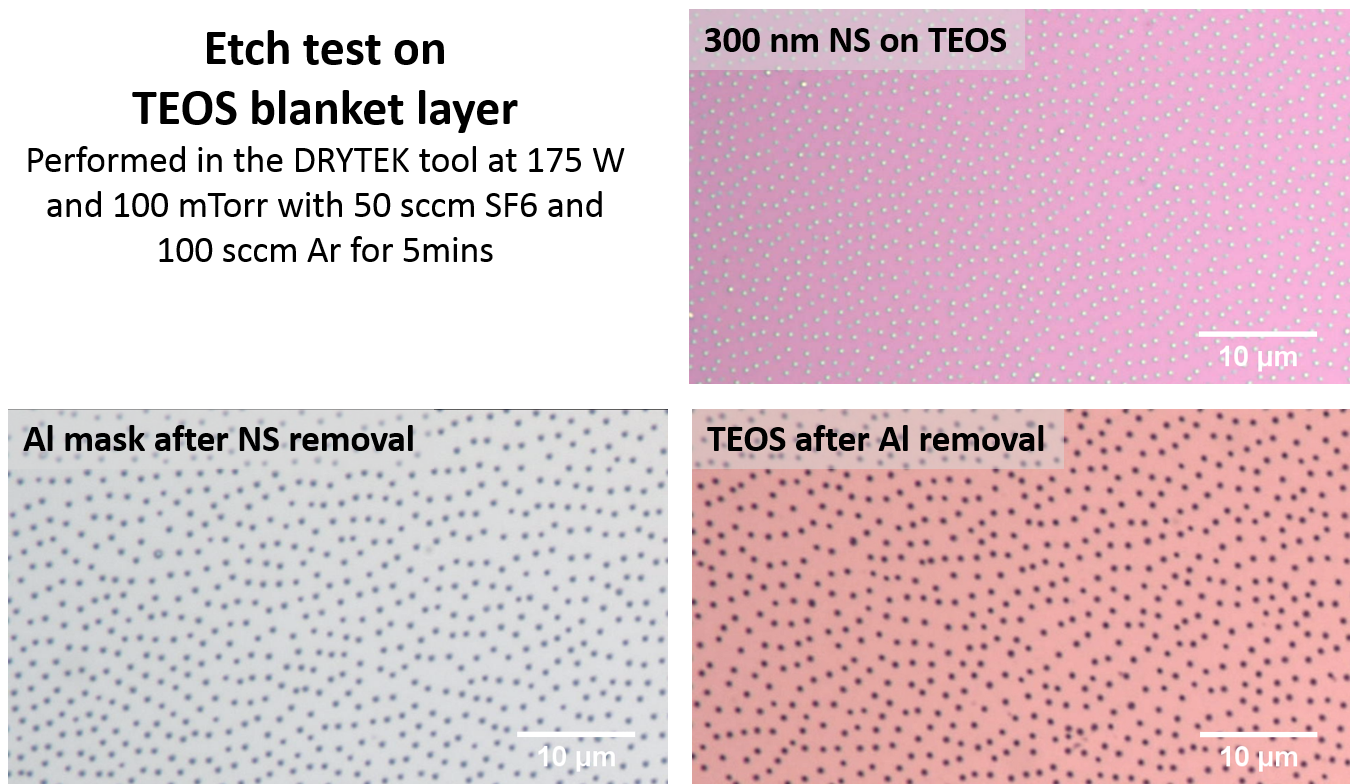
Below you can see optical micrographs of an etch test we performed on a TEOS sample with the Al mask fabricated by nanosphere lithography.
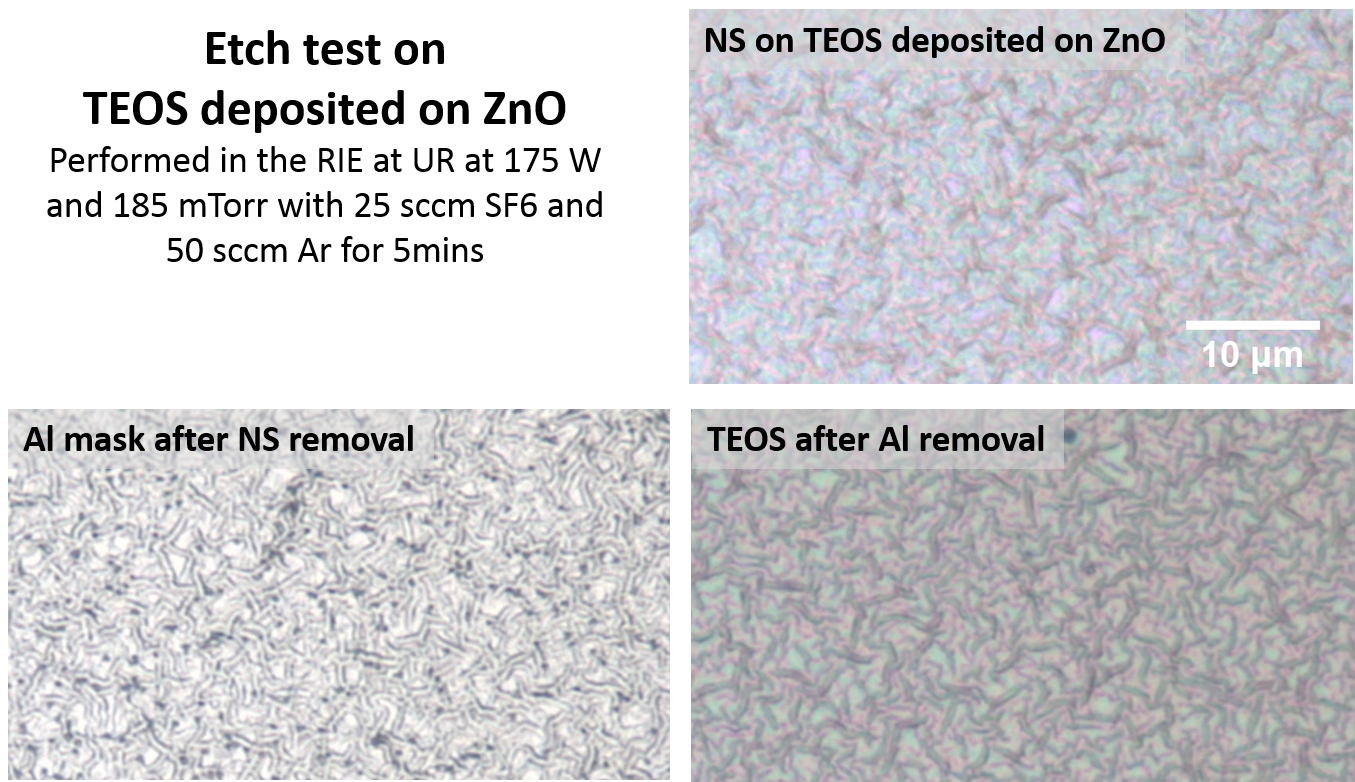
Next, we evaluated the TEOS etch, however this time the TEOS was deposited on a ZnO film (sacrificial layer for membrane release). Samples containing ZnO are not permitted in the DRYTEK at RIT, the RIE at UR was used instead. The etching conditions had to be adjusted and will be optimized in the near future. A couple of things that you can observe from the pictures are: 1) the large features transferred from the ZnO surface to the subsequent layers and 2) the poor contrast between the NS and the TEOS/ZnO stack.
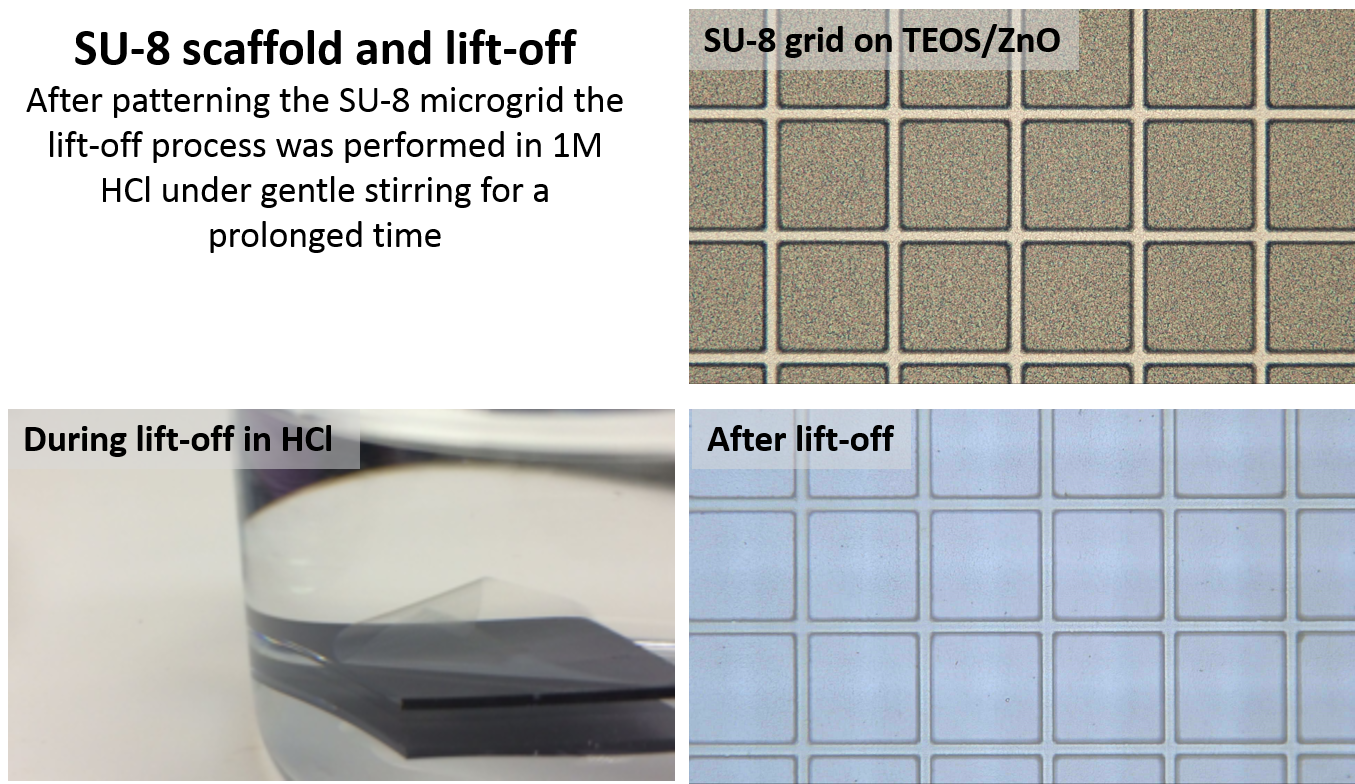
After removing the Al we proceeded to deposit and pattern the SU-8 scaffold as usual and finally released the membrane by dropping the sample in a beaker containing 1M HCl and leaving it over the weekend under gentle stirring. Next, the released membrane was transferred to a clean substrate and imaged in the OM and the SEM.
Through the SEM characterization we observed the NS were still at the surface of the TEOS. We have now improved the removal of the NS and are more experienced on how to quickly evaluate their presence/absence (removing them in toluene and imaging the sample under dark field).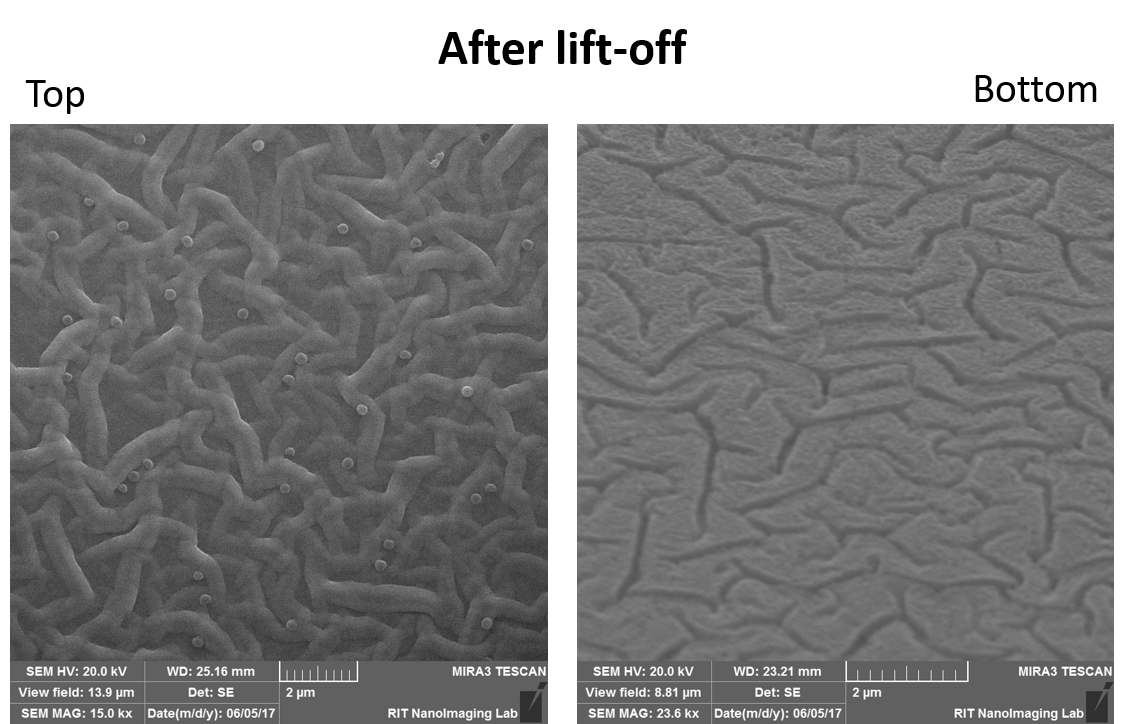
We have also started exploring the assembly of NS when going from a water/hexane to a water/air interface. The aim here is to be able to deposit the NS on substrates that may not be resistant to hexane. The pictures below show the results from three different approaches. 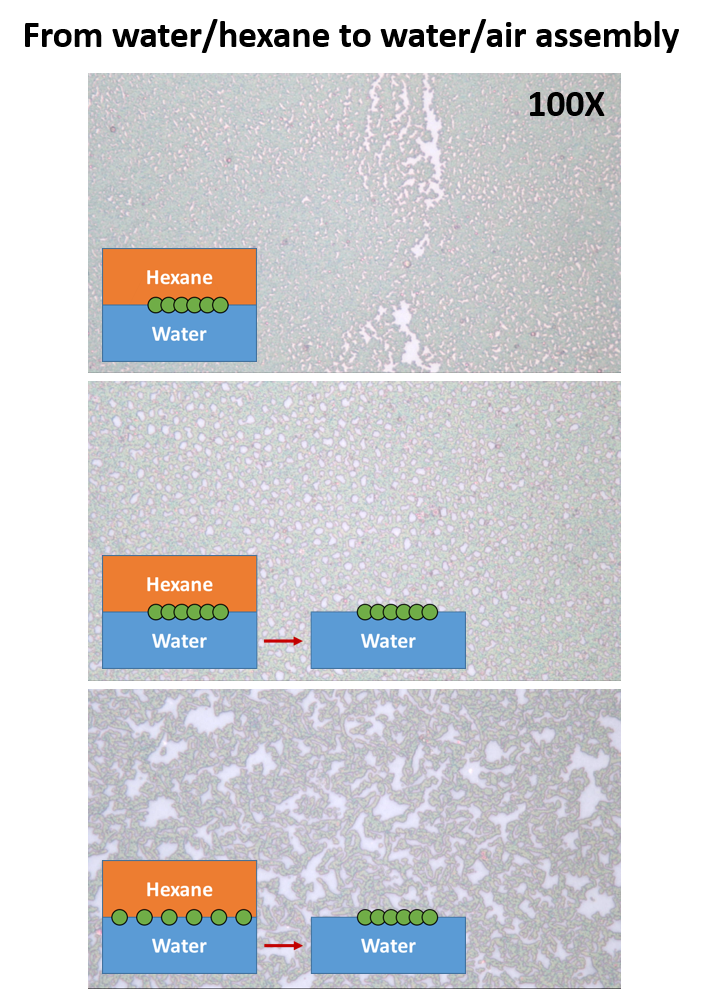
Here are some other things we have been working on:
- NS size reduction in Oxygen plasma tested (from 340 to 180 nm, diameter)
- ZnO deposition by reactive sputtering (at UR)
- Second run of the fabrication process
- NS assembly directly at the water/air interface