R61/R33 Update to NIH on Nov. 9, 2022
Attached is a PDF presented to the NIH at our annual update meeting that included other funded project teams.
Attached is a PDF presented to the NIH at our annual update meeting that included other funded project teams.
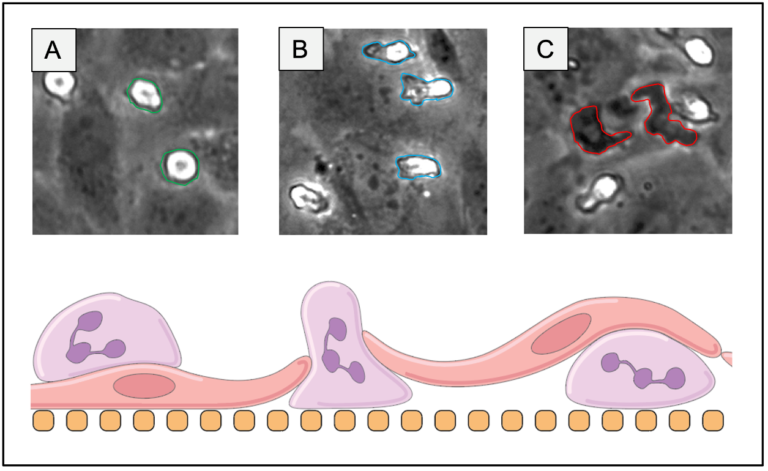
Introduction High throughput imaging techniques in conjunction with in vitro micro-physiological systems (MPS) allow for comprehensive exploration of physiologically relevant phenomena in a living 3D mimetic of a tissue microenvironment. Prior work in this lab has readily demonstrated that vascular tissue mimetics (the µSiM) facilitate real time phase-microscopy visualization of immune cell trafficking in response…
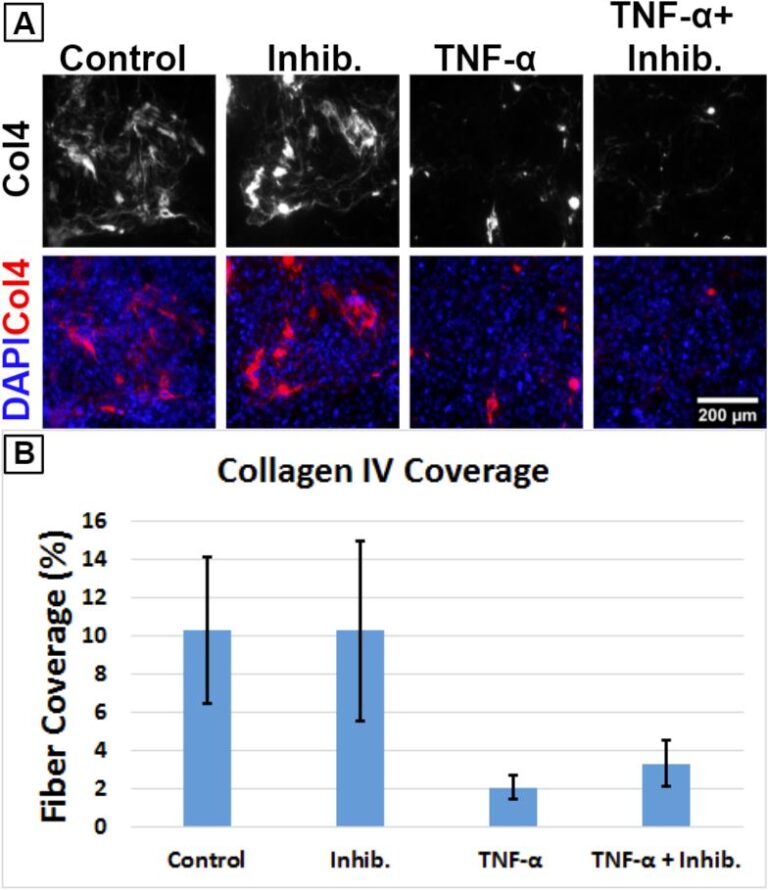
Note: a postscript regarding an assay to determine the activity of our MMP-2/MMP-9 inhibitor was added to this post on June 14, 2021. Introduction The blood-brain barrier (BBB) plays an important role in maintaining brain chemistry by restricting the permeability of small molecules and cells. Inflammatory diseases may disrupt the BBB and promote the development…
Introduction Studies have shown that the shear-stimulation of endothelial cells results in the upregulation of the shear-sensitive transcription factor Kruppel-like factor 2 (KLF2). KLF2 plays a critical role in the regulation of endothelial activity such as the regulation of vascular tone, anti-inflammatory responses, and antithrombotic functions. KLF2 is also responsible for the upregulation of endothelial…
Introduction Here, I will post figure drafts for the paper that introduces the modular µSiM (m-µSiM). Figures Remaining data to obtain: Occludin staining in IMR90-4 from UniBe in µSiM. We have tried this after 2 day culture in µSiM, which worked at UR but is not working at UniBe. Current problem: Occludin is not seen in…
Introduction Breakdown of the blood-brain barrier (BBB) is one of the earliest signs of sepsis and is linked with long-term cognitive impairment. As animal models poorly recapitulate human sepsis, alternative approaches are direly needed to understand sepsis-associated brain injury and develop strategies that protect against cognitive decline. To fill this gap, we are developing a…
Background From previous experimental results as well as COMSOL simulations presented in our older posts, we observed a universal non-uniform analyte distribution in the μSIM bottom channel due to limited lateral diffusion rate. This uneven distribution profile will limit our sensitivity in using small volumes of supernatants collected from the ports which are far away…