Co-Culture on SiO2 3um Low Density Membranes
Scope:
Human umbilical vein endothelial cells (HUVEC) and adipose derived stem cells (ADSC) were co-cultured on SiO2 low density 3um pore membranes. The ADSCs were initially seeded onto the membranes, at 6 hours the membranes were flipped over and placed into a 24 well plate and HUVECs were seeded. Cells were grown for 3 days and then fixed and permeablized. Both sides of the membrane were stained with DAPI/Phallodin. The goal of this experiment was to image both sides of the membranes and begin to compare their image qualities with that of the tracketch membranes.
Result:
On the co-cultured membrane, the ADSC side and HUVEC side appear to be the same in morphology. Both sides appear to be stringy and less spread out than what has commonly been seen with ADSC morphology. The ADSC only membrane appeared to be less dense but I think this is attributed to cells only being grown on one side. It also appears that the ADSCs are crawling through the membrane. This will be further studied.
| ADSC Side (20x) | HUVEC Side (20x) | |
| Co-Culture | 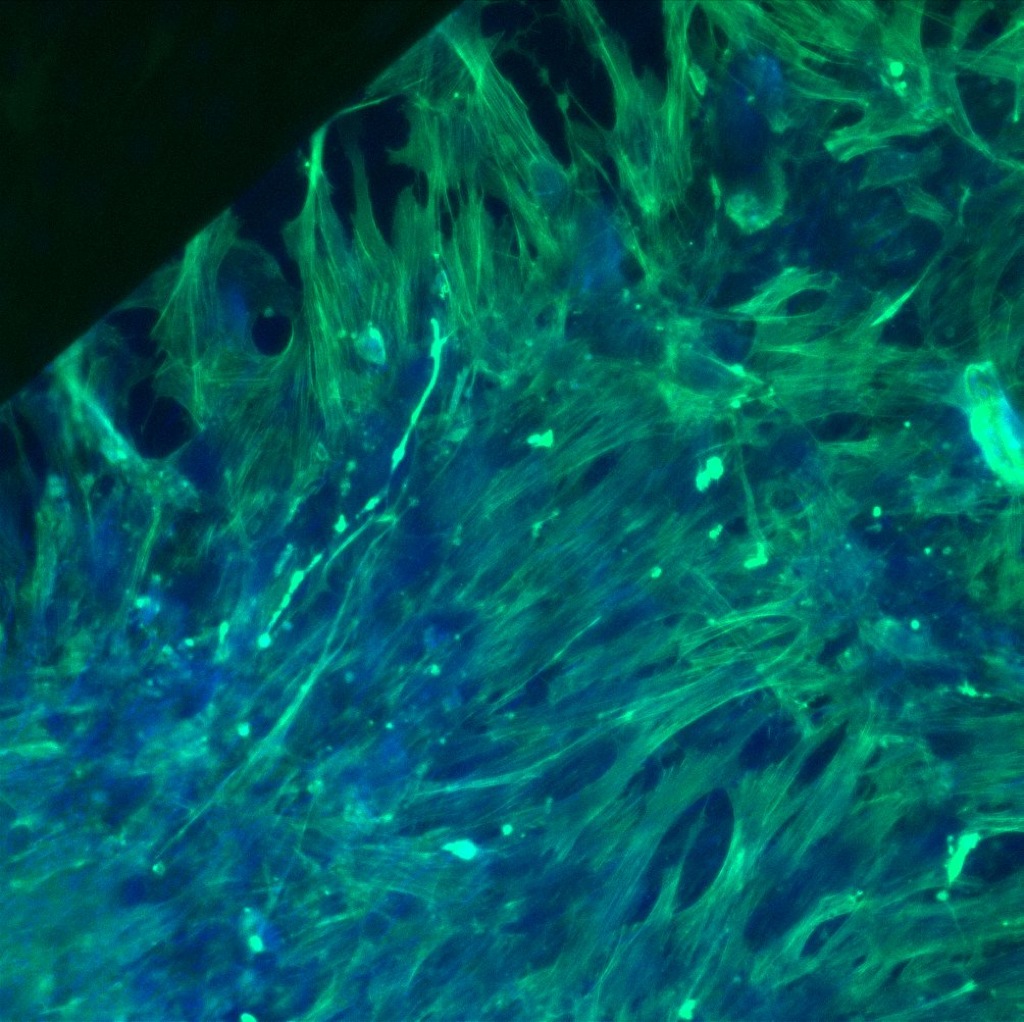 |
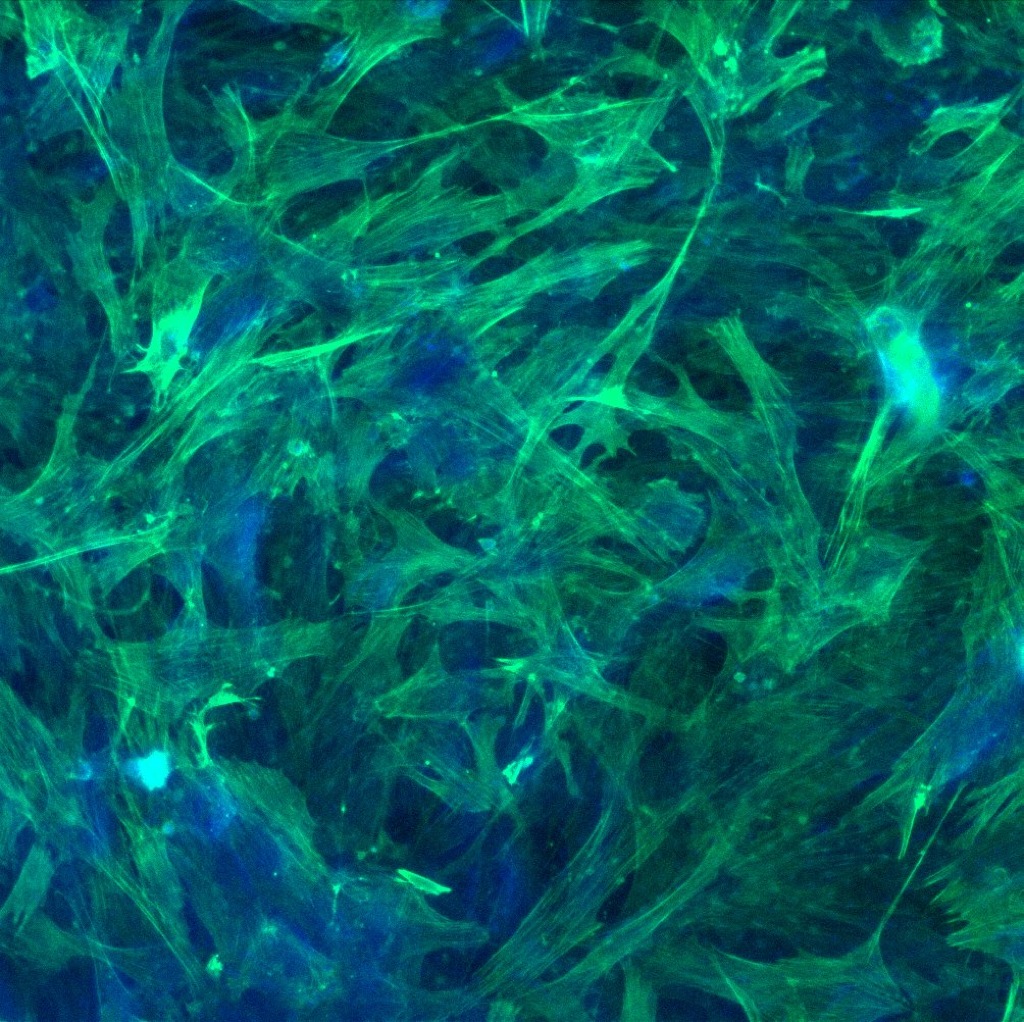 |
| ADSC Only |  |
NRG discussion: Actin polymerization induced by the holes would be very cool (says Jim). Zach’s studies with fluorescent particles are important for figuring out if high fluorescence signal is the most reasonable explanation.