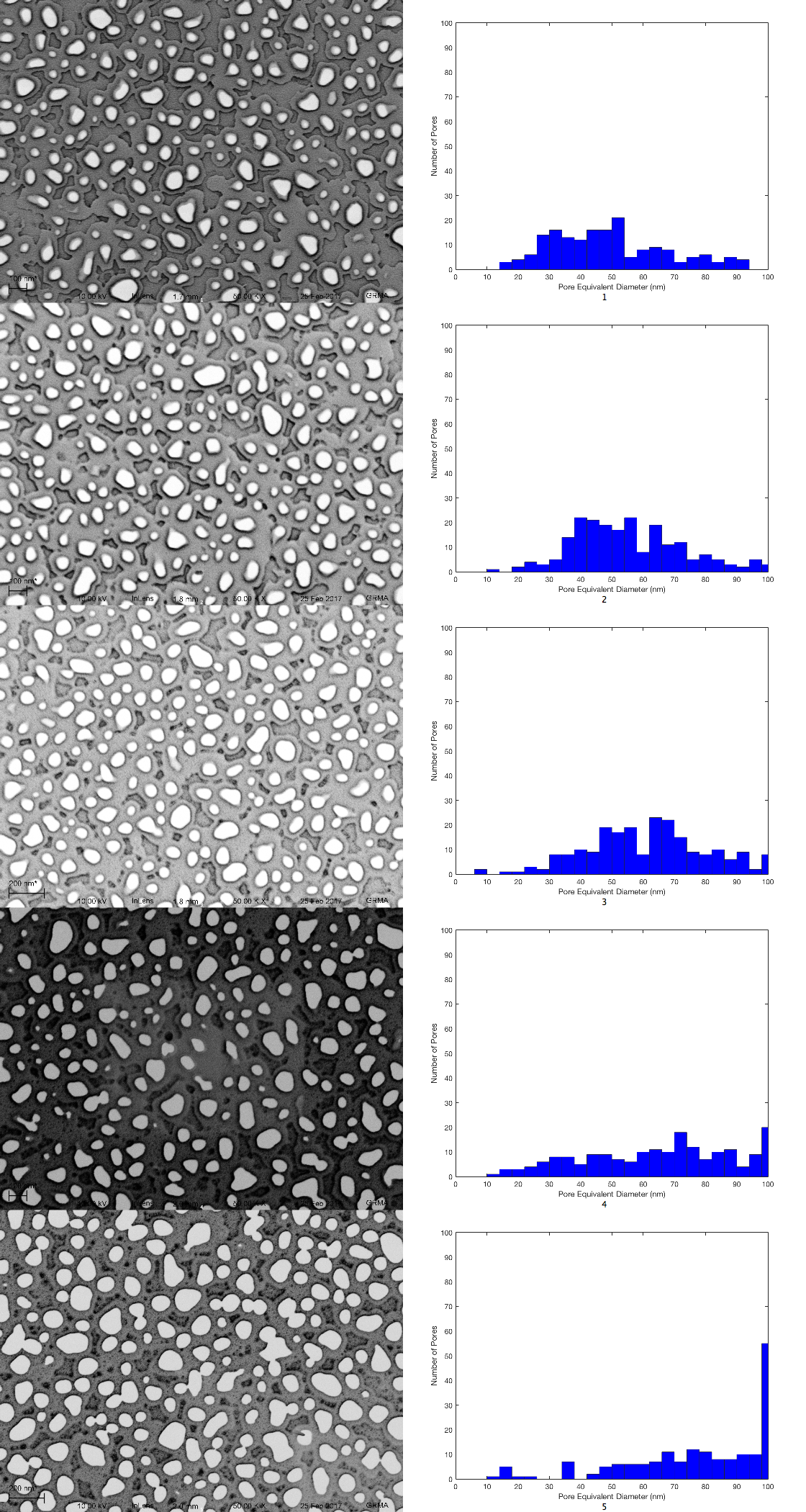
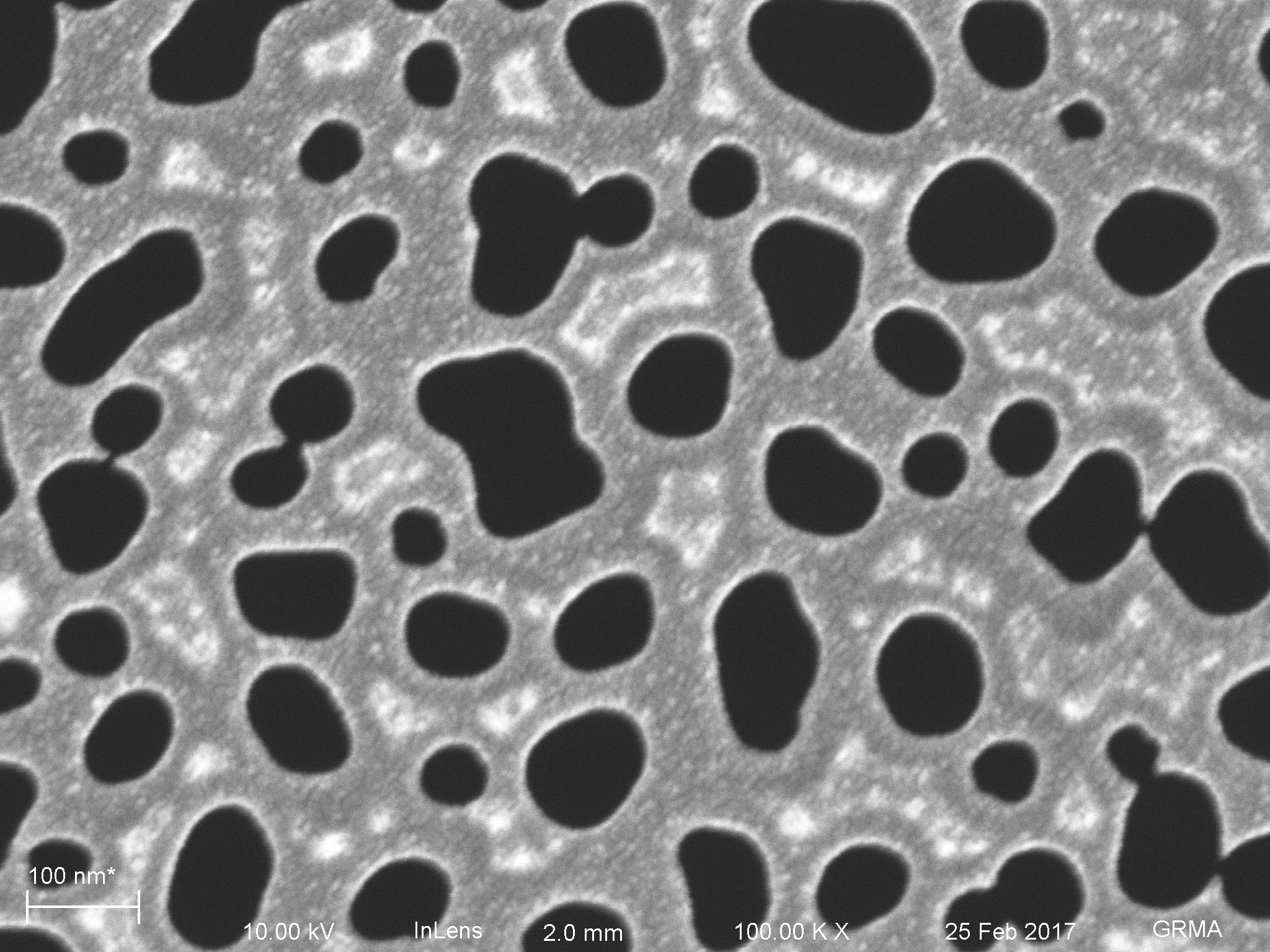
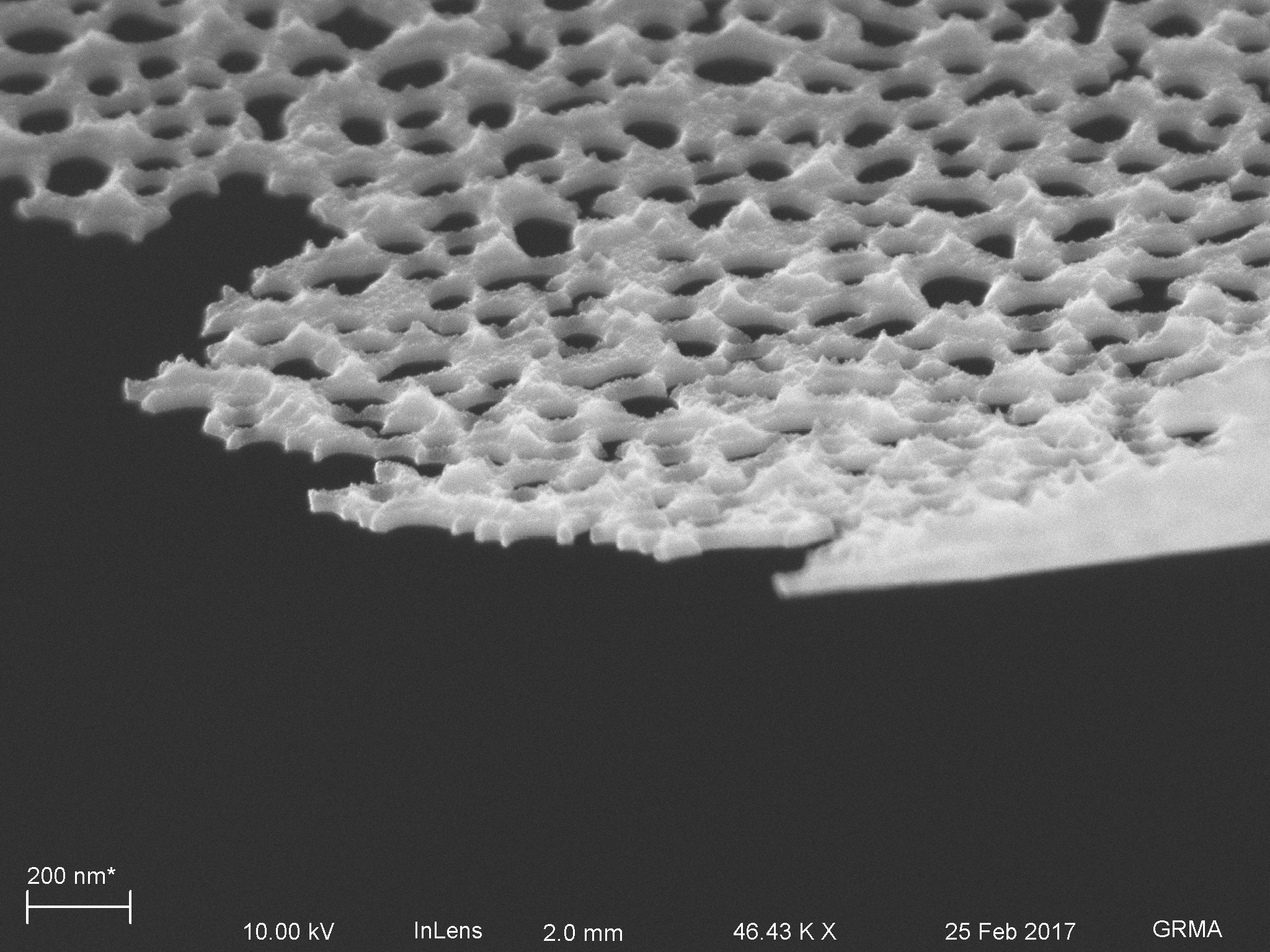
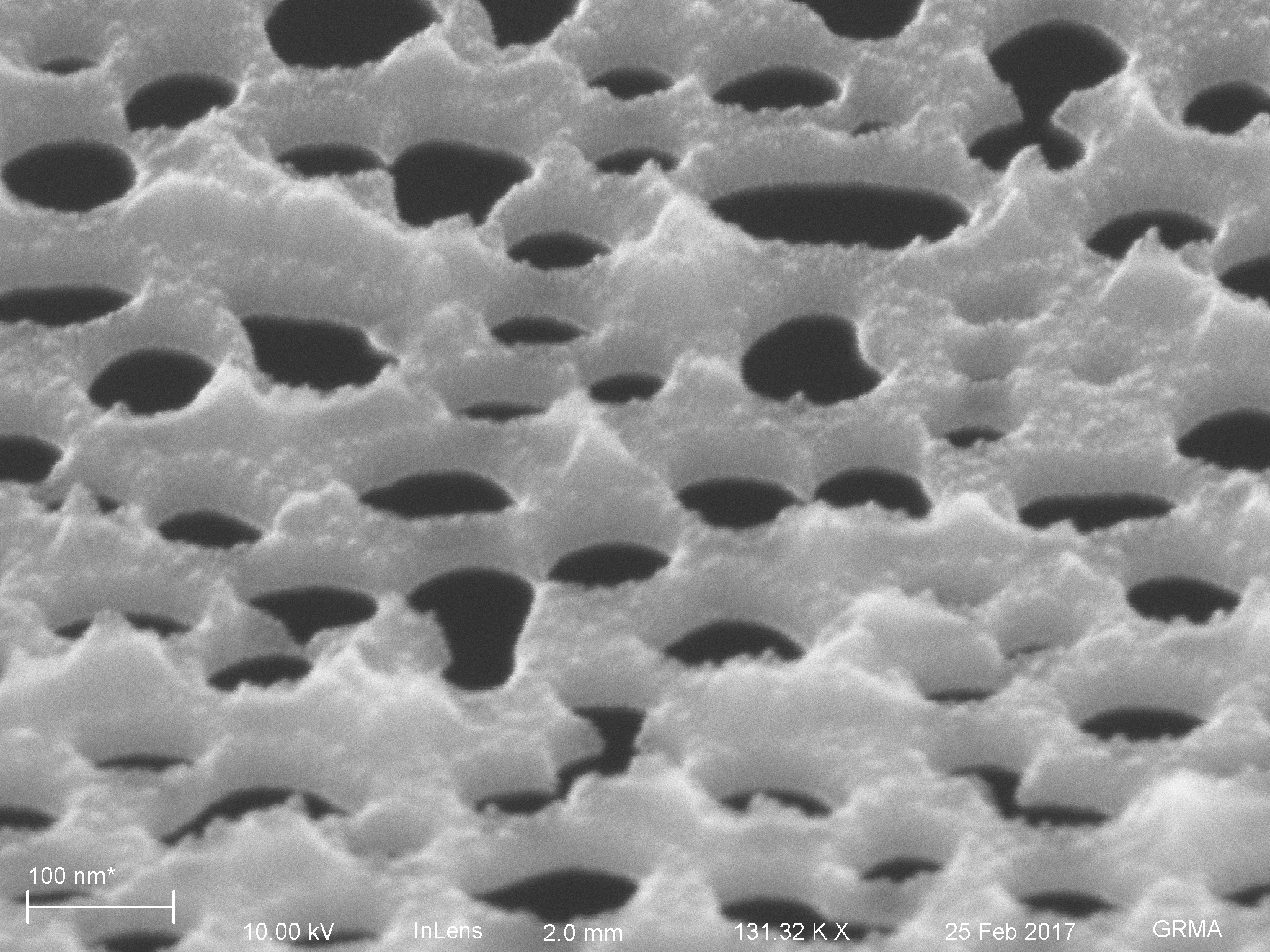
As the title states, I partially etched some different material (Wafer 2238, 100 nm NPN) to create nanofeatures with blown out holes. With a thicker membrane, we can blow out the pores more (etch longer) without compromising the strength of the material (with regard to templating purposes). These membranes were fractured and coated with 6 nm of platinum. These images are only the NPN; not coated with gold or templated with MgF2.
Equivalent pore diameter histograms for partially etched substrates.
Minor Axis histograms of partial etch (0, 20, 40, 60, 80s) of Wafer 2238 (from top to bottom). Average length: 42, 48, 53, 56, 72 nm. Based on estimates of etch rate, the thicknesses of these membranes are (100, 80, 60 40, 20 nm, from top to bottom). Pores merge considerably below 40nm.
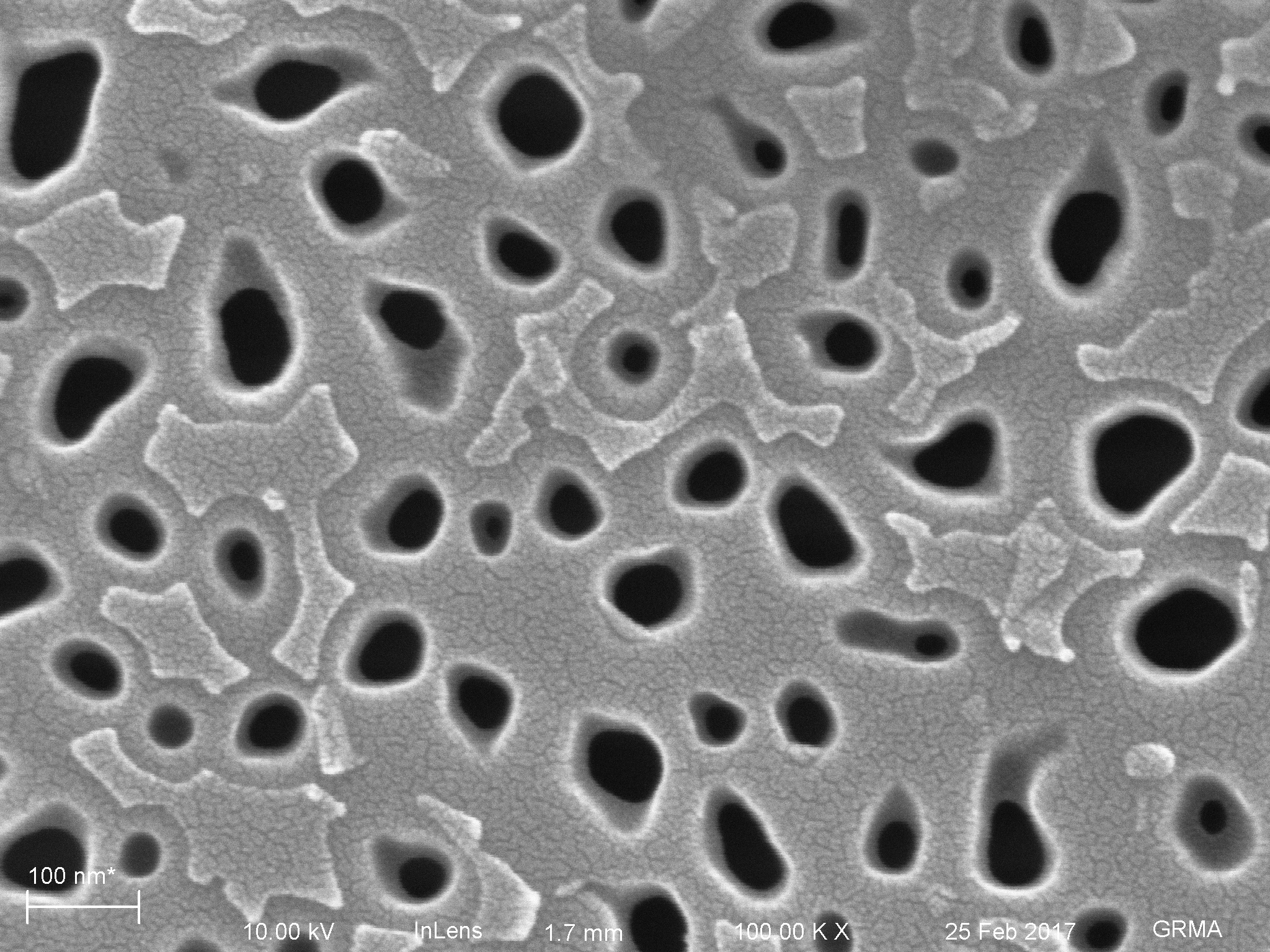
Zoom-in of wafer 2238. The scaly structures are residual pieces (siloxynitride?) used as a mask to create the thicker NPN materials. there also appears to be some conical shape to the pores, instead of anisotropic sidewalls.
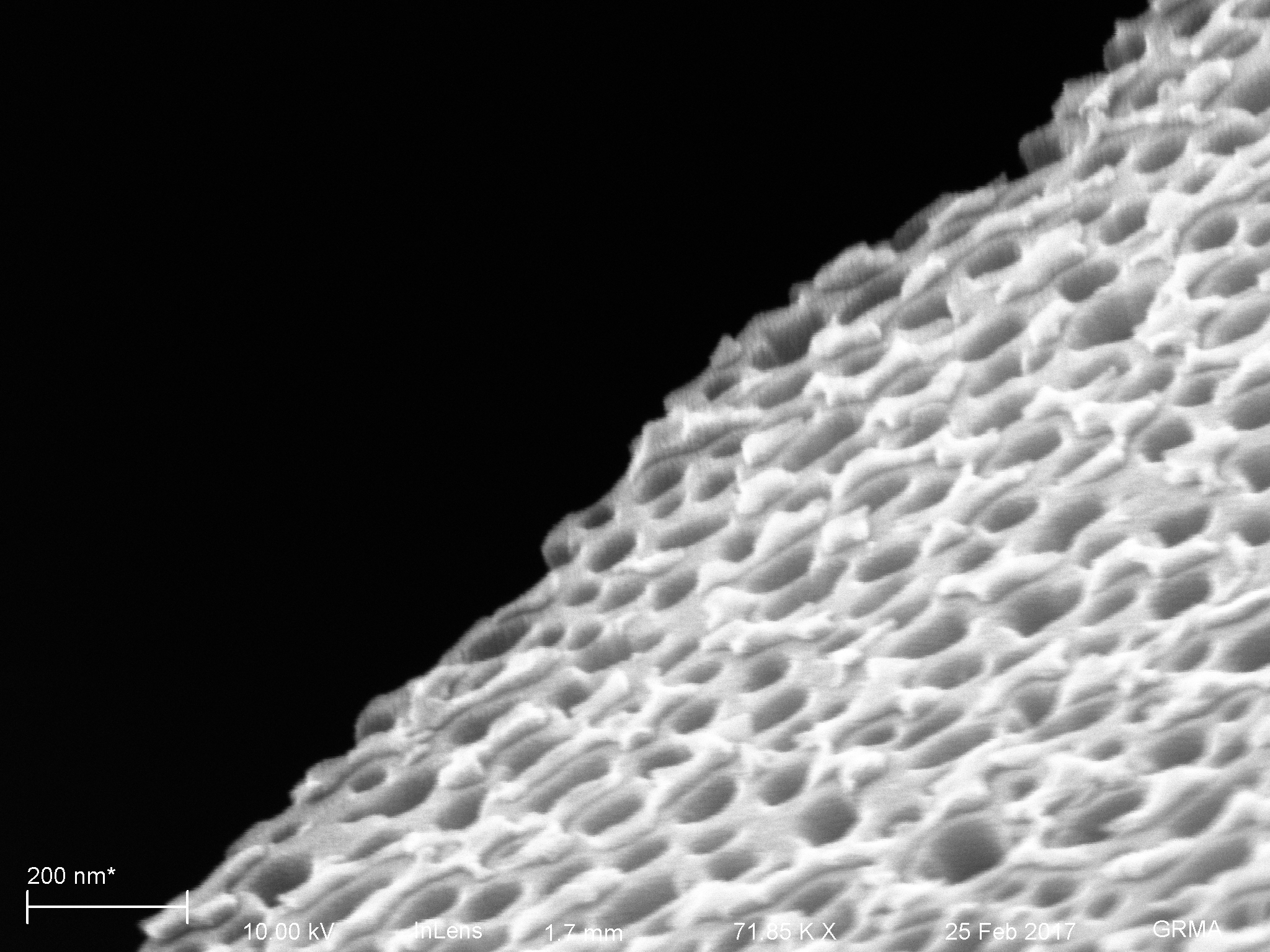
Viewed off-normal, the thickness of the siloxynitride is appreciable.
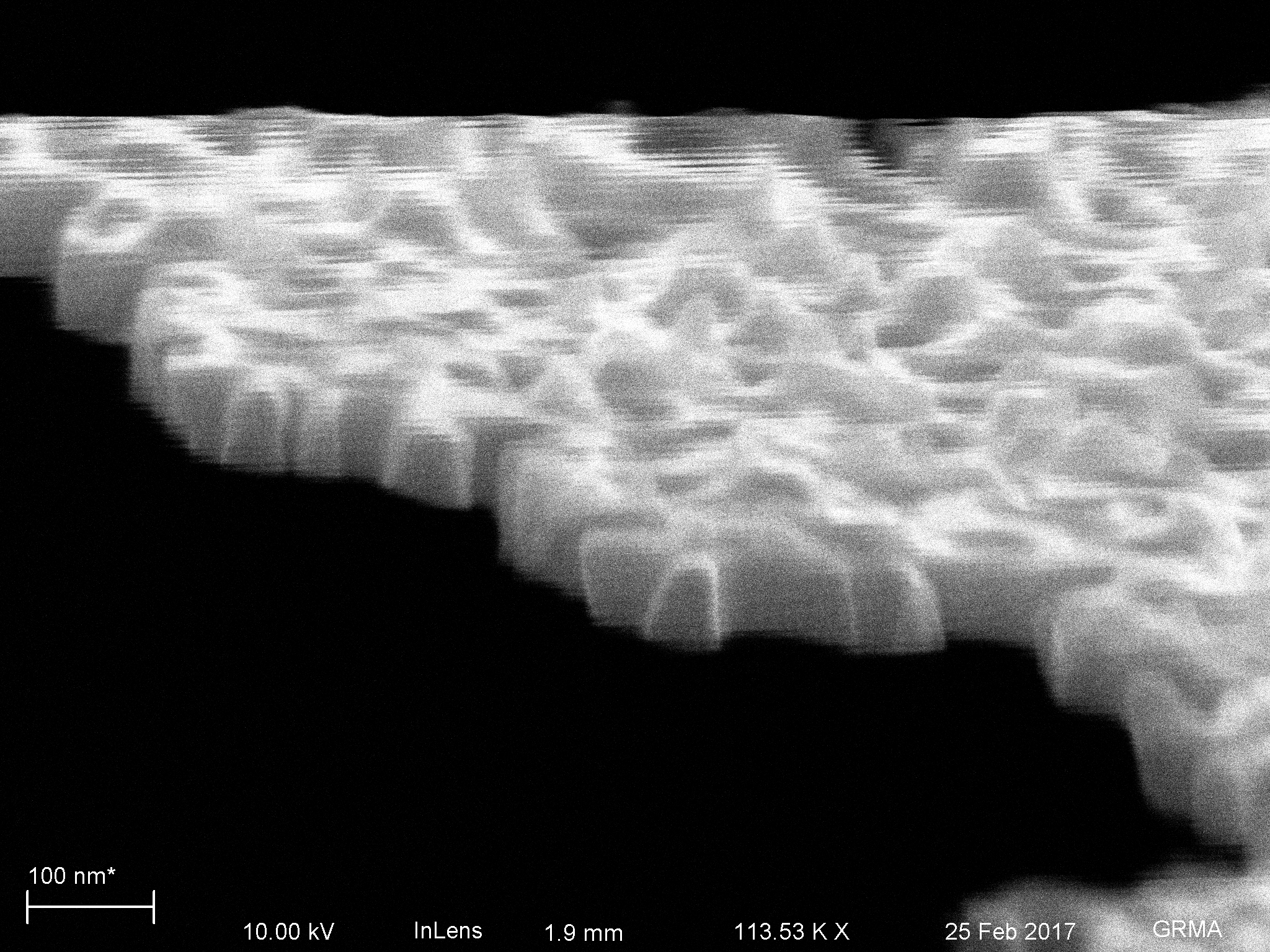
40s etch crossection, 64 nm thick. (vibration hinders some resolution). The pores have a conical crossection.
80s etch aerial image. Residue pattern from the silicoxynitride is transferred through the nanomembrane’s volume.80s etch crossection. 23nm thick. The silicoxynitride acts as an etch mask (with poor selectivity) and is causing the texture at the surface.80s crossection. Shows the scalloped merged pores with sharp peaks.
I think the 2238-80s material is too weak to hold up to MgF2 processing, but there is hope for the 60s material.
I’m currently trying to compare separations between different complex protein mixture. This was my first crack at depleted human serum. This mixture has been processed so that the most common blood proteins (such as albumin and immunoglobulins) have been removed. All three trials were performed using membranes from w338 in diffusion mode. 338 has a…
Summary My analysis of npMgF2 has relied heavily on both tomogram and segmentation processes. The tomogram generation has thus far been sufficient, giving enough detail to our eye to identify different structures, but turning the tomograms into 3d models has been a lot more labor intensive. Using a neural network classifier (Weka, out of a…
After recent studies with surface treatments, we wanted to take a step further by trying amino silanization on RTP’ed samples. Wafer 413 samples were RTP’d with no intact slits. Both 2D and 3D formats were tested in DMEM (-FBS) in oven @37C. All 3D samples had membrane side facing down whereas, in 2D format the…
I’ve been working recently with amyloid-beta (AB) provided to me by some people in Brad Nilsson’s lab. These experiments are related to the HMM diffusion experiments for our collaboration with Harold Smith. Basically, AB fibrils are very long (microns) and we are looking for ways to either prevent their aggregation from smaller peptides/oligos, or to…
Ag/AgCl electrodes are used overwhelmingly in streaming potential and sometimes in electroosmosis. The benefit of using Ag/AgCl in electroosmosis should be less gas generation and the ability to make an enclosed pump. Here is some information on my attempt at Ag/AgCl EO. .2mm silver wires were coated with AgCl using protocol. Electrodes were immersed in…
Desalting of 4M NaCl in deionized water was performed using our membranes in the SepCon format. I ran the SepCons in the same as way as the previous study, using a low stir rate and floating the SepCons. Once again, a conductivity probe was used to measure the amount of salt in the dialysate. Transport…