Skip to content

Nanomembrane Research Group

  • Home
  • Publications
  • MembranesExpand
    • Common Chip Formats
    • Common Membranes
    • Microslit Membranes
  • DevicesExpand
    • µSiMExpand
      • Geometry
      • µSiM CAD Files
      • AssemblyExpand
        • Protocols.io (µSiM Assembly)
        • Instructions
        • Common Issues and Troubleshooting Tips
      • Cell Culture ProtocolsExpand
        • Top Well: hCMEC/D3
        • Top Well: HUVEC
        • Bottom Channel Culturing
        • Immunocytochemistry Protocol
        • Impact of Chip Orientation on Fluorescence Imaging
        • Permeability: In Situ Method
        • Permeability: Sampling Method
        • Cell Culture Common Issues and Troubleshooting Tips
    • SepCon®Expand
      • Sepcon Assembly
      • Sepcon Video Protocol: Assembly
      • SepCon Gasket Silhouette File
      • SepCon Video Protocol: Wetting the membrane
      • SepCon Video Protocol: Disassembly
    • µSiM-DXExpand
      • µSIM Video Protocol: Capture of Nanoparticles
  • ImpactExpand
    • TraCe-bMPS
    • HCIC
    • LOMP
    • SiMPore
Nanomembrane Research Group
  • hToC | memBrains | μSiM

    Using Histogram Distance Measurements as a Means of Analyzing Flow Cytometry Data

    ByDan Ahmad February 7, 2022

    Overview Recently, we performed a series of flow cytometry studies assessing neutrophil (PMN) activation in first generation flow devices. All the relevant data and can be found in a previous post: here. As part of the analysis, we chose to quantify relative PMN activation by comparing isotype control histograms against L-selectin (CD62L) expression histograms. This…
    Read More Using Histogram Distance Measurements as a Means of Analyzing Flow Cytometry DataContinue

  • Knowledge (Public)

    Relationship(s) between Porosity, Pore Size, Pore Density and Interpore Spacing

    ByJim January 26, 2022January 26, 2022

    One of the more useful formulas for our materials is Equation 1 in Chung et al., 2014 Lab on a Chip 14:2456-68 Assuming uniformly distributed pores in a planar (i.e. ultrathin) membrane, the relationship between pore radius r, porosity p, and the average spacing between pores, Lp-p is: Where the porosity is a number between…

    Read More Relationship(s) between Porosity, Pore Size, Pore Density and Interpore SpacingContinue

  • NRG

    Human Tendon-on-Chip (hToC), a current research tool and future screening platform

    ByRaquel Ajalik January 24, 2022January 25, 2022

    The Burden of Tendon Injuries on HealthCare: Acute and chronic tendon injuries commonly affecting the working-age population are frequently work-related and have negative socioeconomic outcomes such as productivity loss, income loss, and unemployment(O’Hara et al., 2020). Tendon injuries are often multifaceted and can be characterized by inflammation and degenerative changes in tendon structures collectively known…

    Read More Human Tendon-on-Chip (hToC), a current research tool and future screening platformContinue

  • Utilizing the μSIM to model brain endothelial barrier changes in Cerebral Amyloid Angiopathy
    memBrains

    Utilizing the μSIM to model brain endothelial barrier changes in Cerebral Amyloid Angiopathy

    ByMuyu Situ January 24, 2022January 25, 2022

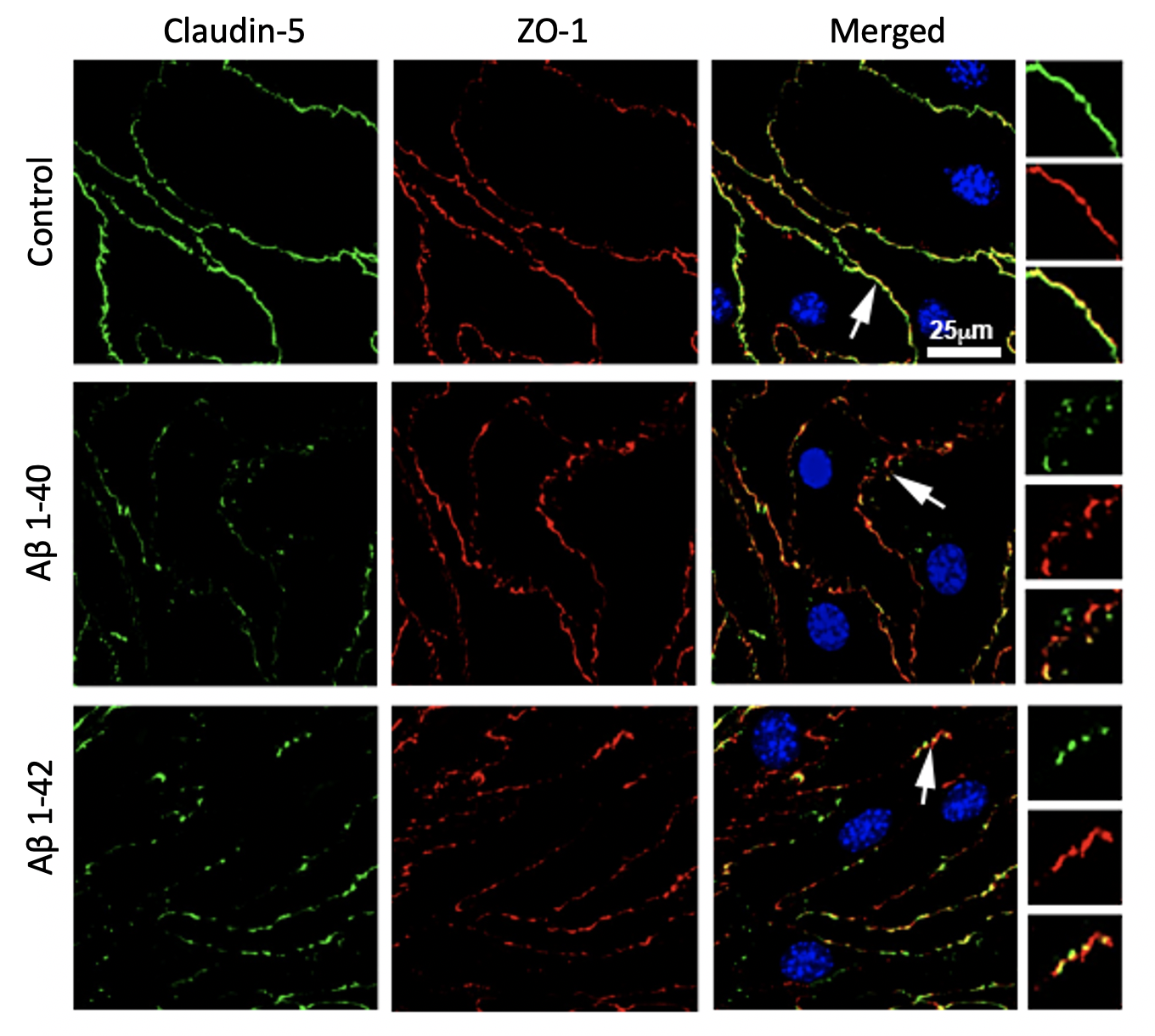
    Introduction Vascular hyperpermeability and hemorrhagic stroke are hallmark symptoms of Cerebral Amyloid Angiopathy (CAA), a cerebrovascular disease characterized by amyloid-β deposition around the brain microvasculature. In CAA pathogenesis, vascular Aβ accumulation contributes to structural alterations and loss of integrity in the neurovascular unit/blood-brain barrier (NVU/BBB) resulting in “leakier” blood vessels, intracerebral hemorrhages, increased risk of…

    Read More Utilizing the μSIM to model brain endothelial barrier changes in Cerebral Amyloid AngiopathyContinue

  • Knowledge (Public)

    Super useful conversions between volumes and lengths

    ByJim January 19, 2022

    1 m^3 = 1000 L 1 cm^3 = mL 1 mm^3 = uL 1 um^3 = fL 100 µm x 100 µm x 100 µm = 1 nL 100,000 nm^3 (50 nm tall cylinder with 50 nm diameter) = 0.1 aL

    Read More Super useful conversions between volumes and lengthsContinue

  • NRG

    No Time To Waste: Developing a Faster Method for Viral Genome Extraction from Waste Water Samples

    ByMichael Klaczko January 10, 2022March 5, 2024

    The premise of this project is built around the ideas that our membranes can: Be used as concentrators for very dilute targets Catch and hold particles for further processing on the membrane Here, we wish to test these ideas for dilute viral genome extraction in large volumes of waste water. We looked to improve upon…

    Read More No Time To Waste: Developing a Faster Method for Viral Genome Extraction from Waste Water SamplesContinue

  • NRG

    Evidence of functional sodium/hydrogen exchangers in single EVs captured on NPN

    ByJim December 29, 2021December 30, 2021

    Thanks to our collaborators at the University of Chicago we have now used NPN to demonstrate sodium/hydrogen exchange functions at the level of single EVs. This is first-of-a-kind evidence of protein function in individual EVs. It will be officially published in Communcations Biology and will soon be located at this DOI. What follows are key…

    Read More Evidence of functional sodium/hydrogen exchangers in single EVs captured on NPNContinue

  • memBrains | μSiM

    AFM Measurements of Glycocalyx in the Upside Down µSiM

    ByRichard Waugh December 21, 2021December 22, 2021

    Slide deck from Large Group Meeting 12-21-12 (PPT) Access requirements for the AFM cantilver to contact the cells requires the cells to be grown on the membrane surface in what is typically the bottom channel of A-line devices (Typical A-line configuration is shown in slide 2).  A PDMS block is attached to the well side…

    Read More AFM Measurements of Glycocalyx in the Upside Down µSiMContinue

  • Progress Toward Modeling Inflammation-Mediated Degradation of Basement Membrane Proteins in the μSiM-hNVU
    memBrains | NRG | μSiM

    Progress Toward Modeling Inflammation-Mediated Degradation of Basement Membrane Proteins in the μSiM-hNVU

    ByLouis Widom December 21, 2021

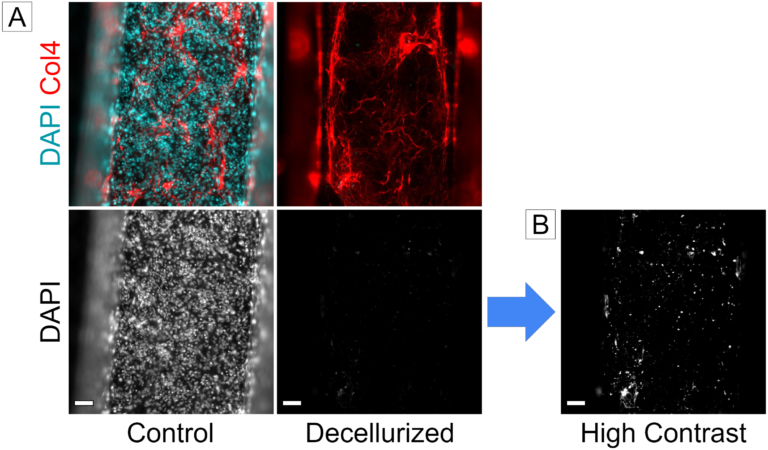
    Introduction The blood-brain barrier (BBB) plays an important role in maintaining brain chemistry by restricting the permeability of small molecules and cells. Inflammatory diseases may disrupt the BBB and promote the development of neurological disorders [1]. One potential mechanism of BBB disruption is the degradation of the extracellular matrix proteins that make up the endothelial…

    Read More Progress Toward Modeling Inflammation-Mediated Degradation of Basement Membrane Proteins in the μSiM-hNVUContinue

  • memBrains

    Pump-assisted oscillation mixing in μSIM for consistent small volume sampling and measurement from bottom channel.

    ByHoward Su December 20, 2021January 10, 2022

    Background From previous experimental results as well as COMSOL simulations presented in our older posts, we observed a universal non-uniform analyte distribution in the μSIM bottom channel due to limited lateral diffusion rate. This uneven distribution profile will limit our sensitivity in using small volumes of supernatants collected from the ports which are far away…

    Read More Pump-assisted oscillation mixing in μSIM for consistent small volume sampling and measurement from bottom channel.Continue

Page navigation

Previous PagePrevious 1 … 19 20 21 22 23 … 231 Next PageNext

© 2026 Nanomembrane Research Group - WordPress Theme by Kadence WP

0
    0
    Your Cart
    Your cart is emptyReturn to Shop
    Continue Shopping
    • Home
    • Publications
    • Membranes
      • Common Chip Formats
      • Common Membranes
      • Microslit Membranes
    • Devices
      • µSiM
        • Geometry
        • µSiM CAD Files
        • Assembly
          • Protocols.io (µSiM Assembly)
          • Instructions
          • Common Issues and Troubleshooting Tips
        • Cell Culture Protocols
          • Top Well: hCMEC/D3
          • Top Well: HUVEC
          • Bottom Channel Culturing
          • Immunocytochemistry Protocol
          • Impact of Chip Orientation on Fluorescence Imaging
          • Permeability: In Situ Method
          • Permeability: Sampling Method
          • Cell Culture Common Issues and Troubleshooting Tips
      • SepCon®
        • Sepcon Assembly
        • Sepcon Video Protocol: Assembly
        • SepCon Gasket Silhouette File
        • SepCon Video Protocol: Wetting the membrane
        • SepCon Video Protocol: Disassembly
      • µSiM-DX
        • µSIM Video Protocol: Capture of Nanoparticles
    • Impact
      • TraCe-bMPS
      • HCIC
      • LOMP
      • SiMPore