Control of DNA Capture by Nanofluidic Transistors
This lovely paper: 121025 – ACSnano fluidic transistor pore details the creation of a “nanofluidic transistor”. In essence, by changing the charge on the (metallized) membrane from 0V to 500V, the group can completely stop the transport of DNA molecules (which are driven across the membrane via electrophoresis) or allow them to pass. The membrane is an array of 16 FOB drilled pores on a 30nm thick free-standing SiN membrane. The nitride was coated with 75nm of Au (on top of a 5nm Cr adhesion layer) and then insulated with 15 nm of Al(2)O(3) via ALD:
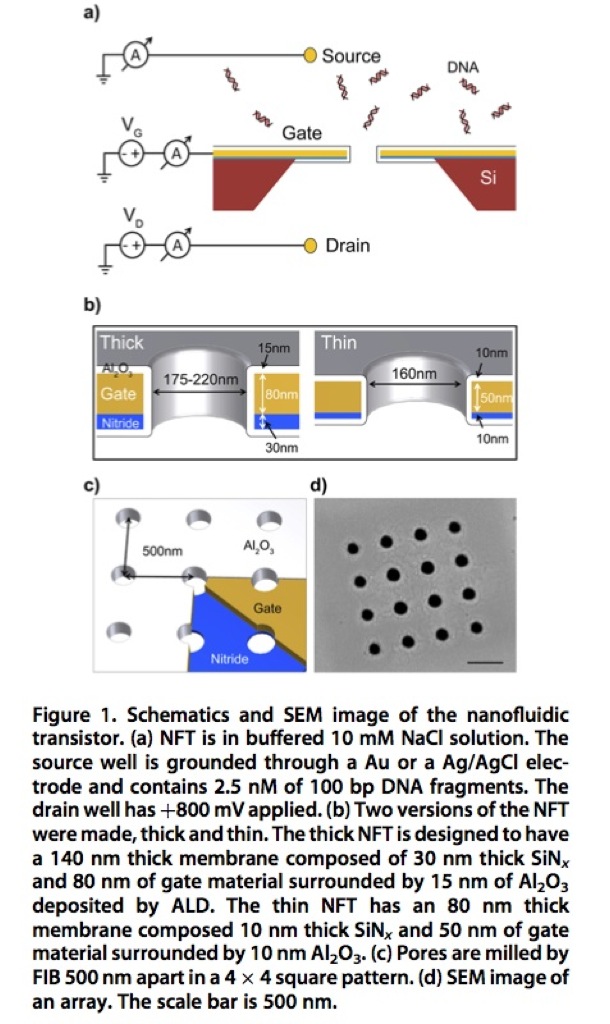
For the experiments, the ‘drain’ voltage was set at +80mV and the ‘gate’ voltage was varied from 0 to +500mV, but note that the aluminum oxide carries a negative charge, and so the zetapotential of the membrane actually begins at less than 0V.
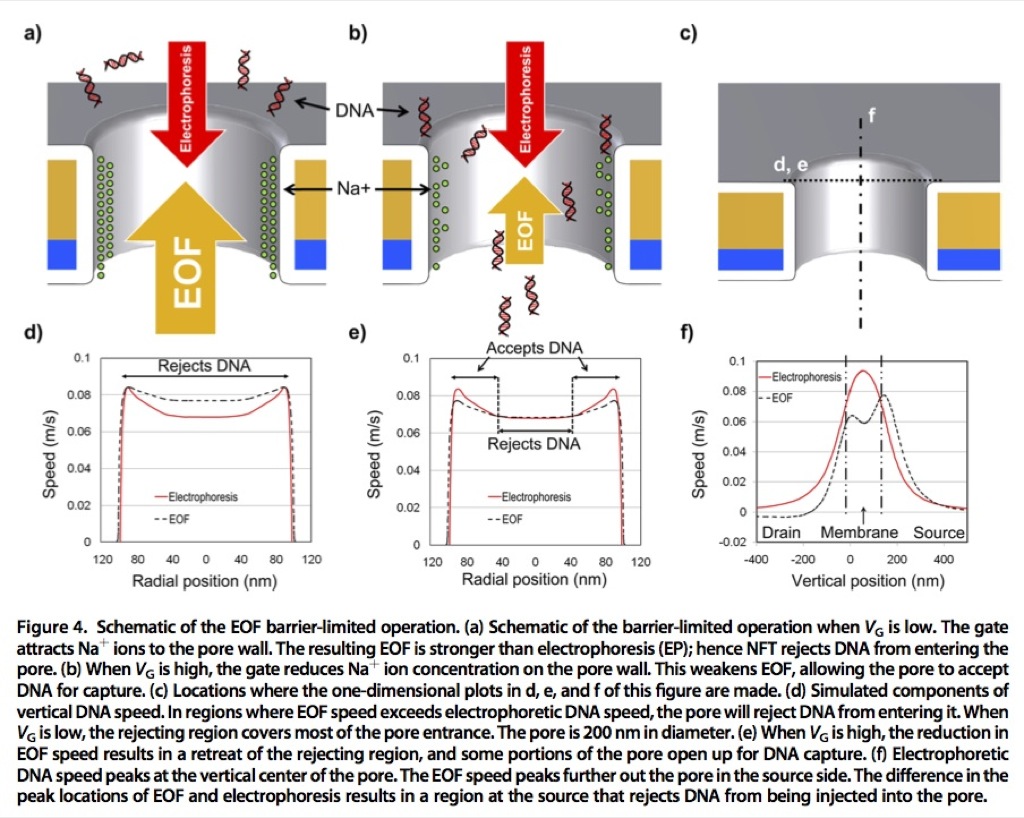
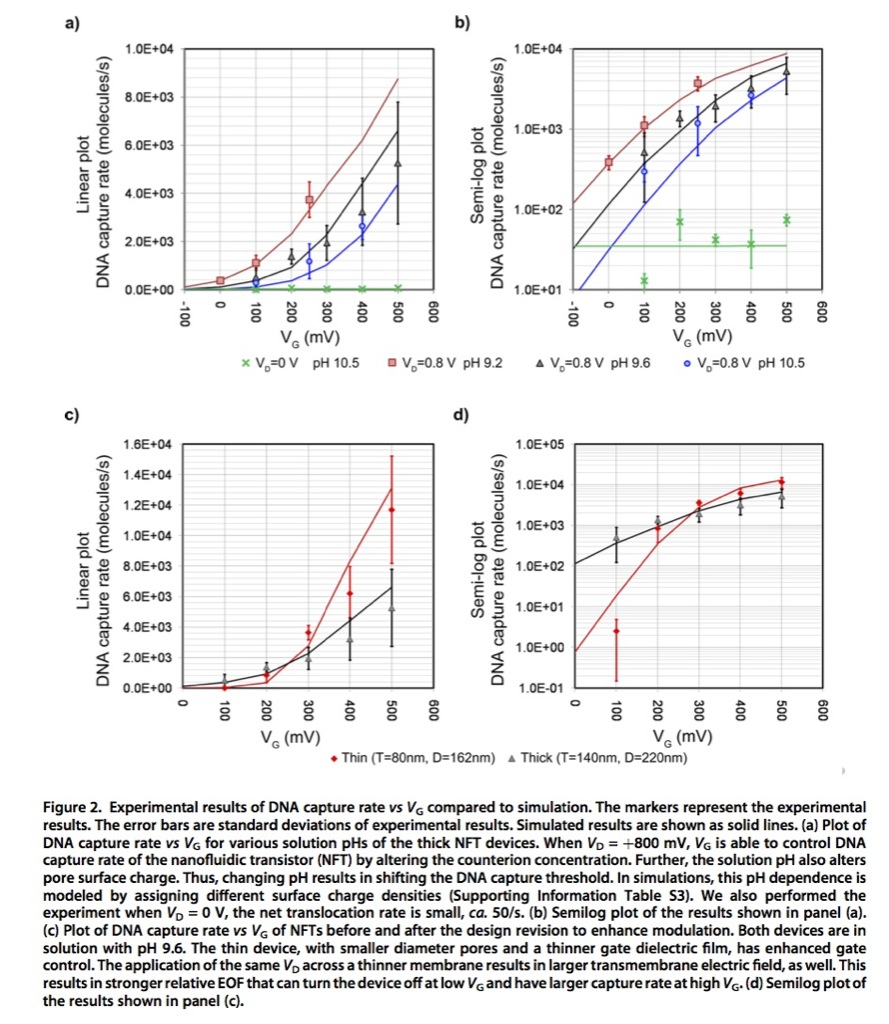
When the membrane carries a negative charge, EOF dominates, and DNA cannot pass through the membrane. When the membrane charge is positive, DNA can pass through. The effect is highly pH dependent:
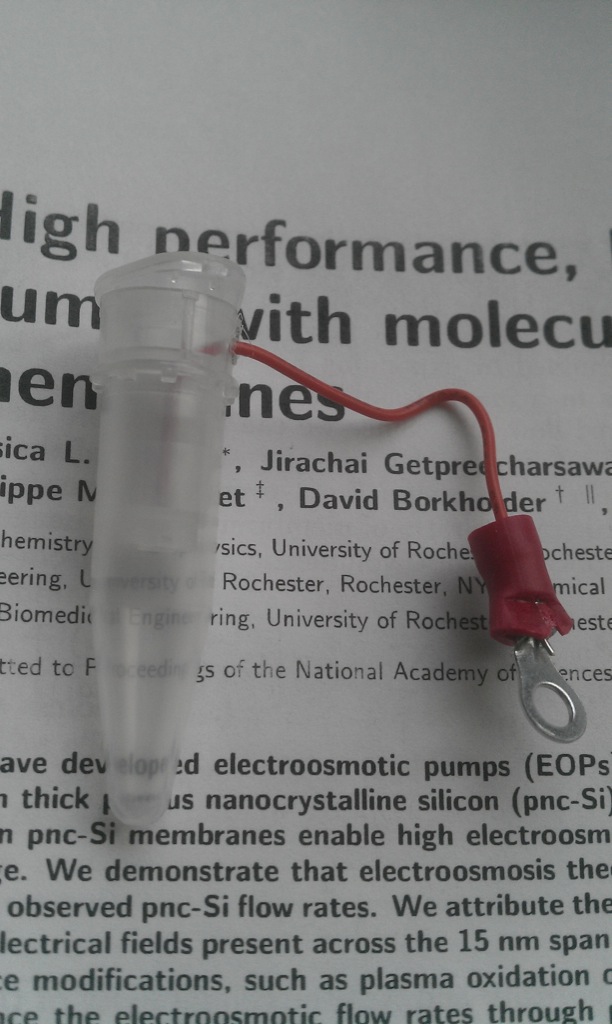
I think this is something that we could examine almost immediately – although a proper electrophoretic setup would be difficult, it should be fairly straightforward to coat the membrane in aluminum and bond a wire to the surface, then bias the surface with some small voltage, all within the existing Sepcon housing:
Two last figures from the paper:
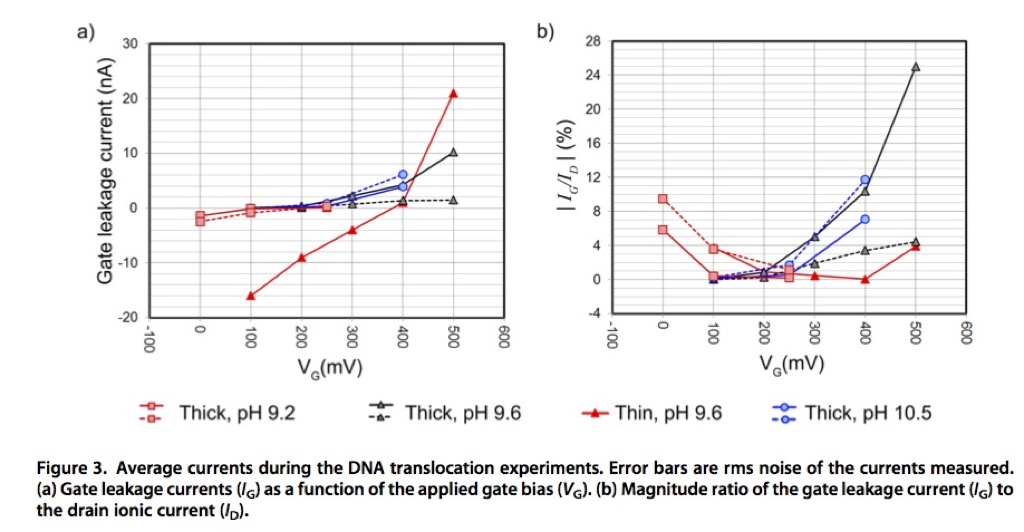
Current can leak out of the membrane:
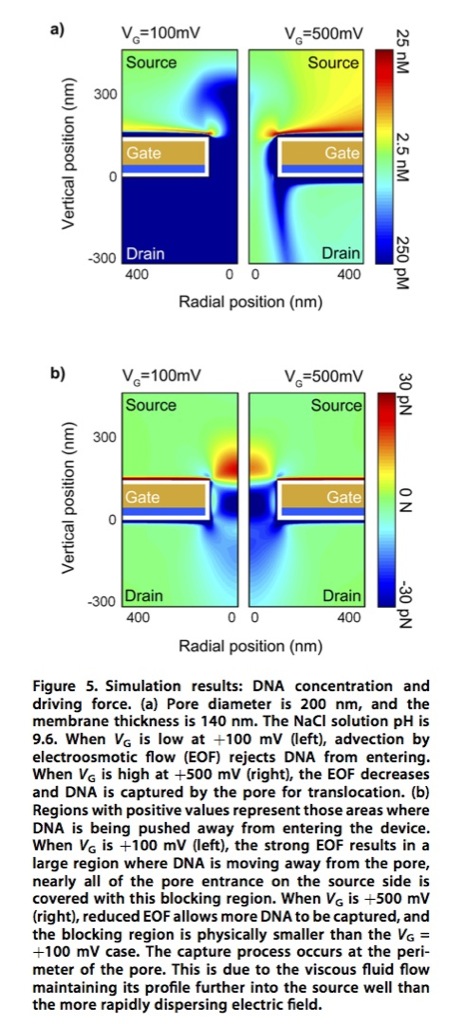
And some modeling of the transport process: